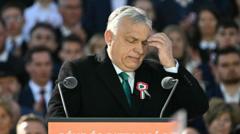
Hungary at a Crossroads: Viktor Orbán Faces Unprecedented Electoral Challenge
Viktor Orbán, the longest-serving leader in the European Union, is bracing for what analysts describe as the most significant threat to his 16-year grip on power. As Hungary approaches the April 12 elections, the Prime Minister faces a surging opposition led by Péter Magyar, a former party insider whose candidacy has energized voters dissatisfied with the current administration. Since returning to office in 2010, Orbán has fundamentally reshaped the Hungarian state, moving the nation toward what he terms an ‘illiberal democracy,’ a shift that has drawn sharp criticism from European institutions regarding the erosion of democratic norms.
Throughout his tenure, Orbán has cultivated a distinct political identity that often places him at odds with Brussels. His government has maintained a controversial stance on the war in Ukraine, frequently blocking EU aid packages and advocating for a policy of neutrality that critics argue aligns too closely with Russian interests. This diplomatic friction is compounded by domestic concerns, including allegations of systemic corruption and the freezing of EU funds due to rule-of-law disputes. Despite these pressures, Orbán retains a loyal base and high-profile international support, including an endorsement from former U.S. President Donald Trump.
The upcoming election serves as a referendum on the ‘cardinal laws’ and constitutional changes enacted by Orbán’s Fidesz party, which have consolidated control over the media, the judiciary, and the electoral process. While Orbán’s career began with a pro-democracy stance during the collapse of the Soviet Union, his pivot toward nationalist conservatism has defined the modern Hungarian landscape. As the campaign intensifies, the focus remains on whether the electorate will continue to support his vision of national sovereignty or opt for a change in leadership that could realign Hungary with its European partners.
Key Takeaways
- Viktor Orbán faces his toughest electoral challenge in 16 years against opposition leader Péter Magyar.
- The Hungarian government remains deeply divided from the EU over its stance on the war in Ukraine and rule-of-law concerns.
- Orbán’s Fidesz party has consolidated power through extensive constitutional changes, but faces growing public scrutiny over corruption allegations.
Editor’s Analysis & Impact
The Hungarian election represents a critical juncture for the European Union’s internal cohesion. Orbán’s ‘illiberal’ model has served as a blueprint for nationalist movements globally, making this contest a high-stakes battle between traditional European integration and sovereign-focused populism. If Orbán loses, it would signal a massive shift in Central European geopolitics, likely leading to a rapid thaw in relations with Brussels and a potential reversal of several controversial domestic policies. Conversely, a victory would solidify his influence, likely deepening the divide between Budapest and the EU leadership. Investors and policymakers should monitor this closely, as the outcome will dictate the flow of frozen EU funds and the future of Hungary’s economic alignment between Western institutions and Eastern partnerships.
Frequently Asked Questions
Q: Why are EU funds for Hungary currently frozen?
A: EU funds have been frozen due to persistent concerns regarding the rule of law, judicial independence, and systemic corruption within the Hungarian government.
Q: Who is the primary challenger to Viktor Orbán in the upcoming election?
A: The primary challenger is Péter Magyar, a former insider from Orbán's own Fidesz party who has emerged as a significant political threat.
AI Disclosure: This article is based on verified data and official reports. Our Team and AI have cross-referenced every financial detail with primary sources to ensure total accuracy.
More from this Category