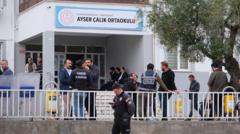
Turkey Launches Massive Digital Crackdown Following Tragic School Shootings
Turkish authorities have launched a sweeping operation against online content that promotes violence, resulting in the issuance of 83 arrest warrants. This move follows a series of two devastating school shootings that have left the nation in mourning. Law enforcement officials confirmed that the crackdown targets individuals accused of glorifying criminal acts, which authorities argue poses a significant threat to public safety. As part of this initiative, the government has blocked access to 940 social media accounts and dismantled 93 Telegram groups identified as hubs for extremist rhetoric.
The most recent tragedy occurred on Wednesday at Ayser Calik Secondary School in Kahramanmaras, where a 14-year-old student killed eight pupils and one teacher, leaving 13 others injured. The attacker, who died during the incident, had reportedly planned the assault well in advance. Digital forensic evidence recovered from the suspect’s computer included a document detailing a ‘major operation’ dated April 11, 2026. Furthermore, investigators discovered that the perpetrator had referenced the 2014 California mass shooter Elliot Rodger on his personal messaging profile, suggesting a concerning pattern of emulation.
This incident followed another violent event on Tuesday at the Ahmet Koyuncu Vocational and Technical Anatolian High School in Siverek, where 16 people were wounded. The assailant, a former student, opened fire with a shotgun before taking his own life. As the country holds funerals for the victims, families are calling for urgent improvements to school security. Government officials have pledged to address the growing concerns regarding safety and the influence of violent online content on the nation’s youth.
Key Takeaways
- Turkish authorities have issued 83 arrest warrants and blocked nearly 1,000 social media accounts for glorifying violence.
- Two separate school shootings in Kahramanmaras and Siverek have resulted in multiple fatalities and injuries, prompting a national security review.
- Evidence suggests the Kahramanmaras attacker had meticulously planned the assault and was influenced by international mass killers.
Editor’s Analysis & Impact
The recent surge in school violence in Turkey has forced the government to confront the intersection of digital radicalization and physical security. By targeting online groups and social media accounts, authorities are attempting to curb the ‘copycat’ effect often associated with high-profile mass shootings. However, this aggressive digital policing raises questions about the balance between national security and freedom of expression. Moving forward, the Turkish government will likely face pressure to implement more robust physical security protocols in educational institutions while simultaneously managing the complex task of monitoring extremist content online. The broader implication is a shift toward a more proactive, surveillance-heavy approach to domestic security in response to the growing threat of youth-led violence inspired by global digital subcultures.
Frequently Asked Questions
Q: Why are Turkish authorities blocking social media accounts?
A: The government is blocking accounts and shutting down groups that are found to be glorifying violence and praising criminals, which they believe threatens public order.
Q: What evidence was found regarding the Kahramanmaras school shooter?
A: Investigators found a computer document outlining a 'major operation' and discovered that the suspect had referenced a known American mass killer on his WhatsApp profile.
AI Disclosure: This article is based on verified data and official reports. Our Team and AI have cross-referenced every financial detail with primary sources to ensure total accuracy.
More from this Category