Julius Malema’s Legal Battle: A Defining Moment for South African Politics
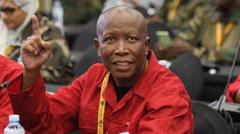
Julius Malema, the prominent leader of the Economic Freedom Fighters (EFF), has been sentenced to five years in prison following a conviction for the illegal possession of a firearm and discharging it in a public space. The ruling, handed down in a KuGompo City court, has sparked widespread national debate regarding the future of one of South Africa’s most controversial and influential political figures. While Malema has characterized the incident as a celebratory act, the judicial outcome represents a major legal challenge that could fundamentally alter his political trajectory.
Despite the gravity of the sentence, Malema will not be incarcerated immediately. Under South African legal statutes, a conviction only triggers disqualification from parliamentary office once all avenues for appeal have been exhausted. Because Malema has initiated the appeals process for both the conviction and the sentencing, he is legally entitled to retain his parliamentary seat and continue his active role in the party’s operations, including upcoming election campaigns. Legal observers anticipate that this litigation could persist for several years, potentially escalating to the Constitutional Court.
Political analysts remain split on the long-term consequences for the EFF. Some suggest that the ongoing legal pressure could destabilize the party, which has recently navigated internal friction and electoral hurdles. Conversely, others argue that the controversy may strengthen Malema’s bond with his base, as he frames the case as a test of his political resilience. By positioning himself as a target of the establishment, he may seek to leverage public sentiment to consolidate his influence.
As the case moves to higher courts, the broader implications for the EFF’s radical economic platform remain uncertain. The party’s ability to maintain its momentum in a volatile political climate will be tested as this legal saga unfolds. For the time being, Malema remains a fixture in the legislature, with the nation closely monitoring whether this sentence will mark the beginning of the end for his career or serve as a rallying point for his supporters.
Key Takeaways
- Julius Malema has received a five-year prison sentence for illegal firearm possession and discharge.
- The EFF leader will remain in parliament and continue political activities while he exhausts the appeals process.
- The legal battle could last for years, potentially reaching the Constitutional Court before a final verdict is reached.
Editor’s Analysis & Impact
The legal proceedings against Julius Malema represent a critical juncture for the South African political landscape. The EFF has built its brand on anti-establishment rhetoric and radical economic reform, and this trial serves as a litmus test for the party’s institutional durability. If the conviction is eventually upheld, it could create a power vacuum within the EFF, potentially leading to internal fragmentation. However, in the short term, the ‘persecution narrative’ often serves to galvanize a populist base, potentially shielding Malema from electoral losses. The broader implication is a heightened tension between the judiciary and populist political movements, which could influence voter turnout and party loyalty in future election cycles. Investors and political observers should watch for signs of party instability as the appeals process drags on, as this will dictate the EFF’s ability to influence national policy.
Frequently Asked Questions
Q: Will Julius Malema be removed from parliament immediately?
A: No. Under South African law, Malema can remain in his parliamentary seat until the entire appeals process is exhausted.
Q: What was the basis for the five-year prison sentence?
A: The sentence was handed down following a conviction for the unlawful possession of a firearm and the discharging of that firearm in a public space.
AI Disclosure: This article is based on verified data and official reports. Our Team and AI have cross-referenced every financial detail with primary sources to ensure total accuracy.
More from this Category