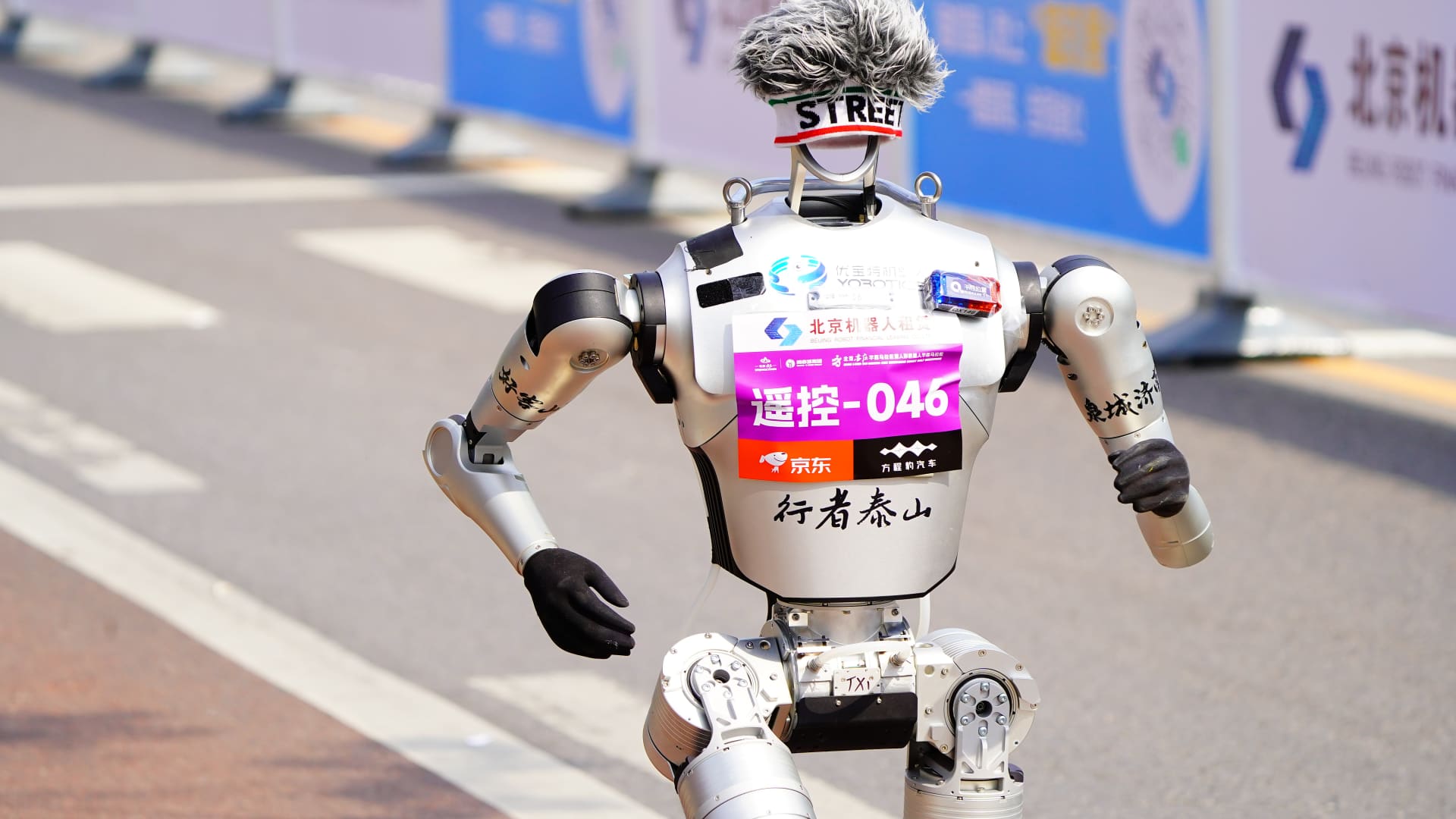
Mechanical Sprinters: Humanoid Robots Shatter Records in Beijing Half-Marathon
A significant milestone in robotics was achieved this past weekend as a fleet of autonomous machines outperformed professional human athletes during a half-marathon in Beijing. The event, which hosted over 100 competing teams, showcased a dramatic evolution in mechanical agility and autonomous navigation. While previous iterations of these robots often struggled to complete basic courses, the current generation displayed unprecedented speed and stability.
The winning entry, developed by smartphone manufacturer Honor, completed the 21-kilometer course in an impressive 50 minutes and 26 seconds. This performance notably outpaced the current international record for a human half-marathon, marking a transformative moment for mechanical athleticism. The success of the Honor unit was attributed to a year of intensive research, featuring long-legged designs that mimic human biomechanics and the integration of advanced liquid cooling technology typically utilized in high-performance mobile devices.
Beyond the spectacle of the race, the event highlighted a broader shift in the robotics industry as it moves from experimental prototypes toward sophisticated, autonomous systems. Nearly half of the participants navigated the course without any remote intervention. While the speed of these machines is a technical triumph, developers are now focused on translating this athletic capability into industrial reliability. The structural integrity and thermal management systems tested on the track are viewed as essential precursors to deploying humanoids in complex manufacturing environments where they may eventually perform tasks too dangerous or demanding for human workers.
Key Takeaways
- A humanoid robot developed by Honor completed a half-marathon in 50 minutes and 26 seconds, surpassing human world records.
- The robots utilized advanced liquid cooling technology and biomimetic leg designs to achieve high-speed autonomous performance.
- Industry experts are pivoting from athletic demonstrations to applying these mechanical advancements toward industrial and manufacturing reliability.
Editor’s Analysis & Impact
The performance of these humanoid robots in Beijing signals a critical inflection point in the robotics sector. By successfully integrating high-performance cooling systems—originally designed for consumer electronics—into mobile, autonomous frames, developers have solved one of the primary bottlenecks in robotics: thermal management during high-exertion tasks. This transition from ‘lab-bound’ prototypes to ‘field-capable’ machines suggests that the commercial viability of humanoids is accelerating faster than anticipated. While the marathon setting is a controlled environment, the underlying technology has profound implications for logistics, hazardous material handling, and automated manufacturing. As government support and private investment continue to converge, we should expect to see these machines move from public demonstrations into specialized industrial roles within the next decade, potentially reshaping global labor dynamics.
Frequently Asked Questions
Q: How did the winning robot achieve such high speeds?
A: The robot utilized a biomimetic design that mimics human running mechanics, paired with advanced liquid cooling technology adapted from high-performance smartphones to prevent overheating.
Q: Are these robots fully autonomous?
A: Yes, nearly half of the robots participating in the Beijing event, including the winning entry, navigated the entire 21-kilometer course without any remote control or human intervention.
AI Disclosure: This article is based on verified data and official reports. Our Team and AI have cross-referenced every financial detail with primary sources to ensure total accuracy.
More from this Category