Pope Leo Issues Sharp Rebuke of Equatorial Guinea’s Human Rights and Corruption
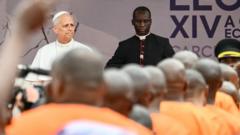
Concluding a significant four-nation tour across Africa, Pope Leo has delivered a stern message to the leadership of Equatorial Guinea regarding the nation’s ongoing humanitarian and governance crises. During a massive public Mass in Mongomo, attended by an estimated 100,000 congregants and President Teodoro Obiang Nguema Mbasogo, the pontiff drew direct attention to the deplorable conditions within the country’s prison system. He specifically highlighted the lack of basic hygiene and sanitation, signaling his intent to inspect the Bata prison, a facility long associated with allegations of systemic abuse and unexplained disappearances.
Beyond the immediate concerns of the penal system, the Pope addressed the broader structural failures plaguing the oil-rich nation. He criticized the extreme wealth disparity that leaves the majority of the population in poverty while a small elite maintains control over the country’s natural resources. By urging leadership to prioritize the common good over private enrichment, the pontiff underscored the urgent need for systemic reform in a nation frequently cited by international monitors for its high levels of corruption and financial mismanagement.
The visit served as a platform for the Pope to advocate for fundamental human rights, including the protection of personal dignity and the expansion of civil liberties. In a political environment characterized by the suppression of opposition and strict media censorship, his remarks represent a significant challenge to the status quo. The pontiff’s firm stance highlights the growing pressure on the government to address its human rights record and the diversion of public funds, issues that have long strained the nation’s relationship with the international community.
Key Takeaways
- Pope Leo publicly criticized the poor sanitary and human rights conditions within Equatorial Guinea's prison system.
- The pontiff called for an end to systemic corruption and the equitable distribution of the nation's oil wealth.
- The visit highlighted the lack of political freedom and the suppression of opposition in the country.
Editor’s Analysis & Impact
The Pope’s direct intervention in Equatorial Guinea’s domestic affairs marks a significant escalation in international scrutiny of the Obiang administration. By leveraging his moral authority to address both the humanitarian crisis in prisons and the economic disparity caused by corruption, the pontiff has effectively placed the nation’s governance under a global spotlight. Economically, the country remains a paradox of immense oil wealth and widespread poverty, a dynamic that has historically deterred sustainable development. Moving forward, this visit may embolden local civil society groups and increase pressure on international partners to demand transparency. However, given the entrenched nature of the current regime, the immediate impact on policy remains uncertain. The long-term implication is a potential shift in how international observers engage with the nation, moving from passive monitoring to more active advocacy for human rights and fiscal accountability.
Frequently Asked Questions
Q: Why did Pope Leo specifically mention the Bata prison?
A: The Bata prison is frequently cited by international human rights organizations for reports of routine abuse, poor sanitary conditions, and the disappearance of detainees.
Q: What is the primary economic issue facing Equatorial Guinea according to the Pope?
A: The primary issue is extreme income inequality, where the country's significant oil wealth is concentrated among a privileged elite while the majority of the population remains in poverty.
AI Disclosure: This article is based on verified data and official reports. Our Team and AI have cross-referenced every financial detail with primary sources to ensure total accuracy.
More from this Category