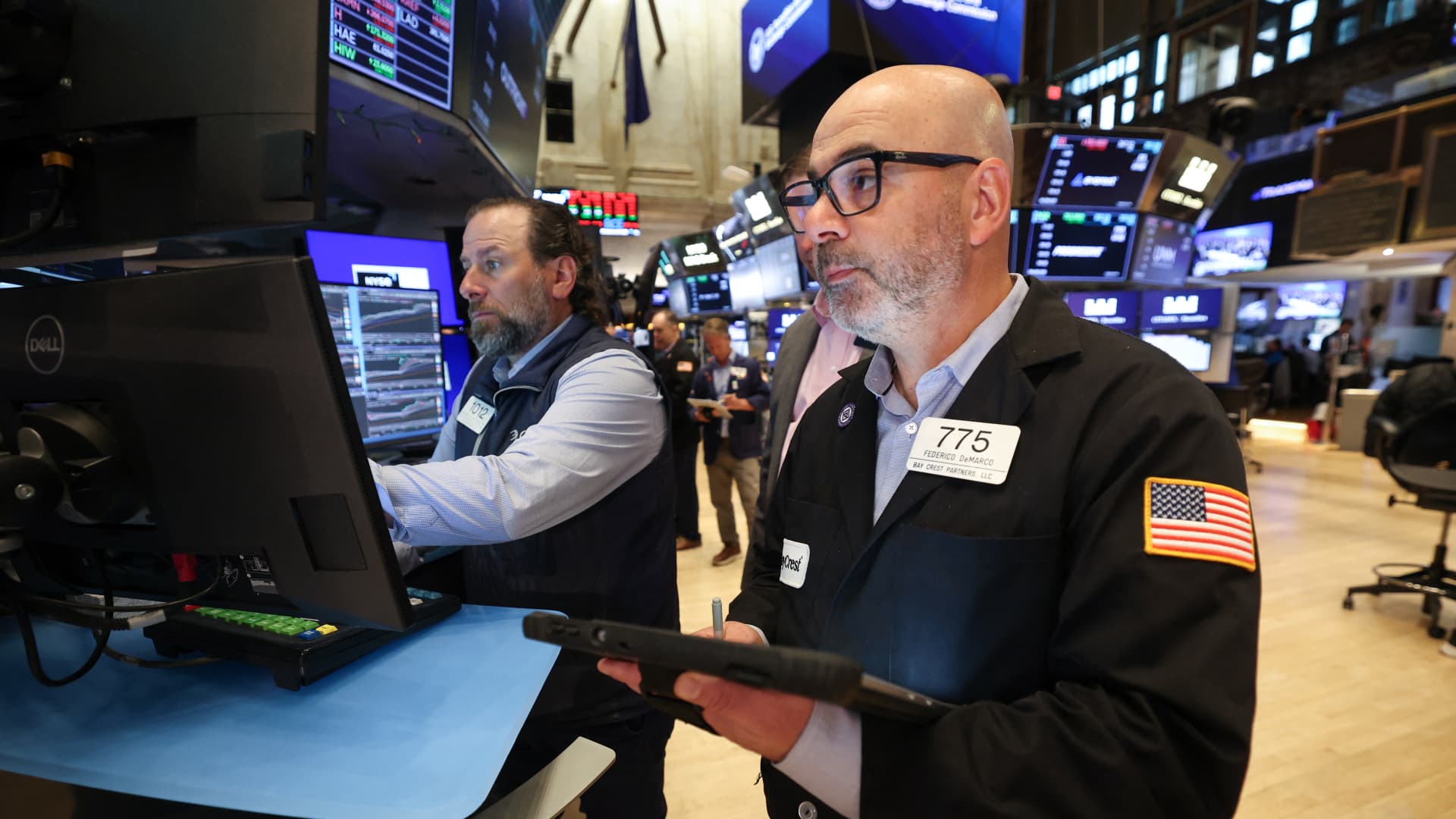
Market Rally Stalls as Geopolitical Tensions and Earnings Volatility Take Hold
Global equity markets are experiencing a period of consolidation as investors pull back from the record-breaking highs recently established by the S&P 500 and Nasdaq Composite. Futures markets indicate a downward trend, with the S&P 500 dipping 0.5% and the Dow Jones Industrial Average facing a sharper decline of 0.7%. This shift in market sentiment is largely attributed to a combination of mixed corporate earnings results and escalating instability in the Middle East.
Corporate performance remains a central focus for traders, with several major companies seeing significant price swings following their latest financial disclosures. IBM and ServiceNow shares faced notable declines of 7% and 13%, respectively. Tesla also encountered volatility; despite an initial rally, the stock fell 3% after CEO Elon Musk announced plans for a substantial increase in capital expenditures dedicated to AI-driven robotics and autonomous driving technology. In contrast, Netflix shares rose by over 1% following the announcement of a $25 billion share buyback program, while Helix Energy Solutions saw a 3% gain following a merger agreement with Hornbeck Offshore Services.
Geopolitical concerns have further complicated the investment landscape. Despite brief optimism regarding potential diplomatic breakthroughs, renewed reports of naval activity in the Strait of Hormuz and the rejection of ceasefire talks by Iranian state media have heightened uncertainty. These developments have exerted upward pressure on energy markets, with Brent crude oil prices climbing to $104.17 per barrel, reflecting growing anxieties over potential supply chain disruptions.
Despite these challenges, the broader earnings season continues to demonstrate resilience. Data shows that approximately 81% of S&P companies reporting so far have surpassed earnings expectations, with 76% exceeding revenue forecasts. As the market processes these results, investors are turning their attention to upcoming S&P Global PMI manufacturing and services data, which will serve as a key indicator of the global economy’s ability to withstand ongoing inflationary and geopolitical pressures.
Key Takeaways
- Major U.S. stock indices are retreating from record highs due to a mix of corporate earnings volatility and geopolitical instability.
- Tesla shares declined following CEO Elon Musk's announcement of increased capital spending on AI and robotics, signaling a shift toward long-term, capital-intensive growth.
- Brent crude oil prices have surged past $104 per barrel as rising tensions in the Middle East spark fears regarding global energy security.
Editor’s Analysis & Impact
The current market environment reflects a tug-of-war between strong corporate fundamentals and external macroeconomic risks. While the high percentage of companies beating earnings estimates provides a solid floor for equity valuations, the market’s sensitivity to geopolitical developments in the Middle East suggests that volatility will remain elevated in the near term. The pivot toward heavy AI investment by major tech players like Tesla indicates a long-term capital-intensive shift that may pressure short-term margins, even as it promises future growth. Investors should remain cautious, as the combination of energy price spikes and potential supply chain disruptions could complicate the path for central banks attempting to manage inflation. The upcoming PMI data will be critical in determining whether the current economic resilience can withstand these mounting pressures.
Frequently Asked Questions
Q: Why did Tesla's stock price drop despite positive earnings?
A: Tesla's stock declined because CEO Elon Musk warned that the company would need to significantly increase capital expenditures to invest in AI-powered self-driving technologies and humanoid robotics, which investors interpreted as a potential drag on near-term profitability.
Q: How are geopolitical tensions affecting global markets?
A: Geopolitical unrest, particularly regarding the U.S.-Iran situation and maritime activity in the Strait of Hormuz, has increased uncertainty and pushed Brent crude oil prices higher, raising concerns about energy security and potential supply chain disruptions.
AI Disclosure: This article is based on verified data and official reports. Our Team and AI have cross-referenced every financial detail with primary sources to ensure total accuracy.
More from this Category