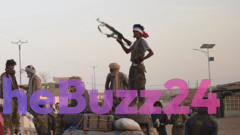
Mali’s Military Leadership Staggers Under Coordinated Insurgent Offensive
The military administration in Mali is currently confronting its most severe security crisis since the 2020 coup. A strategic and coordinated offensive, spearheaded by an alliance between the Azawad Liberation Front (FLA) and the al-Qaeda-affiliated JNIM, has destabilized the region and reached the capital, Bamako. The conflict has resulted in the death of Defense Minister Sadio Camara, a pivotal figure in the junta’s security framework and the primary point of contact for Russian military assets operating within the nation.
The loss of key northern territories, most notably the strategic city of Kidal, has dealt a significant blow to the authority of Col. Assimi Goïta. With the efficacy of Russian military support being openly questioned following these territorial retreats, the administration is under immense pressure to regain control. The death of Camara has created a vacuum in the junta’s strategic planning, forcing the leadership to reconsider its reliance on current security partners while facing a rapidly deteriorating situation on the ground.
Public dissatisfaction is mounting as the insurgency tightens its grip, exacerbated by economic blockades and the persistent threat of violence. While the military maintains control over major urban hubs, the government is reportedly exploring a diversification of its security alliances. Potential outreach to nations like Turkey or a recalibration of diplomatic ties with the United States are being discussed as the junta attempts to stabilize its position within the Alliance of Sahel States.
Looking ahead, the nation faces a precarious future. The fragile coalition between nationalist separatists and Islamist militants presents a complex challenge, as their conflicting ideologies could lead to further instability should the current regime collapse. Observers remain divided on whether the junta can suppress the uprising or if the country is headed toward a secondary internal power struggle or a prolonged state of civil conflict.
Key Takeaways
- The death of Defense Minister Sadio Camara has left a critical void in the junta's security and diplomatic strategy.
- The loss of the strategic city of Kidal to a rebel alliance has severely damaged the credibility of Col. Assimi Goïta’s administration.
- The military government is considering diversifying its international security partnerships to counter the growing influence of the FLA and JNIM.
Editor’s Analysis & Impact
The situation in Mali represents a critical inflection point for the Sahel region. The junta’s reliance on a singular security partner—specifically Russian forces—has proven insufficient against a highly mobile and coordinated insurgency. The market and geopolitical implications are profound; as the state loses control over northern territories, the risk of regional contagion increases, potentially destabilizing neighboring countries. Future stability will likely hinge on the junta’s ability to pivot toward a more pragmatic, multi-lateral security approach. However, the ideological divide between the separatist FLA and the extremist JNIM suggests that even if the current government falls, a unified successor state is unlikely. Investors and international observers should anticipate continued volatility, economic disruption, and a potential shift in the regional balance of power as the junta struggles to maintain its grip on the capital.
Frequently Asked Questions
Q: Why is the death of Defense Minister Sadio Camara significant?
A: Camara was the primary architect of the junta's security policy and served as the main liaison for Russian military forces, making his loss a major strategic and diplomatic setback.
Q: What is the nature of the alliance fighting the Malian military?
A: The alliance consists of the Azawad Liberation Front (FLA), a separatist group, and JNIM, an al-Qaeda-linked militant organization, which together have launched a coordinated offensive against the state.
AI Disclosure: This article is based on verified data and official reports. Our Team and AI have cross-referenced every financial detail with primary sources to ensure total accuracy.
More from this Category