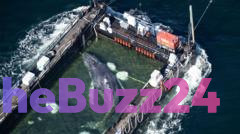
High-Stakes Rescue: Humpback Whale Transported to Open Sea After Weeks Stranded
A humpback whale, known locally as ‘Timmy,’ has been successfully relocated to a specialized transport barge following a grueling five-week ordeal in the shallow coastal waters off Germany’s Poel island. The operation, which reached a critical turning point this past Tuesday, represents the culmination of an intensive rescue mission that began in late March. The transport vessel, Fortuna B, is currently navigating the Baltic Sea, charting a course toward the North Sea via the Skagerrak strait in a final effort to return the marine mammal to its natural environment.
The mission was made possible through a collaborative effort between regional government officials and private entrepreneurs who provided the necessary funding. The whale initially became trapped near Timmendorfer Beach, where it is suspected to have been incapacitated by discarded fishing gear. After several unsuccessful attempts to guide the animal back to deeper, safer waters, authorities authorized the barge transport as a last-resort measure to prevent the whale’s death.
While the rescue team has expressed optimism regarding the whale’s condition during transit, the operation has ignited a broader debate among marine biologists. Experts have raised significant concerns regarding the animal’s long-term prognosis, citing extensive skin lesions and systemic weakness caused by prolonged exposure to low-salinity coastal waters. Despite these medical risks, the successful loading of the whale is being hailed as a major milestone in a high-profile rescue that has drawn significant public interest.
Key Takeaways
- A humpback whale stranded for five weeks in shallow German waters has been successfully loaded onto a transport barge.
- The rescue was made possible through private funding after initial attempts to guide the whale back to sea failed.
- Marine experts remain cautious about the whale's survival prospects due to physical trauma and health complications from its long-term stranding.
Editor’s Analysis & Impact
The rescue of the humpback whale highlights the growing tension between public sentiment and scientific pragmatism in wildlife conservation. While the operation represents a triumph of human effort and private initiative, it underscores the ethical complexities of intervening in natural processes. The skepticism from marine experts serves as a reminder that ‘saving’ an animal from a stranding site does not guarantee its survival, especially when the creature has suffered significant physiological stress. Moving forward, this case will likely influence how authorities and private organizations collaborate on marine mammal rescues. It raises broader questions about the allocation of resources for individual animal rescues versus systemic efforts to mitigate threats like ocean plastic and abandoned fishing gear, which remain the primary drivers of such tragic incidents.
Frequently Asked Questions
Q: Why was the whale stranded in the first place?
A: The whale is believed to have become stranded after becoming entangled in fishing netting, which hindered its ability to navigate back to deeper, open waters.
Q: What are the primary concerns regarding the whale's health?
A: Marine experts are concerned about the whale's long-term survival due to skin damage caused by prolonged exposure to low-salinity water and general physical weakness from its extended time in shallow, restricted areas.
AI Disclosure: This article is based on verified data and official reports. Our Team and AI have cross-referenced every financial detail with primary sources to ensure total accuracy.
More from this Category