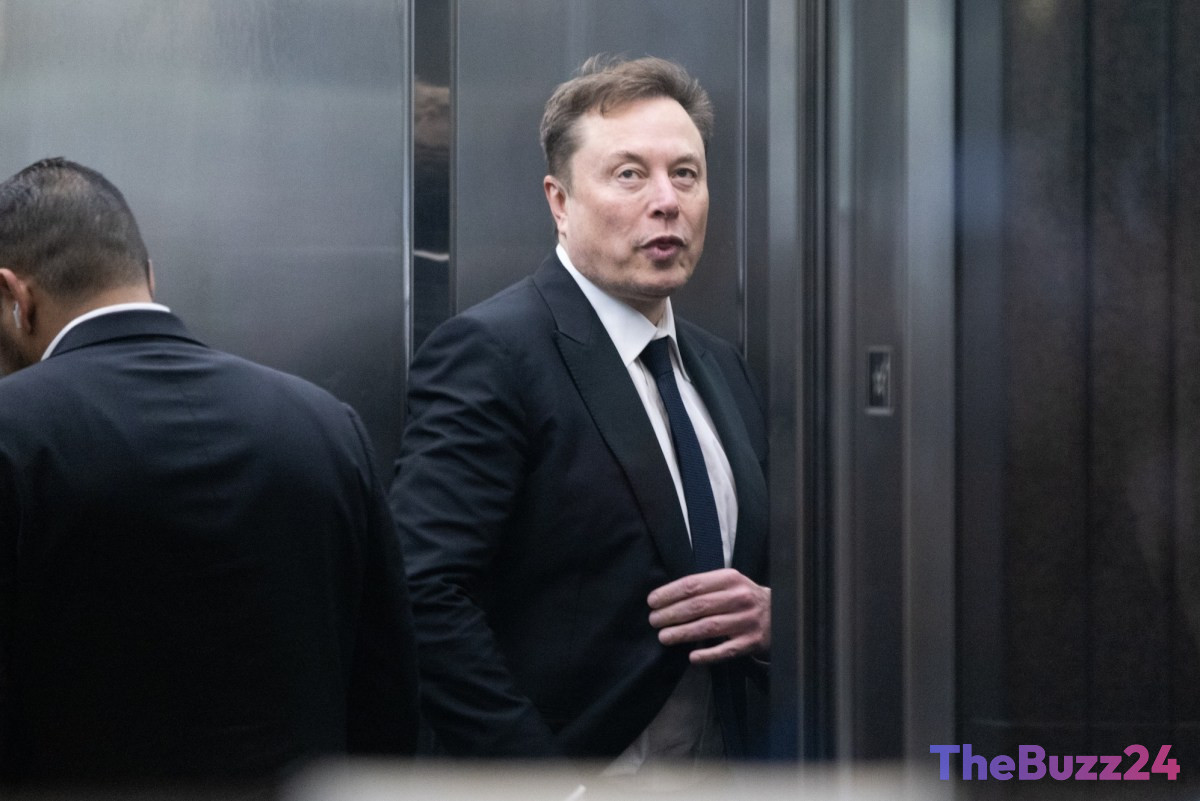
Elon Musk Admits xAI Used OpenAI Models for Grok Training Amidst Legal Battle
In a significant development during his ongoing lawsuit against OpenAI, tech mogul Elon Musk testified that his artificial intelligence company, xAI, has employed “distillation” techniques using OpenAI’s models to train its own Grok AI. Distillation, a process where a newer AI model learns from an existing, more advanced one by analyzing its outputs, has become a contentious topic in the AI industry.
Musk’s admission came during his testimony in a California federal court, where he is suing OpenAI, CEO Sam Altman, and Greg Brockman. He alleges they have strayed from the company’s original non-profit mission by prioritizing a for-profit structure. When questioned about whether xAI used distillation on OpenAI models, Musk responded affirmatively, stating, “Partly,” and characterizing the practice as common among AI developers. This revelation comes as major AI labs like OpenAI and Anthropic have publicly voiced concerns about third-party entities using their publicly accessible chatbots and APIs for model training, particularly focusing on Chinese firms creating lower-cost, highly capable open-weight models.
The practice of distillation poses a potential threat to AI giants by enabling competitors to develop sophisticated models without the immense investment in compute infrastructure. This allows smaller or newer companies, like xAI which was founded in 2023, to accelerate their development by leveraging the foundational work of established players. While not explicitly illegal, such practices may violate the terms of service agreements set by the AI providers. OpenAI, Anthropic, and Google have reportedly initiated efforts through the Frontier Model Forum to share information and strategies to counter these distillation attempts, including measures to detect and prevent suspicious mass querying.
During his testimony, Musk also provided his current ranking of leading AI providers, placing Anthropic at the top, followed by OpenAI, Google, and Chinese open-source models. He described xAI as a considerably smaller operation with a few hundred employees, contrasting it with the scale of the leading AI corporations. OpenAI has not yet responded to requests for comment regarding Musk’s testimony.
Key Takeaways
- Elon Musk confirmed xAI used OpenAI models for training its Grok AI via "distillation" techniques.
- The admission occurred during Musk's lawsuit against OpenAI, alleging breaches of its original mission.
- Distillation allows newer AI companies to develop advanced models more affordably, potentially undermining AI giants' competitive advantage.
Editor’s Analysis & Impact
Elon Musk’s testimony regarding xAI’s use of OpenAI models for Grok’s training injects a significant dose of real-world complexity into the ongoing debate surrounding AI development ethics and intellectual property. This admission highlights the competitive pressures within the AI landscape, where rapid advancement often necessitates leveraging existing technologies, even if it skirts the edges of terms of service. For established AI leaders, this practice threatens to devalue their substantial investments in proprietary data and compute power. Conversely, for emerging players like xAI, it represents a crucial pathway to compete. The legal ramifications of this testimony could set important precedents for data usage and model training in the burgeoning AI industry, influencing future innovation strategies and regulatory frameworks.
Frequently Asked Questions
Q: What is AI model "distillation"?
A: AI model distillation is a technique where a smaller, more efficient AI model learns from a larger, more complex "teacher" model. This is typically done by analyzing the outputs of the teacher model in response to various inputs, allowing the student model to mimic its capabilities without needing the same extensive training data or computational resources.
Q: Why is Elon Musk suing OpenAI?
A: Elon Musk is suing OpenAI, Sam Altman, and Greg Brockman, alleging that they have violated the company's original non-profit mission by shifting towards a for-profit structure and prioritizing commercial interests over the stated goal of benefiting humanity.
Q: What are the implications of xAI using OpenAI's models?
A: The implications are twofold: it suggests that even major AI players may use techniques that could be seen as "borrowing" from competitors, and it allows newer companies like xAI to accelerate their development and potentially catch up to established leaders more quickly and cost-effectively, challenging the dominance of companies with vast resources.
AI Disclosure: This article is based on verified data and official reports. Our Team and AI have cross-referenced every financial detail with primary sources to ensure total accuracy.
More from this Category