Google Shifts Strategy Toward Autonomous AI Agents with Gemini 3.5 Flash
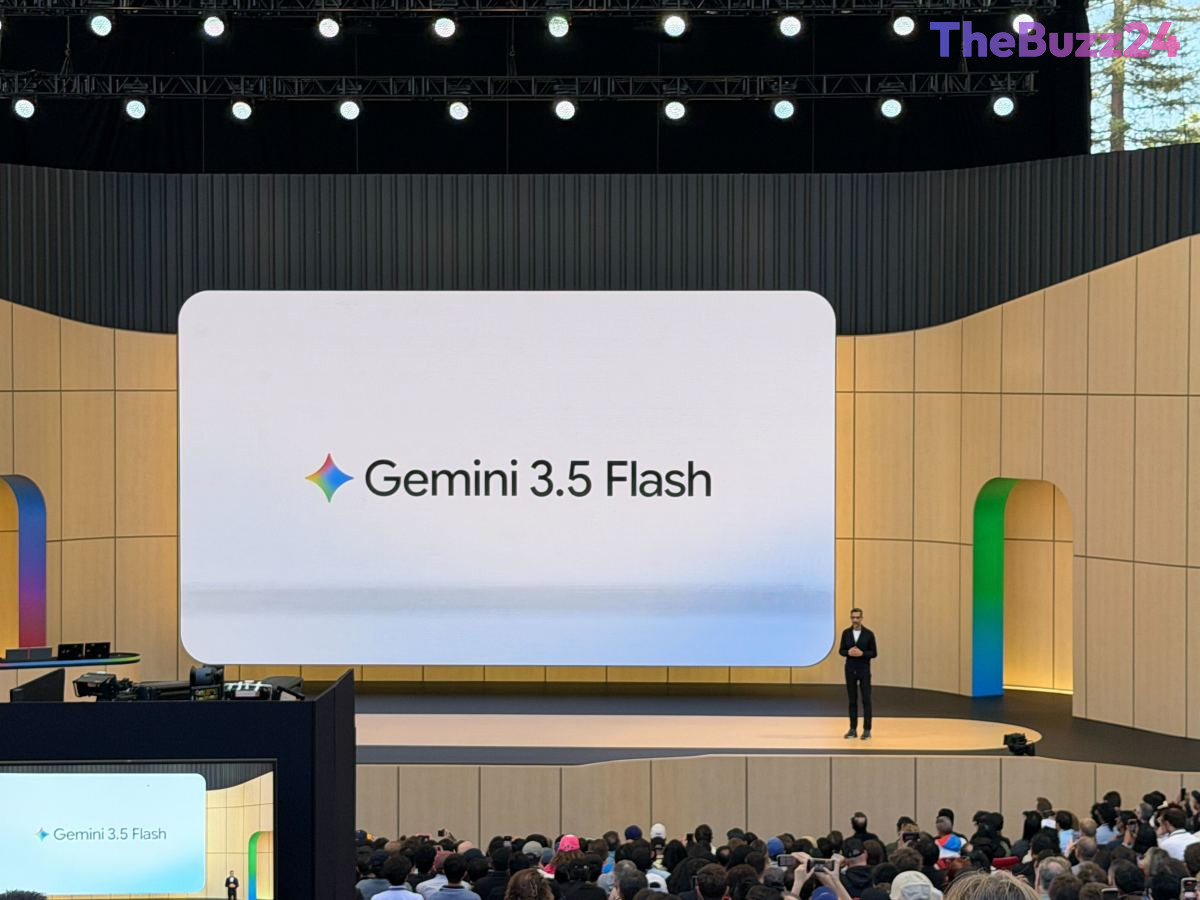
Google has officially unveiled Gemini 3.5 Flash, a high-performance artificial intelligence model that marks a significant strategic pivot from standard conversational chatbots toward autonomous, ‘agentic’ AI tools. Designed for speed, low latency, and advanced problem-solving, the model is engineered to execute multi-step workflows—such as complex coding pipelines and deep research projects—with minimal human intervention. Internal benchmarks have even showcased the model’s ability to construct an operating system from scratch.
The technical architecture of Gemini 3.5 Flash is optimized for rapid iteration, boasting speeds up to four times faster than previous frontier models, with specialized configurations achieving up to 12 times the performance efficiency. This speed is essential for the new agentic framework, which enables multiple AI entities to operate in parallel, coordinating their efforts to complete intricate development tasks. To facilitate this, Google has introduced Antigravity 2.0, a desktop environment tailored specifically for agent-first development.
While the model is capable of autonomous operation for extended periods, it maintains a tether to human oversight for critical decision-making. Future iterations will see Gemini 3.5 Flash working alongside the upcoming 3.5 Pro model, which will serve as a high-level orchestrator to delegate sub-tasks to the faster Flash model. Beyond developer tools, Google is integrating these capabilities into consumer products like the Gemini app, AI-powered Search, and the new Gemini Spark personal assistant.
As the company scales these autonomous systems, it has implemented enhanced safety protocols to mitigate cyber and sensitive threats. Gemini 3.5 Flash is currently available for developers and enterprises through the Gemini API, signaling a broader push to make agentic AI a standard component of the modern digital ecosystem.
Key Takeaways
- Gemini 3.5 Flash shifts Google's AI focus from simple chatbots to autonomous 'agentic' tools capable of multi-step workflows.
- The model offers significant performance gains, reportedly reaching speeds up to 12 times faster than previous versions for specific tasks.
- Google is integrating these autonomous capabilities across its consumer ecosystem, including Search and the new Gemini Spark assistant.
Editor’s Analysis & Impact
The launch of Gemini 3.5 Flash represents a pivotal moment in the AI arms race, signaling that the industry is moving past the ‘chat’ phase and into the ‘action’ phase. By focusing on agentic workflows, Google is attempting to solve the primary limitation of current LLMs: their inability to execute long-running, multi-step tasks without constant prompting. This shift has massive implications for the software development and enterprise automation sectors, potentially reducing the need for manual intervention in complex digital workflows. However, the move toward autonomous agents also raises significant questions regarding safety and accountability. As these models gain the ability to interact with operating systems and external APIs, the ‘human-in-the-loop’ requirement will become the most critical bottleneck for adoption. If successful, this architecture could redefine productivity software, turning AI from a passive assistant into an active, autonomous workforce.
Frequently Asked Questions
Q: What is an 'agentic' AI model?
A: An agentic AI model is designed to perform complex, multi-step tasks autonomously, coordinating its own actions to achieve a goal rather than simply responding to a single user prompt.
Q: Is Gemini 3.5 Flash available for public use?
A: Yes, the model is currently available for integration via the Gemini API and enterprise platforms.
AI Disclosure: This article is based on verified data and official reports. Our Team and AI have cross-referenced every financial detail with primary sources to ensure total accuracy.
More from this Category