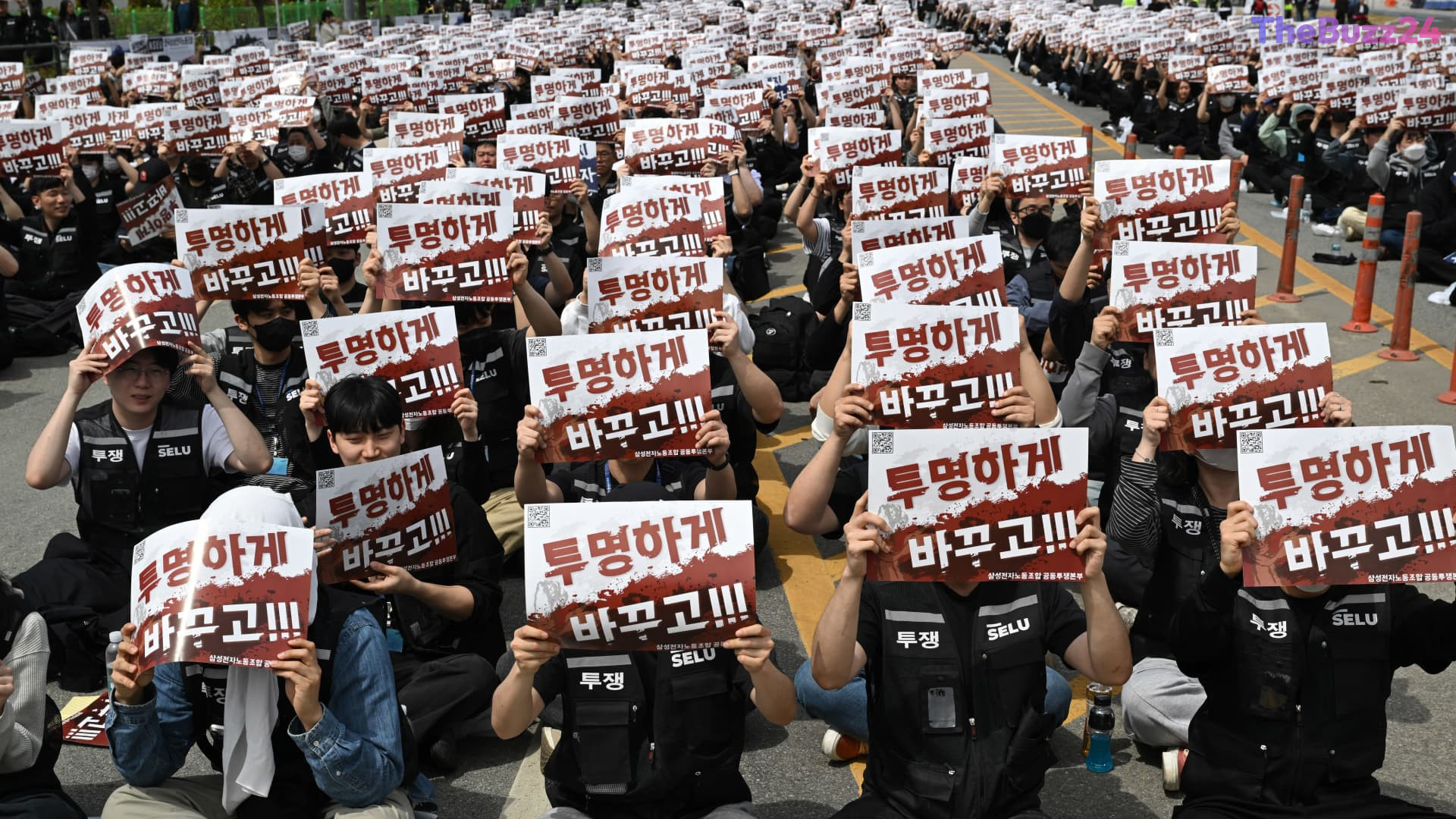
Samsung Electronics Faces Massive Labor Walkout Amid Bonus Dispute
Samsung Electronics is bracing for a significant labor disruption as over 47,000 employees prepare to walk off the job this Thursday. The industrial action follows a breakdown in wage negotiations, specifically regarding the company’s performance-based bonus structure. Union representatives are pushing for a more transparent system, including a 15% share of operating profits and the elimination of existing payout caps, which they argue are currently arbitrary.
The impasse reached a critical point after the union agreed to a mediation proposal from the National Labor Relations Commission, a move that Samsung ultimately rejected. The company stated that the union’s demands could compromise fundamental management principles. While union spokesperson Choi Seung-ho noted that the company requested more time to deliberate, the lack of a concrete resolution has pushed the workforce toward this strike.
Despite the scale of the planned walkout, the impact on production may be tempered by a court order that restricts interference with safety-critical facilities, specifically protecting semiconductor wafer manufacturing lines. Government officials have expressed concern over the potential economic fallout, with high-level authorities urging both sides to return to the negotiating table to prevent further escalation. Meanwhile, the uncertainty surrounding the labor dispute has already rattled the markets, contributing to a roughly 3% decline in Samsung’s share price as investors weigh the potential for long-term operational instability.
Key Takeaways
- Over 47,000 Samsung Electronics employees are planning a strike following failed negotiations over performance-based bonuses.
- The union is demanding a 15% share of operating profits and the removal of current bonus payout caps.
- A court order will limit the strike's impact by protecting safety-critical semiconductor manufacturing facilities.
Editor’s Analysis & Impact
The impending strike at Samsung Electronics represents a significant shift in the labor landscape for South Korea’s largest conglomerate. Historically, Samsung has maintained a non-unionized or strictly controlled labor environment, making this level of organized dissent a major challenge to its corporate culture. From a market perspective, the 3% dip in share price reflects investor anxiety regarding the company’s ability to maintain its competitive edge in the global semiconductor market during a period of high demand. If the strike persists or expands, it could disrupt supply chains already strained by geopolitical tensions. The government’s involvement signals that this is viewed as a matter of national economic security, suggesting that if a private settlement is not reached quickly, state intervention may become inevitable to protect the country’s vital tech exports.
Frequently Asked Questions
Q: Why are Samsung Electronics employees going on strike?
A: The strike is primarily driven by a dispute over the company's performance-based bonus scheme, with employees demanding a 15% share of operating profits and the removal of payout caps.
Q: Will the strike stop all production at Samsung?
A: No. A court order prohibits the union from interfering with safety-critical facilities, meaning semiconductor wafer manufacturing is expected to remain protected and operational.
AI Disclosure: This article is based on verified data and official reports. Our Team and AI have cross-referenced every financial detail with primary sources to ensure total accuracy.
More from this Category