Regional Stability at Risk as Kuwait Activates Air Defenses Amid U.S.-Iran Escalation
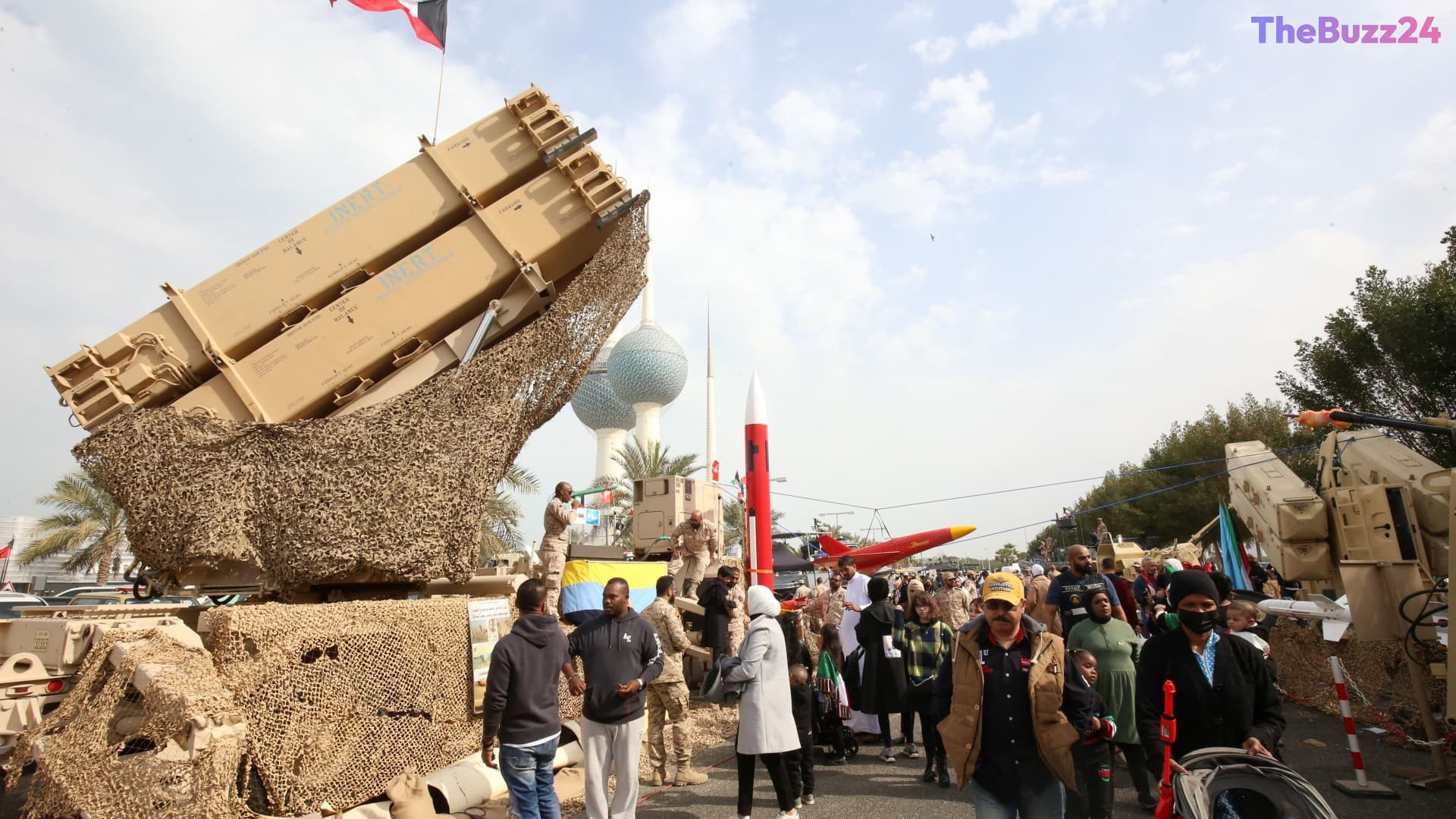
Kuwait’s military forces activated national air defense systems on Thursday in response to detected missile and drone threats. While the military did not explicitly identify the source of the incoming projectiles, officials confirmed that the loud explosions heard by local residents were the result of successful defensive interceptions. This heightened state of alert comes as regional instability intensifies due to escalating friction between the United States and Iran.
The situation follows a series of aggressive military maneuvers, including U.S. strikes on an Iranian facility that authorities claimed posed a direct threat to American personnel and commercial shipping in the Strait of Hormuz. In a retaliatory move, the Islamic Revolutionary Guard Corps reported launching a strike against a U.S. air base near Bandar Abbas, accompanied by warnings of further escalation should the U.S. continue its current military trajectory.
Economic repercussions were immediate, as global energy markets reacted to the volatility. Oil prices surged by more than 3% amid fears that the conflict could disrupt the critical Strait of Hormuz. Compounding these tensions, the U.S. Treasury Department has introduced new sanctions targeting Iran’s Persian Gulf Strait Authority, alleging the agency facilitates support for the IRGC. Entities interacting with this authority now face potential financial penalties.
Despite the rapid militarization of the region, diplomatic efforts continue to run in parallel with combat operations. U.S. officials have signaled a preference for a negotiated resolution, noting that some progress has been achieved in recent discussions. However, the administration maintains that all military options remain on the table if diplomatic channels fail to stabilize the region.
Key Takeaways
- Kuwait activated its air defense systems to intercept incoming drone and missile threats amid rising regional tensions.
- The U.S. and Iran have engaged in reciprocal military strikes, heightening concerns over the security of the Strait of Hormuz.
- Global oil prices rose by over 3% as new U.S. sanctions targeted Iranian maritime authorities.
Editor’s Analysis & Impact
The current escalation between the U.S. and Iran represents a significant inflection point for global energy security. Because the Strait of Hormuz serves as a vital artery for international oil transit, any sustained military conflict in the region creates immediate, upward pressure on commodity prices, which could exacerbate inflationary trends globally. The dual-track approach of imposing financial sanctions while maintaining diplomatic dialogue suggests that both parties are attempting to avoid a full-scale war, yet the margin for error is razor-thin. If diplomatic efforts stall, the risk of a miscalculation leading to a broader regional conflict remains high. Investors and policymakers should monitor the status of maritime transit and potential further sanctions, as these will be the primary indicators of whether the situation will de-escalate or spiral into a more protracted confrontation.
Frequently Asked Questions
Q: Why did Kuwait activate its air defense systems?
A: Kuwait activated its air defenses to intercept incoming missile and drone threats detected in its airspace during a period of heightened regional tension.
Q: How has the conflict affected global oil markets?
A: The instability has caused global oil prices to rise by more than 3% due to concerns regarding the security and potential closure of the Strait of Hormuz, a critical maritime route for oil transport.
AI Disclosure: This article is based on verified data and official reports. Our Team and AI have cross-referenced every financial detail with primary sources to ensure total accuracy.
More from this Category