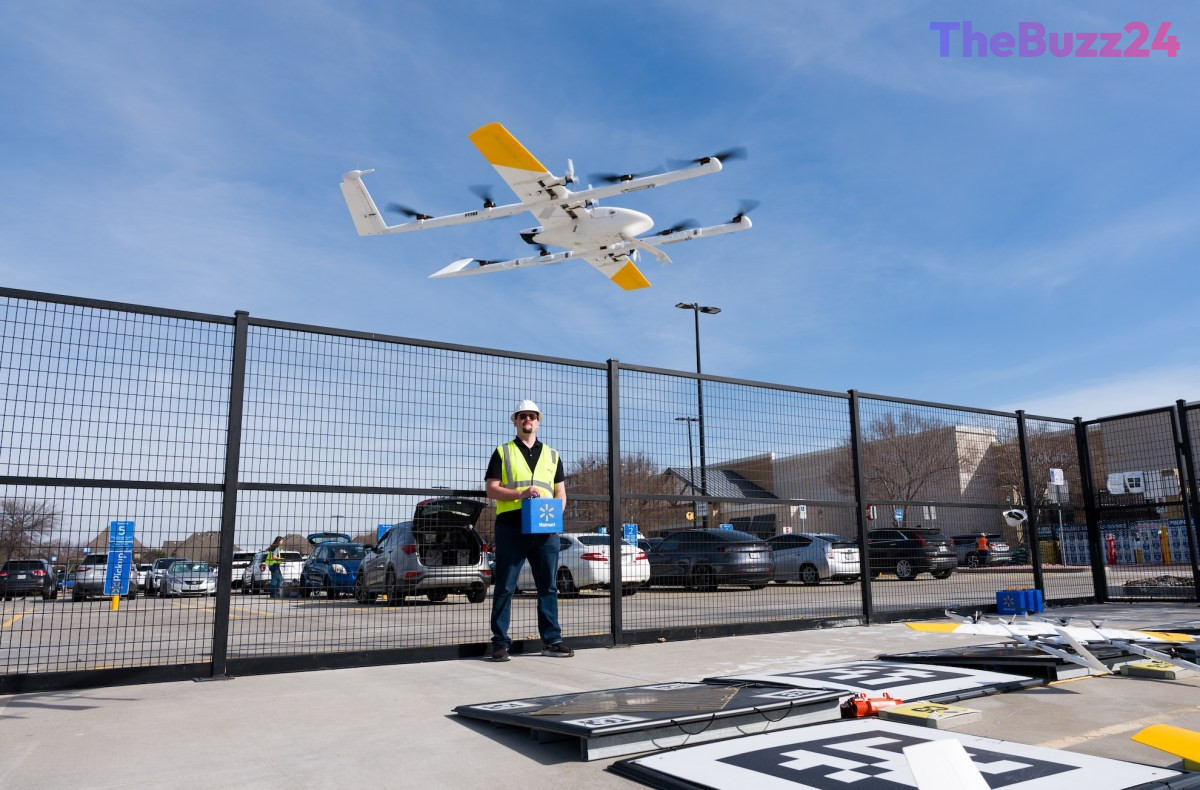
Wing and Walmart Scale Autonomous Drone Delivery Across Major U.S. Markets
The era of autonomous drone delivery is rapidly transitioning from experimental novelty to a standard retail convenience. Wing, the drone delivery subsidiary owned by Alphabet, has announced a significant expansion of its service footprint in collaboration with Walmart. The partnership is set to bring on-demand aerial delivery to seven additional major U.S. metropolitan areas, including Philadelphia, Phoenix, San Diego, and the San Francisco Bay Area.
This strategic rollout is part of an ambitious roadmap to integrate drone delivery capabilities into more than 270 Walmart locations by next year. With the addition of cities like Memphis, New Orleans, and Salt Lake City, the combined network will soon span nearly 20 U.S. markets. This expansion builds upon the success of existing operations in hubs such as Atlanta, Dallas-Fort Worth, and Houston, where the service has already demonstrated high consumer adoption rates.
Data from the partnership indicates that drone delivery is becoming a habitual utility rather than a one-off experience. Wing has officially surpassed the milestone of 1 million commercial deliveries, with the most frequent users utilizing the service up to three times per week. By scaling its infrastructure, Walmart aims to solidify its position in the quick-commerce sector, proving that autonomous logistics can effectively handle the high-volume demands of modern retail.
Key Takeaways
- Wing and Walmart are expanding drone delivery services to seven new U.S. cities, targeting a network of over 270 locations by next year.
- The partnership has successfully completed over 1 million commercial deliveries, signaling a shift toward mainstream adoption.
- Data shows that the most active customers utilize drone delivery services multiple times per week, validating the model as a reliable retail utility.
Editor’s Analysis & Impact
The aggressive expansion of the Wing and Walmart partnership marks a pivotal moment for the logistics industry. By moving beyond pilot programs and into high-density urban markets, the companies are testing the limits of regulatory frameworks and public acceptance of autonomous aerial systems. The shift from ‘novelty’ to ‘utility’ suggests that drone delivery is successfully solving the ‘last-mile’ problem, which has historically been the most expensive and inefficient part of the supply chain. If this scale continues, it will likely force competitors to accelerate their own automation efforts to remain price-competitive. However, the long-term success of this model will depend on navigating complex airspace regulations and maintaining public trust regarding noise and privacy concerns in residential areas.
Frequently Asked Questions
Q: How many cities will Wing and Walmart serve after this expansion?
A: The expansion will bring the total service footprint to nearly 20 U.S. markets.
Q: How frequently do customers use the drone delivery service?
A: According to internal data, the top 25% of customers use the service approximately three times per week.
AI Disclosure: This article is based on verified data and official reports. Our Team and AI have cross-referenced every financial detail with primary sources to ensure total accuracy.
More from this Category