Jakarta Streets Erupt as Students Protest Prabowo’s Policies and Rising Costs
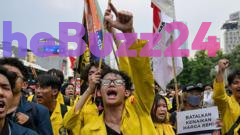
Hundreds of students converged on Indonesia’s capital, Jakarta, on Friday to voice strong opposition to government policies they contend are pushing the nation towards financial instability. The demonstrations targeted what protesters described as extravagant state spending and demanded the immediate cessation of President Prabowo Subianto’s signature free meals program, which has been marred by allegations of corruption and incidents of mass food poisoning.
Adding to their grievances, students also condemned the government’s recent decision to increase fuel prices, a move expected to disproportionately affect the middle class. State-run Pertamina recently hiked prices for two widely-used fuel types, known as Pertamax, by over 30%. This decision, coupled with the substantial budgetary demands of programs like the free meals initiative, has intensified pressure on the national budget.
The protests unfold against a backdrop of escalating public anger that has simmered for months over perceived economic mismanagement. The Indonesian rupiah has recently experienced a significant decline, reaching new lows. During the demonstration, students were seen clashing with police near the Hotel Indonesia roundabout, a prominent Jakarta landmark, with some attempting to breach barricades. On social media, protesters rallied under the hashtag #MenujuIndonesiaBangkrut, translating to “Towards Bankrupt Indonesia.”
The controversial free meals program, estimated to cost $28 billion annually, was a central pillar of President Prabowo’s 2024 presidential campaign, touted as an investment in Indonesia’s future to combat child malnutrition and boost the economy. However, its implementation has been fraught with issues, leading to public calls for its termination and the recent dismissal of the agency head responsible for its oversight. These latest protests echo similar anti-government sentiments seen less than a year ago, following violent demonstrations sparked by the death of a delivery rider.
Key Takeaways
- Indonesian students protested in Jakarta against government spending and a recent fuel price hike.
- A central demand was the cancellation of President Prabowo Subianto's flagship free meals program, plagued by corruption allegations and mass poisonings.
- The protests reflect broader public discontent over economic mismanagement, a weakening rupiah, and rising living costs.
Editor’s Analysis & Impact
The student protests in Indonesia highlight growing public dissatisfaction with the government’s economic policies and fiscal management. The dual pressures of rising fuel costs and scrutiny over the costly free meals program, a cornerstone of President Prabowo Subianto’s agenda, could significantly impact his administration’s stability and public trust. The weakening rupiah further exacerbates economic anxieties, potentially leading to more widespread social unrest if not addressed effectively. For businesses, this climate suggests increased policy uncertainty and potential for market volatility. The government’s response to these protests and its ability to demonstrate fiscal prudence will be crucial in shaping Indonesia’s economic outlook and political landscape in the coming months.
Frequently Asked Questions
Q: What are the main reasons for the student protests in Indonesia?
A: Students are protesting against what they deem wasteful state spending, the government's decision to raise fuel prices, and President Prabowo Subianto's controversial free meals program, which has faced allegations of corruption and incidents of mass food poisoning.
Q: What is the "free meals program" and why is it controversial?
A: The free meals program is a flagship initiative of President Prabowo Subianto, costing an estimated $28 billion annually, aimed at tackling child malnutrition and stimulating the economy. It has become controversial due to allegations of corruption, incidents of mass food poisoning, and concerns about its significant budgetary impact.
Q: How has the Indonesian economy been affected recently?
A: The protests come amid rising public anger over perceived economic mismanagement. The local currency, the rupiah, has recently slid to fresh lows, and state-run Pertamina increased prices for widely-used fuel types by over 30%, contributing to higher living costs.
AI Disclosure: This article is based on verified data and official reports. Our Team and AI have cross-referenced every financial detail with primary sources to ensure total accuracy.
More from this Category