US-Iran Tensions Flare Amid Peace Talks: Trump Threatens Strikes as Strait of Hormuz Closure Looms
In a dramatic turn of events, U.S. President Donald Trump issued stern warnings of renewed military action against Iran on Sunday, even as Vice President JD Vance engaged in crucial peace discussions with Iranian officials. These talks, held in Switzerland, were intended to solidify an interim peace agreement but were immediately complicated by Iran’s announcement of a renewed closure of the vital Strait of Hormuz.
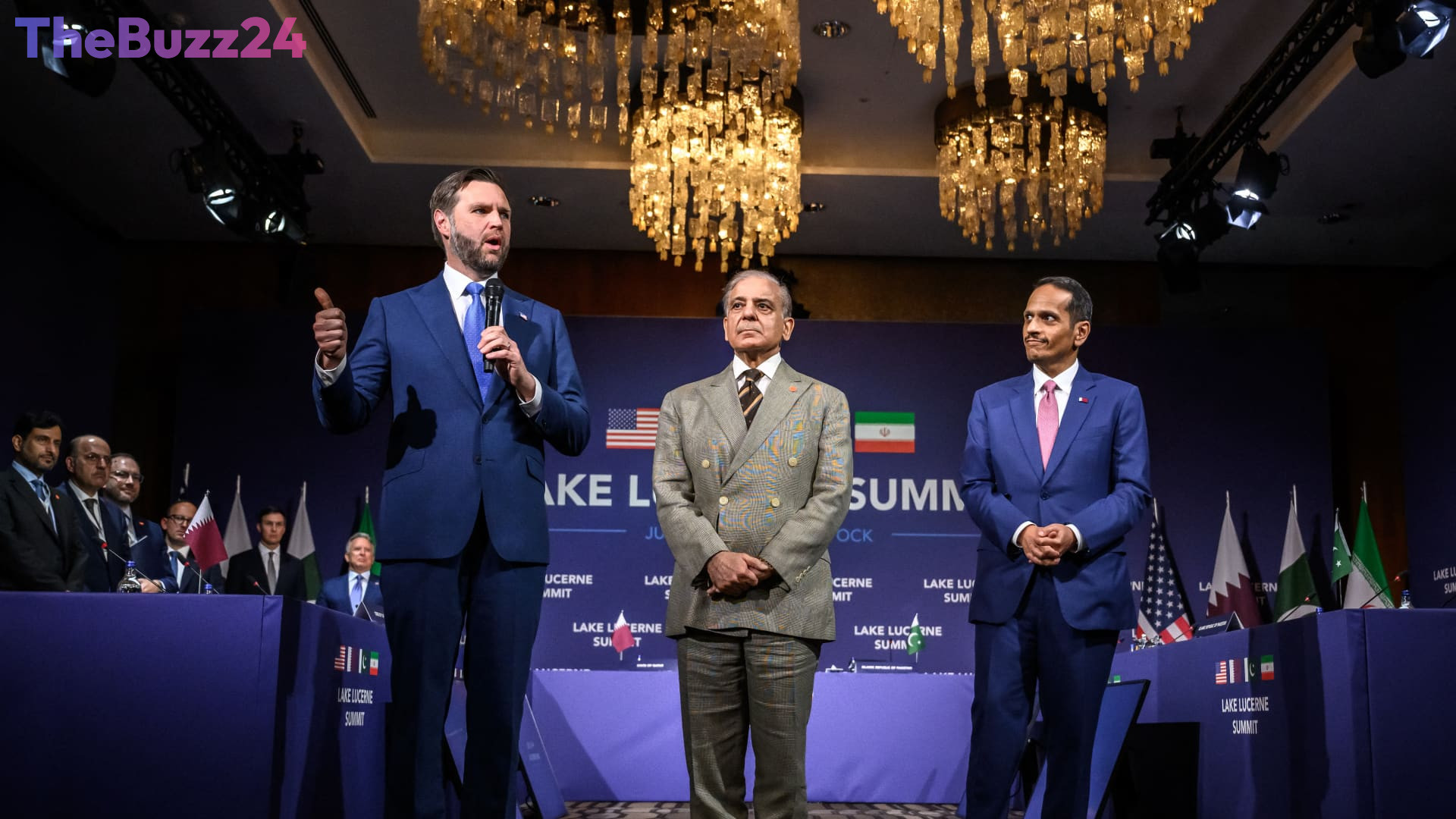
The high-stakes negotiations took place at the Bürgenstock resort, facilitated by Qatari mediators. The discussions were framed by a memorandum of understanding reached the previous week, which aimed to extend a fragile ceasefire for an additional 60 days and crucially, reopen the Strait of Hormuz, a critical artery for global energy shipments. The agreement also stipulated an end to all hostilities, including the ongoing conflict in Lebanon between Israel and Iranian-backed Hezbollah.
However, Iran cited the U.S.’s alleged failure to ensure a halt to fighting in Lebanon as grounds for its decision to once again restrict maritime traffic through the Strait of Hormuz. Consequently, Tehran indicated that substantive issues, such as its nuclear program, would not be on the agenda for Sunday’s talks. President Trump, via a social media post, directly addressed the situation, demanding that Iran cease its proxies’ activities in Lebanon, threatening a significantly harsher response if hostilities persisted.
Despite the escalating rhetoric from President Trump, Vice President Vance sought to project an image of progress during the Swiss summit. He downplayed the impact of the violence in Lebanon, suggesting that advancements were being made toward de-escalating the conflict there. Vance conveyed that President Trump had expressed a desire to “turn over a new leaf” in the relationship between the United States and Iran. While a joint photo opportunity did not materialize, U.S. diplomats later indicated that progress had been made on maintaining the open passage through the Strait of Hormuz and enforcing the ceasefire in Lebanon, alongside discussions on the nuclear deal.
Key Takeaways
- U.S. President Trump threatened military action against Iran amid ongoing peace talks.
- Iran announced the closure of the Strait of Hormuz, citing U.S. inaction on the Lebanon conflict.
- Vice President Vance reported progress in peace talks despite escalating tensions and the Strait's closure.
Editor’s Analysis & Impact
The volatile situation highlights the precarious nature of de-escalation efforts between the U.S. and Iran. While diplomatic channels are open, the dual threats of military action and strategic chokepoint closures create significant market uncertainty, particularly for global energy supplies. The Strait of Hormuz’s closure, even temporarily, has historically sent oil prices soaring, impacting economies worldwide. The success of these talks hinges on Iran’s perception of U.S. commitment to regional stability, especially concerning the Lebanon conflict, and the U.S.’s ability to balance deterrence with diplomatic engagement. Future outlook remains uncertain, dependent on de-escalation in Lebanon and adherence to the interim agreement.
Frequently Asked Questions
Q: What is the Strait of Hormuz and why is it important?
A: The Strait of Hormuz is a narrow waterway connecting the Persian Gulf and the Gulf of Oman. It is a critical chokepoint for global oil transportation, with a significant percentage of the world's oil passing through it daily. Its closure can severely disrupt global energy supplies and impact oil prices.
Q: What was the interim peace deal between the U.S. and Iran aiming to achieve?
A: The interim peace deal, based on a memorandum of understanding, aimed to extend a ceasefire for 60 days, reopen the Strait of Hormuz, and end hostilities in regions like Lebanon. It also laid the groundwork for future negotiations on more substantial issues, including Iran's nuclear program in exchange for sanctions relief.
Q: Why did Iran cite the conflict in Lebanon as a reason to close the Strait of Hormuz?
A: Iran views Hezbollah in Lebanon as an ally and claims the U.S. has not done enough to halt Israeli strikes in Lebanon. Iran stated that since the U.S. did not guarantee a ceasefire in Lebanon, it would not adhere to its commitments regarding the Strait of Hormuz and other aspects of the peace agreement.
AI Disclosure: This article is based on verified data and official reports. Our Team and AI have cross-referenced every financial detail with primary sources to ensure total accuracy.
More from this Category