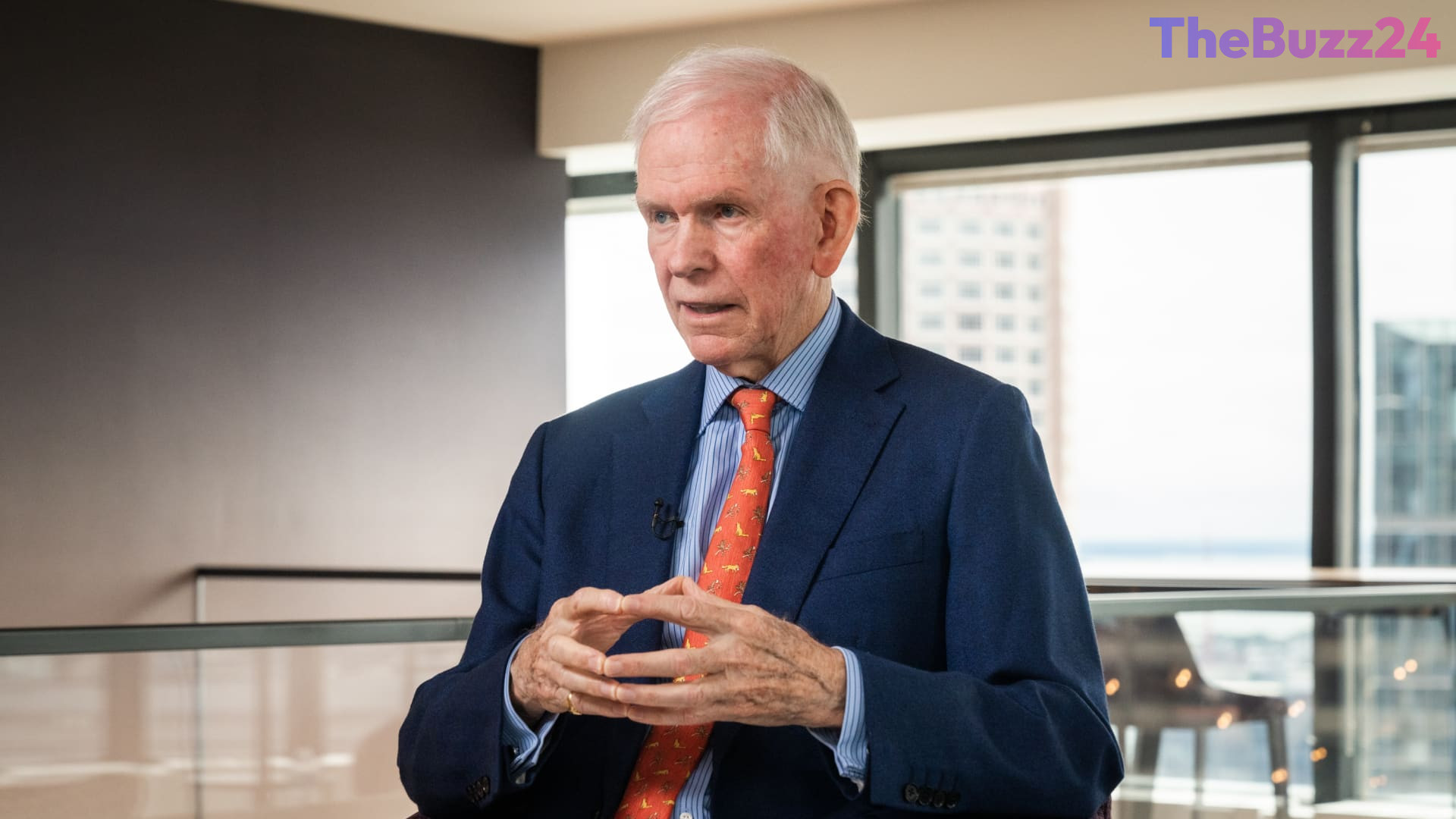
Veteran Investor Jeremy Grantham Declares US Stock Market ‘Most Expensive’ in History Amid AI Boom
Renowned investor Jeremy Grantham has issued a stark warning, asserting that the U.S. stock market currently stands at its most expensive valuation in American history. Grantham attributes this unprecedented level largely to the artificial intelligence boom, drawing parallels to the speculative fervor observed during the tech bubble of 2000.
Grantham, a co-founder of GMO, points to the ‘Buffett indicator’ as a key metric for his assessment. This indicator compares the total market capitalization of U.S. stocks to the nation’s Gross Domestic Product (GDP). The current market capitalization to GDP ratio is estimated at an astounding 235%, meaning the total value of the stock market is more than double the size of the U.S. economy. Legendary investor Warren Buffett himself once cautioned that when this ratio approaches 200%, as it did in 1999 and 2000, investors are “playing with fire.”
While acknowledging the inherent uncertainty in market timing, Grantham suggests that markets could be nearing a peak. He has a notable history of accurately predicting bear markets, having issued similar warnings in the past, including one in March 2024 where he stated that the long-term outlook for U.S. stocks was as poor as almost any other point in history. Despite such warnings, stocks continued to advance.
Grantham also highlighted the valuation of companies like SpaceX as further evidence of extreme market enthusiasm. He believes that its roughly $2 trillion valuation is indicative of the kind of excessive investment seen at market tops. Drawing a historical comparison, he noted that Amazon shares plummeted 92% after the dot-com bubble before the company eventually became a dominant force. Grantham speculates that historians might one day view SpaceX’s public-market debut as a defining peak of this era, suggesting a potential significant correction before its long-term trajectory becomes clear.
Key Takeaways
- Jeremy Grantham believes the U.S. stock market is at its most expensive point in history, primarily driven by the artificial intelligence boom.
- He highlights the 'Buffett indicator,' with market capitalization to GDP at 235%, significantly surpassing levels seen before the 2000 tech bubble.
- Grantham views high valuations in companies like SpaceX as a sign of extreme market exuberance, drawing parallels to Amazon's significant post-dot-com crash.
Editor’s Analysis & Impact
Jeremy Grantham’s latest warning, coming from an investor with a track record of identifying market bubbles, carries significant weight for market participants. His emphasis on the ‘Buffett indicator’ and the comparison to the dot-com era suggests a deep-seated concern about current valuations, particularly in the tech and AI sectors. While market timing remains notoriously difficult, Grantham’s analysis implies that the risk-reward profile for U.S. equities is highly unfavorable. A potential market correction, if it materializes, could have broad implications for investor portfolios, corporate earnings, and the broader economy. The discussion around SpaceX’s valuation further underscores the speculative nature of certain high-growth assets, reminding investors of the potential for sharp declines even in fundamentally strong companies.
Frequently Asked Questions
Q: What is the 'Buffett indicator' and what does it suggest about the current market?
A: The 'Buffett indicator' compares the total market capitalization of a country's stock market to its Gross Domestic Product (GDP). Jeremy Grantham notes it is currently at 235% for the U.S., meaning the stock market's value is more than double the economy's size. Historically, Warren Buffett has warned that levels approaching 200% indicate significant overvaluation and potential risk.
Q: Why does Jeremy Grantham believe the market is currently overvalued?
A: Grantham attributes the market's high valuation primarily to the artificial intelligence boom, which he sees as fueling excessive investment and speculation. He also points to the historically high 'Buffett indicator' ratio and the valuations of specific companies like SpaceX as evidence of market exuberance reminiscent of past bubbles.
Q: What is the significance of SpaceX's valuation in Grantham's analysis?
A: Grantham views SpaceX's roughly $2 trillion valuation as a prime example of the extreme market enthusiasm characteristic of a market peak. He draws a parallel to Amazon's 92% decline after the dot-com bubble, suggesting that even fundamentally strong companies can experience significant corrections when valuations become detached from reality.
AI Disclosure: This article is based on verified data and official reports. Our Team and AI have cross-referenced every financial detail with primary sources to ensure total accuracy.
More from this Category