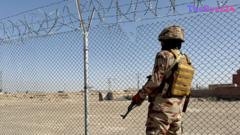
Escalating Border Tensions: Deadly Strikes Leave Dozens Dead in Afghanistan
A significant escalation in regional hostilities occurred on Sunday as Pakistan launched a series of airstrikes and ground operations into Afghan provinces situated along the shared border. The military action has resulted in a high number of casualties, with Afghan Taliban officials reporting at least 36 civilian deaths, including women and children, and over 160 individuals wounded. The Taliban government has strongly condemned the operation, labeling the strikes as a criminal act against their sovereignty.
In contrast, Pakistani officials maintain that the military campaign was a precise response to recent terrorist activity. Information Minister Attaullah Tarar stated that the strikes successfully neutralized 29 militants, asserting that the targets were specific hideouts used by groups responsible for cross-border violence. Pakistan has consistently alleged that Afghanistan provides a safe haven for insurgent factions, an accusation that the Taliban leadership continues to deny.
The latest surge in violence follows a suicide attack on a Pakistani paramilitary headquarters in Karachi, which resulted in the deaths of three Sindh Rangers. The militant group Jamaat-ul-Ahrar claimed responsibility for that assault, further straining the already fragile relationship between the two nations. Despite previous attempts at internationally-mediated ceasefires, the border region remains a volatile flashpoint, with intermittent clashes continuing to undermine regional stability and resulting in significant loss of life on both sides.
Key Takeaways
- Pakistan launched airstrikes and ground operations into Afghanistan, resulting in dozens of reported civilian and militant casualties.
- The military action follows a deadly suicide attack on a Pakistani paramilitary base in Karachi, claimed by the militant group Jamaat-ul-Ahrar.
- Tensions remain high as both nations trade accusations regarding cross-border terrorism and the targeting of civilian populations.
Editor’s Analysis & Impact
The ongoing conflict between Pakistan and Afghanistan represents a critical failure in regional security diplomacy. The collapse of previous ceasefire agreements suggests that neither side currently possesses the political will or the diplomatic framework to address the root causes of cross-border militancy. From a market and geopolitical perspective, this instability threatens to disrupt trade corridors and regional infrastructure projects, potentially isolating the area from international investment. The recurring nature of these strikes indicates that the border region will remain a high-risk zone for the foreseeable future. Unless a sustainable, third-party mediation process is established, the cycle of retaliation is likely to intensify, further destabilizing the South Asian security landscape and complicating the Taliban’s efforts to gain international recognition.
Frequently Asked Questions
Q: Why did Pakistan launch strikes into Afghanistan?
A: Pakistan claims the strikes were targeted operations against militant hideouts responsible for recent terrorist attacks, including a suicide bombing at a paramilitary base in Karachi.
Q: What is the current status of the relationship between the two countries?
A: The relationship is highly volatile, characterized by mutual accusations of harboring terrorists and unprovoked military aggression, with previous ceasefire agreements having failed to hold.
AI Disclosure: This article is based on verified data and official reports. Our Team and AI have cross-referenced every financial detail with primary sources to ensure total accuracy.
More from this Category