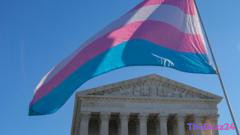
US Supreme Court Upholds State Restrictions on Transgender Athletes in Female Sports
The United States Supreme Court has issued a landmark ruling upholding state-level bans that prevent transgender women from competing in female sports at public schools and universities. The decision addresses legal challenges originating from Idaho and West Virginia, where state laws mandate that athletic participation align with an individual’s biological sex recorded at birth. This ruling solidifies a growing national trend, as more than two dozen states have enacted similar restrictions since Idaho pioneered the legislation in 2020.
In a unanimous consensus, all nine Supreme Court justices determined that these state bans do not violate Title IX, the federal civil rights law designed to prevent sex-based discrimination in education. However, the court split along ideological lines regarding the Constitution’s 14th Amendment, which guarantees equal protection under the law. The six conservative justices ruled that the bans are constitutional, while the three liberal justices dissented. Writing for the majority, Justice Brett Kavanaugh stated that neither the Constitution nor Title IX mandates a sweeping restructuring of female athletics. Conversely, Justice Sonia Sotomayor argued in her dissent that the ruling applies a weakened interpretation of equal protection.
The legal battle began when Lindsay Hecox, a transgender long-distance runner in Idaho, challenged her state’s law shortly after its passage. While lower courts initially blocked the ban, the Supreme Court’s decision establishes a definitive legal precedent. Proponents of the restrictions, including West Virginia Attorney General JB McCuskey, hailed the decision as a victory for fairness and safety in women’s sports. Meanwhile, advocacy groups like the Human Rights Campaign condemned the ruling, stating it unfairly marginalizes transgender student-athletes.
The ruling carries significant implications for the broader athletic landscape. Following the decision, the NCAA, the governing body for US college sports, enacted a ban on transgender women competing in female divisions, aligning with similar policies implemented by international bodies like the International Olympic Committee (IOC). Supporters point to scientific consensus regarding biological advantages in strength and power, while opponents argue that such bans lack a definitive scientific consensus and cause psychological harm to transgender youth.
Key Takeaways
- The US Supreme Court ruled 9-0 that state bans on transgender women in female sports do not violate Title IX.
- The court split 6-3 along ideological lines on the constitutional question, deciding the bans do not violate the 14th Amendment's Equal Protection Clause.
- The ruling impacts over two dozen states with existing bans and has prompted major athletic organizations, including the NCAA, to align their policies accordingly.
Editor’s Analysis & Impact
This Supreme Court ruling marks a decisive turning point in the ongoing cultural and legal debate surrounding athletic fairness and gender identity. By validating state-level restrictions, the Court has effectively cleared the path for more conservative-leaning states to implement similar bans without fear of federal constitutional blocks. The decision also provides legal cover for governing bodies like the NCAA and various high school athletic associations to enforce stricter eligibility criteria based on biological sex. While proponents view this as a crucial victory for safeguarding the integrity of female sports, the ruling is likely to deepen political polarization. It will also intensify pressure on international sports federations to standardize their policies, potentially leading to a highly fragmented landscape where athletic eligibility varies dramatically by jurisdiction and competitive level.
Frequently Asked Questions
Q: What was the core legal issue decided by the Supreme Court?
A: The Court evaluated whether state laws banning transgender women from female sports violated Title IX (the federal law prohibiting sex discrimination in education) or the 14th Amendment's Equal Protection Clause. The Court unanimously ruled that Title IX was not violated, and a 6-3 majority ruled the bans are constitutional.
Q: How many states have enacted bans on transgender athletes?
A: Since Idaho passed the first such law in 2020, more than two dozen US states have enacted similar restrictions requiring athletes to compete based on their sex assigned at birth.
Q: How have major sports organizations responded to this ruling?
A: Following the legal precedent, the NCAA implemented bans on transgender women competing in female sports categories, aligning with restrictions previously set by international bodies like the International Olympic Committee (IOC).
AI Disclosure: This article is based on verified data and official reports. Our Team and AI have cross-referenced every financial detail with primary sources to ensure total accuracy.
More from this Category