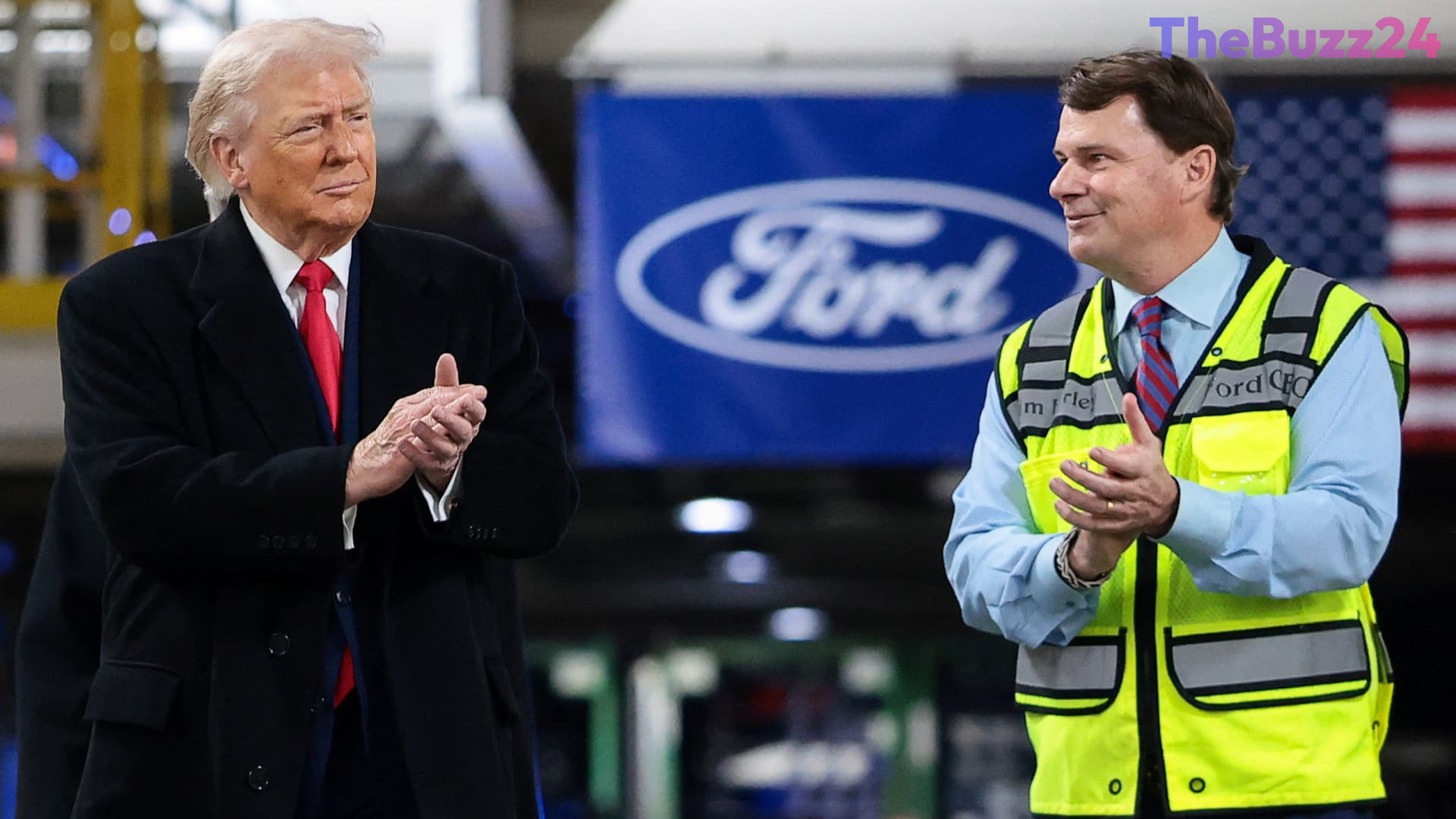
Ford CEO Calls for Trade Policy Overhaul to Favor Domestic Manufacturing
As discussions regarding the USMCA trade agreement resume, Ford Motor Company CEO Jim Farley is advocating for a significant shift in how the United States approaches automotive trade. Farley argues that the current framework should be restructured to provide a competitive advantage to manufacturers that prioritize domestic production, while imposing stricter measures on companies that rely heavily on vehicle imports from overseas markets.
Ford currently maintains the highest volume of U.S. vehicle assembly, producing over 2 million units domestically last year. In contrast, major competitors like General Motors and Toyota continue to import a substantial percentage of their U.S. sales—41% and 47% respectively—often leveraging lower labor costs in countries like Japan and South Korea. Farley contends that the trade deal must evolve to reward the high levels of domestic investment and union labor utilization that Ford maintains, rather than allowing importers to compete on an equal footing.
This push for policy change arrives at a precarious time for the automotive sector, as the current administration moves away from a long-term trilateral pact in favor of annual reviews. While industry trade groups are urging for stability to protect investments and jobs, Ford’s leadership is signaling that the status quo is insufficient. The debate highlights a growing tension between the need for predictable trade environments and the desire to protect domestic manufacturing bases from global competitors with lower cost structures.
Key Takeaways
- Ford CEO Jim Farley is pushing for trade policies that penalize heavy reliance on vehicle imports and reward domestic manufacturing.
- Data shows that while Ford produces the majority of its vehicles in the U.S., competitors like Toyota and GM import nearly half of their domestic sales.
- The automotive industry is facing uncertainty as the USMCA shifts toward annual reviews, prompting concerns about potential impacts on future investment and job security.
Editor’s Analysis & Impact
The stance taken by Ford’s leadership reflects a broader protectionist trend within the U.S. automotive industry, aimed at countering the cost advantages held by foreign manufacturers. By framing the issue as a ‘level playing field,’ Ford is attempting to influence trade policy to favor its specific business model, which relies heavily on domestic assembly and unionized labor. If successful, such policies could force competitors to accelerate their domestic production timelines or face significant financial penalties. However, the industry at large remains wary of the volatility introduced by the shift to annual trade reviews. The long-term implication is a potential fragmentation of the North American supply chain, as automakers may be forced to choose between maintaining global efficiency or aligning with increasingly localized, protectionist trade mandates.
Frequently Asked Questions
Q: Why is Ford advocating for changes to the USMCA?
A: Ford believes the current trade agreement does not sufficiently reward companies that manufacture the majority of their vehicles domestically, putting them at a disadvantage against competitors that rely on cheaper imports.
Q: What is the current status of the USMCA trade deal?
A: The administration has opted to move away from a long-term trilateral pact, instead implementing annual reviews of the treaty, which has created uncertainty regarding future trade stability.
AI Disclosure: This article is based on verified data and official reports. Our Team and AI have cross-referenced every financial detail with primary sources to ensure total accuracy.
More from this Category