Miraculous Rescue in Venezuela: Security Guard Pulled Alive After Eight Days Under Earthquake Rubble
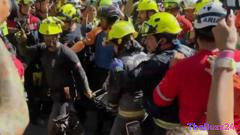
In a stunning testament to human survival and international cooperation, rescue workers in Venezuela have successfully pulled a security guard alive from the ruins of a collapsed building, eight days after devastating twin earthquakes struck the nation. Hernán Gil was freed from beneath an estimated 140 tonnes of concrete and debris, sparking emotional celebrations among the rescue crews who had been working tirelessly to reach him.
The rescue operation was a grueling race against time. Emergency teams first located Gil on Saturday, but it took more than 100 hours of delicate, highly dangerous excavation to safely extract him. The collapse was triggered by the powerful June 24 earthquakes, which have left a trail of destruction across Venezuela, claiming nearly 2,300 lives and leaving tens of thousands of people still unaccounted for.
The successful extraction of Gil was made possible through a massive collaborative effort. Specialist search and rescue teams from Venezuela were joined by international experts from Chile, Costa Rica, El Salvador, Mexico, Portugal, and the United States. Working in shifts around the clock, these teams navigated unstable debris to pull off what many are calling a modern miracle amid an ongoing national tragedy.
Key Takeaways
- Security guard Hernán Gil was rescued alive after spending eight days trapped under 140 tonnes of rubble following twin earthquakes in Venezuela.
- The rescue was a massive international effort involving teams from Venezuela, the U.S., Chile, Costa Rica, El Salvador, Mexico, and Portugal.
- The June 24 earthquakes have resulted in nearly 2,300 confirmed deaths, with tens of thousands of people still reported missing.
Editor’s Analysis & Impact
The miraculous rescue of Hernán Gil highlights both the extraordinary resilience of the human spirit and the critical importance of international disaster response frameworks. When local resources are overwhelmed by catastrophic events like Venezuela’s twin earthquakes, the rapid deployment of global search-and-rescue teams becomes a deciding factor between life and death. This event underscores the need for standardized training and seamless communication protocols among international rescue agencies. Moving forward, the focus must shift from immediate rescue operations to long-term humanitarian aid and rebuilding infrastructure. The high death toll and vast number of missing persons point to severe vulnerabilities in regional building codes and emergency preparedness, signaling an urgent need for seismic-resistant urban planning in earthquake-prone zones across Latin America.
Frequently Asked Questions
Q: Who was rescued and how long was he trapped?
A: Hernán Gil, a security guard, was rescued alive after being trapped for eight days (including over 100 hours after he was first located by rescue teams) under 140 tonnes of rubble.
Q: Which countries participated in the rescue operation?
A: The rescue was a collaborative international effort featuring specialist teams from Venezuela, Chile, Costa Rica, El Salvador, Mexico, Portugal, and the United States.
Q: What is the current casualty toll from the Venezuela earthquakes?
A: The twin earthquakes, which struck on June 24, have claimed nearly 2,300 lives, with tens of thousands of people still reported missing.
AI Disclosure: This article is based on verified data and official reports. Our Team and AI have cross-referenced every financial detail with primary sources to ensure total accuracy.
More from this Category