Keiko Fujimori Declared Winner of Peru’s Presidential Election Amid Deep Political Division
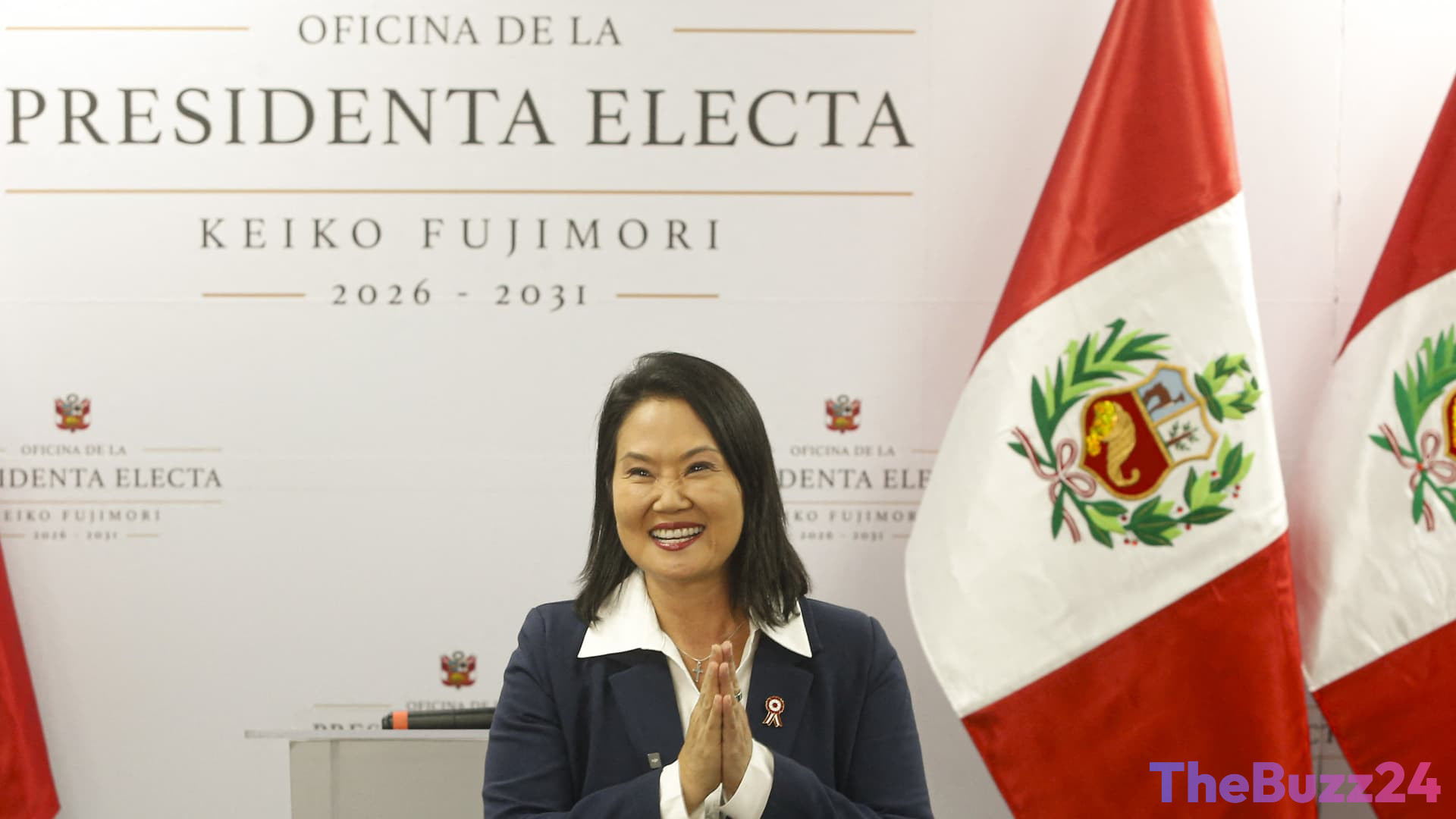
Peru’s electoral office has officially declared conservative candidate Keiko Fujimori the winner of the country’s presidential race following weeks of intense protests, fraud allegations, and meticulous ballot reviews. Fujimori secured victory in the June 7 runoff with 50.135% of the vote, narrowly defeating her leftist opponent, congressman Roberto Sanchez, who garnered 49.865%. The razor-thin margin of approximately 50,000 votes out of 18 million cast highlights the deep political polarization gripping the South American nation.
Fujimori’s triumph marks a significant political comeback after her narrow defeat in 2021 to Pedro Castillo, who was later impeached and jailed. While Sanchez, widely regarded as Castillo’s political successor, has refused to recognize the election results and alleged fraud without presenting evidence, Fujimori has called for unity. Speaking from her party headquarters, she pledged to build on successful past initiatives and usher in a new era of institutional trust, dialogue, and stability.
The election outcome has been welcomed by financial markets and international observers. Rating agency Moody’s indicated that Fujimori’s presidency is expected to maintain policy continuity, boost investor confidence, and potentially unlock stalled mining projects in Peru, the world’s third-largest copper producer. Regional conservative leaders, including Argentina’s Javier Milei and El Salvador’s Nayib Bukele, alongside U.S. Secretary of State Marco Rubio, have extended their congratulations, signaling a continued rightward shift in Latin American politics.
When Fujimori takes office on July 28, she will become Peru’s 10th president since 2016, inheriting a highly fragmented Congress and a nation divided geographically between the supportive capital of Lima and the rural regions that backed Sanchez. As the daughter of the late controversial President Alberto Fujimori, her administration faces the daunting task of bridging these deep socio-economic divides and establishing long-term governance in a country historically prone to political volatility.
Key Takeaways
- Keiko Fujimori won the Peruvian presidency by a razor-thin margin of 50.135% to 49.865% against leftist candidate Roberto Sanchez.
- Financial markets reacted positively, with rating agencies noting that the victory could restore investor confidence and revive delayed copper mining projects.
- Fujimori will become Peru's 10th president since 2016, facing the challenge of leading a deeply polarized nation with a history of political instability.
Editor’s Analysis & Impact
Keiko Fujimori’s narrow victory represents a critical turning point for Peru’s economic trajectory and the broader Latin American political landscape. By securing the presidency, Fujimori aligns Peru with the region’s growing conservative bloc, reassuring international investors who feared the radical economic shifts proposed by her leftist opponent. The immediate positive response from credit rating agencies highlights the market’s relief, particularly regarding the potential revival of major copper mining projects that have long been stalled by social unrest and regulatory bottlenecks. However, Fujimori’s path forward is fraught with obstacles. She must govern a deeply fractured nation where rural populations feel marginalized by the Lima-centric political elite. To achieve lasting economic stability, her administration must move beyond political survival and actively address the deep-seated socio-economic inequalities that continue to fuel Peru’s chronic political volatility.
Frequently Asked Questions
Q: Who is Keiko Fujimori and what is her political background?
A: Keiko Fujimori is a conservative Peruvian politician and the daughter of the late former President Alberto Fujimori. She has run for the presidency multiple times and leads the country's primary conservative political force, advocating for market-friendly policies and institutional stability.
Q: Why is this election result significant for Peru's economy?
A: Peru is the world's third-largest copper producer. Fujimori's victory is seen as market-friendly, with analysts predicting it will restore investor confidence, maintain policy continuity, and help unlock major mining projects that were previously stalled due to political uncertainty.
Q: What challenges does the new president face upon taking office?
A: Fujimori faces a deeply polarized electorate, a fragmented Congress, and ongoing opposition from rural regions that supported her rival, Roberto Sanchez. She will also need to navigate the legacy of political instability that has seen Peru cycle through ten presidents since 2016.
AI Disclosure: This article is based on verified data and official reports. Our Team and AI have cross-referenced every financial detail with primary sources to ensure total accuracy.
More from this Category