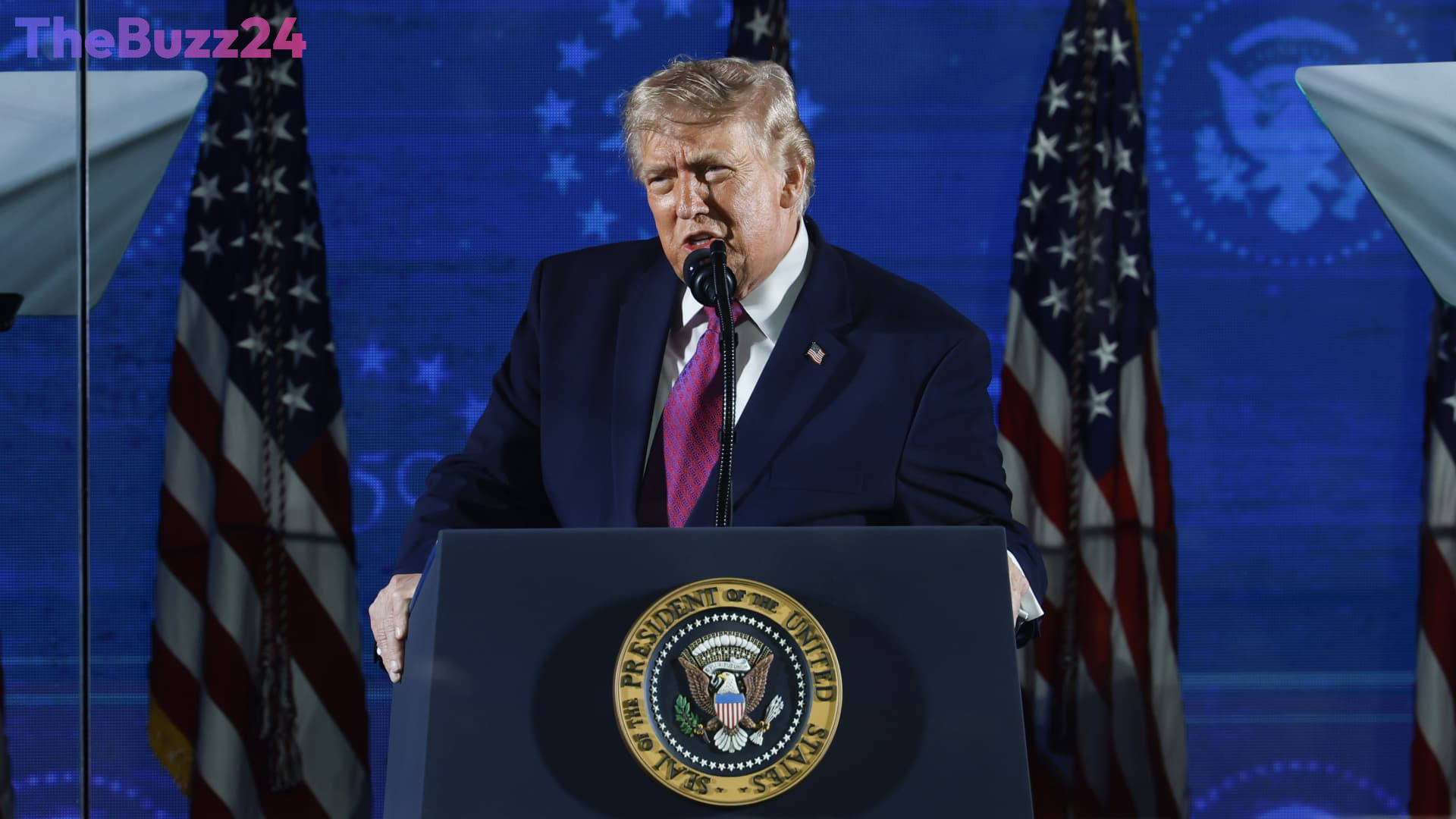
Trump Links Communism to ‘Mortal Threat’ During Divisive 250th Anniversary Speech
President Donald Trump marked the upcoming 250th anniversary of American independence with a speech emphasizing national exceptionalism, but quickly pivoted to a politically charged address warning of communism as a grave danger to the nation. Speaking from the iconic Mount Rushmore, Trump declared, “Communism is a mortal threat to American liberty,” and asserted it posed the greatest danger to the country, even surpassing historical events like World War I, World War II, Pearl Harbor, and 9/11.
This rhetoric, while echoing previous statements by the president, stood out due to its delivery at a national monument honoring past presidents. Unlike the typically unifying and apolitical Independence Day addresses given by former presidents such as Gerald Ford and Ronald Reagan, Trump’s speech drew parallels to the McCarthy era’s Red Scare, a period marked by widespread persecution and blacklisting of alleged communists.
Meanwhile, in New York City, Mayor Zohran Mamdani, identifying as a democratic socialist, offered a contrasting perspective, characterizing America as a nation striving towards its founding ideals. His remarks, though not directly naming the president, seemed to address Trump’s divisive rhetoric by stating that the nation’s foundational principles are robust enough to withstand authoritarianism, provided the country actively pursues them.
The holiday celebrations were also significantly impacted by an intense heatwave affecting much of the eastern United States. Many events, including Philadelphia’s Salute to Independence parade and parts of the Great American State Fair in Washington, faced cancellations or adjusted schedules. Despite the extreme weather, some events proceeded, featuring musical performances and fireworks displays, while others, like a planned parade in Washington, were ultimately canceled. The nation’s 250th anniversary is unfolding against a backdrop of both patriotic reflection and deep political polarization, with public sentiment showing a mix of pride and excitement, alongside concerns about the country’s direction.
Key Takeaways
- President Trump delivered a speech linking communism to a 'mortal threat' during the 250th anniversary of American independence.
- The speech, delivered at Mount Rushmore, deviated from traditional apolitical Independence Day addresses by past presidents.
- The holiday celebrations were affected by a severe heatwave and highlighted the current political polarization within the U.S.
Editor’s Analysis & Impact
President Trump’s address at Mount Rushmore, framing communism as an existential threat, underscores the ongoing political polarization in the United States. By invoking historical anxieties and contrasting them with his administration’s vision, Trump aims to galvanize his base and frame the upcoming political landscape. This approach, while resonating with some, diverges sharply from the unifying tone typically associated with national holidays, potentially deepening existing societal divisions. The juxtaposition of patriotic celebrations with heated political rhetoric and the challenges posed by extreme weather events paints a complex picture of America at this significant milestone, highlighting both resilience and deep-seated ideological divides.
Frequently Asked Questions
Q: What historical event did President Trump compare the threat of communism to?
A: President Trump stated that communism was the greatest threat to the country, even surpassing World War I, World War II, Pearl Harbor, and 9/11.
Q: How did the weather impact the 250th anniversary celebrations?
A: A severe heatwave gripped the eastern United States, leading to the cancellation or rescheduling of several events, including parades and fair activities. Officials advised attendees to stay hydrated and seek air-conditioned breaks.
Q: What was the general public sentiment regarding the 250th anniversary?
A: A survey indicated that about 4 in 10 U.S. adults felt 'proud' about the anniversary, while roughly 3 in 10 felt 'excited.' However, some individuals expressed concerns about politics and healthcare, reflecting a mix of emotions and priorities.
AI Disclosure: This article is based on verified data and official reports. Our Team and AI have cross-referenced every financial detail with primary sources to ensure total accuracy.
More from this Category