Sovereign AI: How France and India are Bypassing Bureaucracy to Court Tech Giants
As the global race for artificial intelligence dominance intensifies, world leaders are shifting from traditional policy-making to direct, personal diplomacy. French President Emmanuel Macron and Indian Prime Minister Narendra Modi are leading this charge, actively courting top technology executives to secure multi-billion-dollar investments in AI infrastructure, data centers, and semiconductor manufacturing. This hands-on approach highlights a growing urgency among mid-tier tech powers to avoid being left behind by the United States and China.
In Europe, France is leveraging its robust nuclear energy grid to position itself as a premier hub for power-hungry AI data centers. President Macron recently engaged in direct negotiations with SoftBank founder Masayoshi Son, securing a commitment to build 3.1 gigawatts of AI data center capacity in France by 2031. This project is part of a broader 75-billion-euro initiative. Macron has also utilized high-profile diplomatic events, such as hosting a working lunch during the G7 summit, to bring together leaders from OpenAI, Anthropic, Google DeepMind, and European AI startups like Mistral, fostering a collaborative ecosystem directly supported by the French state.
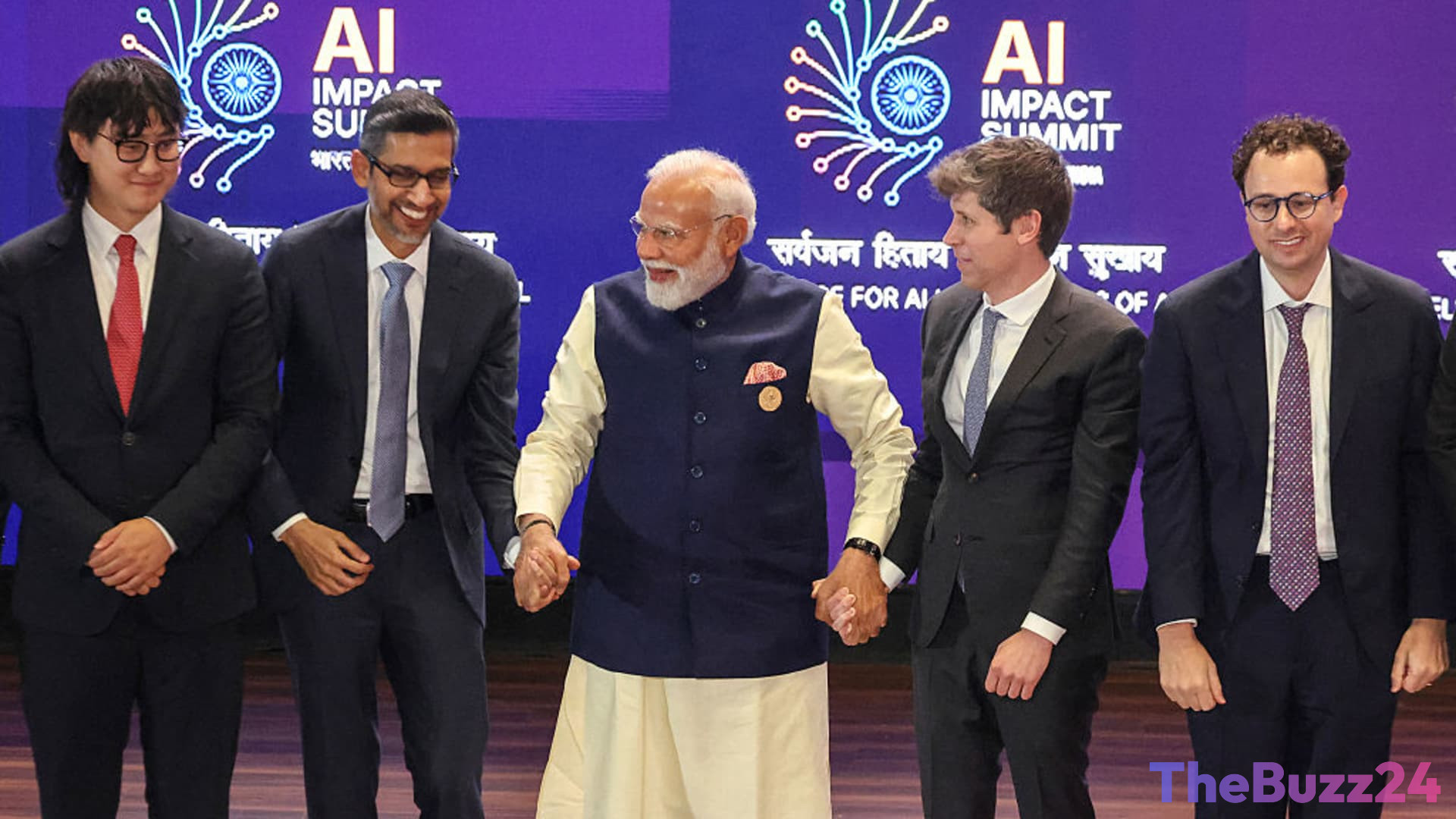
Meanwhile, India is executing an aggressive strategy to transition from an AI consumer to a global hardware and software hub. Prime Minister Modi has personally secured massive commitments from American tech giants, including a historic $48 billion investment from Amazon—with $21 billion dedicated to AI and cloud infrastructure. Additionally, Google is establishing its largest AI hub outside the U.S. in India with a $15 billion commitment, while Microsoft is deploying its largest Asian investment to date in the country. To sweeten the deal, the Indian government is offering long-term tax incentives to hyperscalers and actively supporting domestic semiconductor manufacturing through partnerships between local firms like Tata Electronics and global suppliers like ASML and Intel.
Both nations face distinct challenges that make these personal diplomatic efforts essential. For India, establishing domestic chip fabrication and sovereign AI models is critical to reducing vulnerability to foreign export controls and capturing a share of the global AI market. For France, securing energy-intensive infrastructure is key to leading the European Union’s technological sovereignty. By bypassing traditional bureaucratic channels, both Macron and Modi are demonstrating that personal statecraft is now a vital tool in the global technology landscape.
Key Takeaways
- French President Emmanuel Macron and Indian Prime Minister Narendra Modi are bypassing traditional bureaucracy to personally negotiate multi-billion-dollar AI deals with global tech CEOs.
- France is leveraging its stable nuclear power grid to attract energy-intensive data centers, securing a major 3.1 GW commitment from SoftBank.
- India is offering long-term tax breaks and partnering with global firms like ASML and Intel to build domestic semiconductor fabrication capabilities and reduce reliance on foreign hardware.
Editor’s Analysis & Impact
The aggressive courtship of tech conglomerates by France and India signals a shift toward ‘sovereign AI,’ where nations view technological infrastructure as critical to national security and economic survival. By offering tailored incentives—such as France’s nuclear energy guarantees and India’s long-term tax breaks—governments are actively de-risking massive capital expenditures for tech firms. This trend will likely intensify competition among secondary tech powers, potentially leading to a subsidy war similar to the global semiconductor push. For tech giants, this geopolitical wooing provides unprecedented leverage, allowing them to secure favorable regulatory environments and subsidized resources. However, it also binds these corporations closer to national agendas, complicating their global operations amid rising geopolitical tensions.
Frequently Asked Questions
Q: Why are France and India focusing so heavily on personal diplomacy with tech CEOs?
A: Both nations want to fast-track their AI capabilities to avoid falling behind the U.S. and China. Personal outreach by leaders like Macron and Modi helps bypass bureaucratic red tape, offering direct state assurances and customized incentives to secure massive infrastructure investments.
Q: What advantages does France offer to AI developers?
A: France's primary advantage is its abundant and stable nuclear energy capacity, which is highly attractive to tech companies looking to power energy-intensive AI data centers sustainably.
Q: How is India addressing its lack of domestic semiconductor manufacturing?
A: India is offering long-term tax breaks to attract global hyperscalers and is fostering partnerships between domestic giants like Tata Electronics and international semiconductor leaders like ASML and Intel to build local fabrication facilities.
AI Disclosure: This article is based on verified data and official reports. Our Team and AI have cross-referenced every financial detail with primary sources to ensure total accuracy.
More from this Category