A New Era in Tehran: How Iran’s Post-War Leadership is Reshaping the Middle East
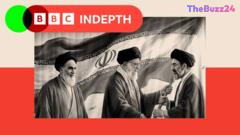
Following the conclusion of a fragile ceasefire and the death of long-time supreme leader Ayatollah Ali Khamenei, Iran is undergoing a profound political transformation. The recent conflict, marked by devastating joint US-Israeli airstrikes, has effectively dismantled the old guard, clearing the path for a younger, more pragmatic generation of leaders. This new administration, heavily influenced by the Iranian Revolutionary Guard Corps (IRGC), is signaling a departure from the cautious ‘no war, no peace’ strategy that defined the previous era.
Under the leadership of the new supreme leader, Mojtaba Khamenei, and key figures like Mohammad Bagher Ghalibaf and Ahmad Vahidi, the Iranian state is adopting a more aggressive and decisive posture. While the country remains under significant economic pressure, the new leadership has demonstrated a willingness to engage in direct military confrontation, including strikes on US bases and the strategic closure of the Strait of Hormuz. This shift has forced regional neighbors to re-evaluate their reliance on the US security umbrella, with many Gulf states now quietly seeking to mend diplomatic ties with Tehran to ensure their own stability.
Domestically, the regime faces the monumental task of rebuilding its legitimacy after a period of intense internal unrest and external bombardment. While there are signs of social liberalization—such as the relaxed enforcement of certain dress codes—the government remains focused on state survival. As negotiations continue regarding sanctions relief and a potential $300 billion reconstruction plan, the new leadership is attempting to forge a fresh social contract. Whether this ‘post-revolutionary’ pragmatism can lead to long-term stability or merely serves as a temporary tactical pivot remains the central question for the future of the Middle East.
Key Takeaways
- A new generation of leadership, deeply connected to the IRGC, has replaced the old guard in Iran following the recent war.
- The regime has shifted from a cautious diplomatic strategy to a more aggressive, pragmatic approach to both regional conflict and international negotiations.
- Gulf nations are increasingly questioning the reliability of the US security umbrella, leading to a regional trend of seeking diplomatic reconciliation with Tehran.
Editor’s Analysis & Impact
The transition in Iran represents a critical ‘plastic moment’ in Middle Eastern geopolitics. By moving away from the ideological rigidity of the past, the new leadership is signaling a shift toward state-centric realism. This evolution poses a complex challenge for Western policymakers: while the new regime is more aggressive in its military capabilities, it is also more transactional, potentially opening doors for long-term diplomatic breakthroughs that were previously impossible. However, the reliance on the IRGC for internal control suggests that while the regime may become more economically pragmatic, it is unlikely to embrace democratic reforms. The future stability of the region hinges on whether the current ceasefire can evolve into a durable framework for security, or if the deep-seated mistrust between Iran, the US, and Gulf states will lead to a resurgence of hostilities once the current economic incentives are exhausted.
Frequently Asked Questions
Q: How does the new Iranian leadership differ from the previous administration?
A: The new leadership is significantly younger and more closely aligned with the IRGC. Unlike the previous 'no war, no peace' strategy, the current administration is characterized by a more aggressive, pragmatic, and decisive approach to both military and diplomatic affairs.
Q: Are Gulf states moving away from their security alliances with the US?
A: While Gulf states are not abandoning their security arrangements with the US, they are increasingly hedging their bets. Due to the perceived vulnerability of the US security umbrella during the recent conflict, many are actively seeking to repair relations with Iran to ensure regional stability.
AI Disclosure: This article is based on verified data and official reports. Our Team and AI have cross-referenced every financial detail with primary sources to ensure total accuracy.
More from this Category