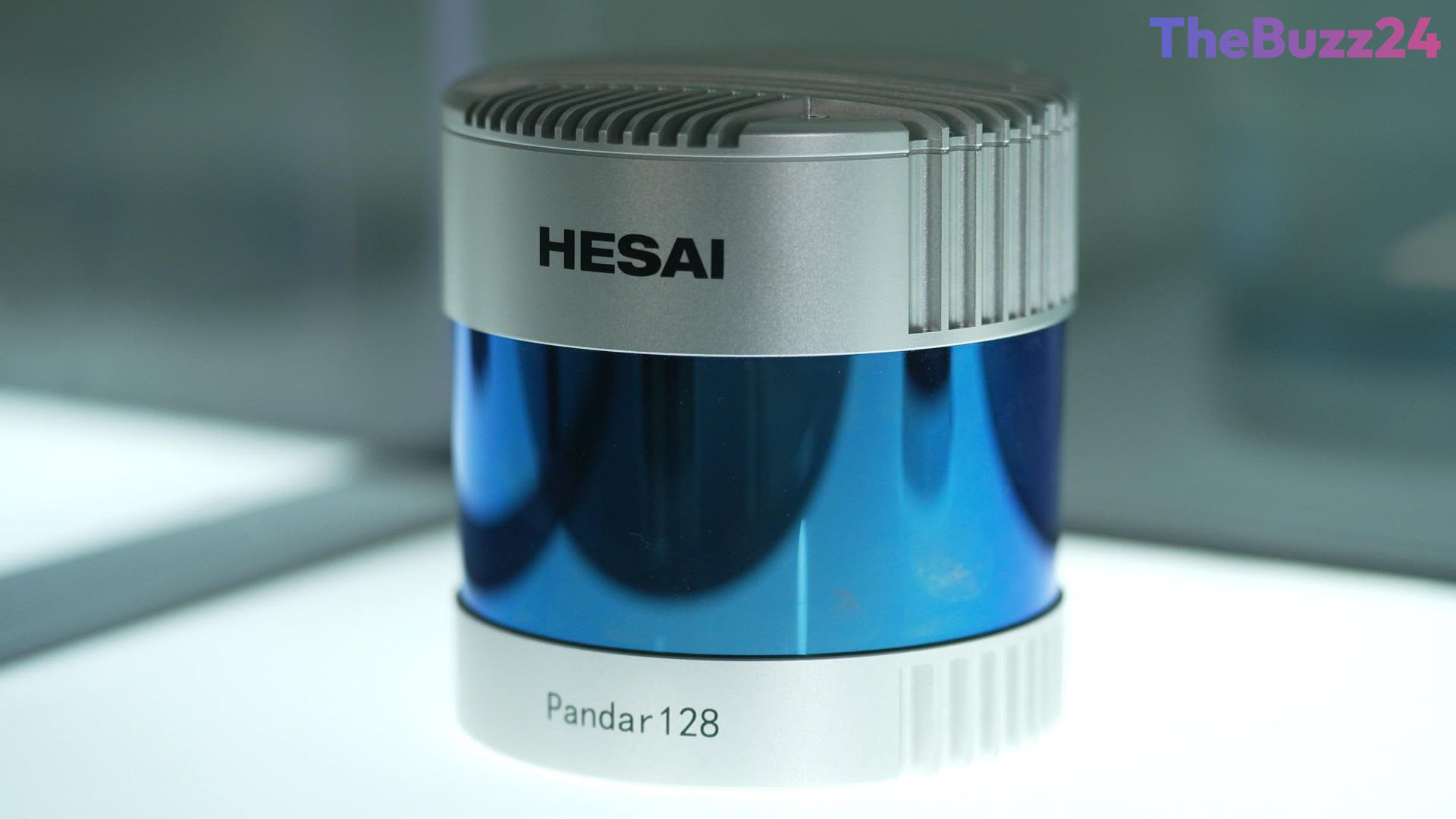
Despite U.S. Blacklist, Chinese Lidar Giant Hesai Deepens Roots in Autonomous Tech, Sparking Security Fears
Hesai Technology, a Shanghai-based manufacturer of critical lidar sensors for robots and self-driving vehicles, was designated a Chinese military entity and blacklisted by the U.S. Department of Defense in 2024. Despite this significant national security designation, the company’s technology continues to see widespread adoption across the United States, including through a prominent partnership with chipmaker Nvidia, which aims to power the next generation of autonomous vehicles.
Government officials and security experts have voiced serious concerns that the proliferation of Chinese-made lidar could expose emerging critical infrastructure to cyberthreats. Lidar, which stands for “light detection and ranging,” creates detailed 3D maps of surroundings using laser pulses. Experts warn that these sensors could be compromised via malware, potentially allowing for data exfiltration or the manipulation of sensor data to create phantom objects or hide real ones, with potentially catastrophic consequences for autonomous systems. This echoes past U.S. efforts to “rip and replace” technology from other blacklisted Chinese firms like Huawei, DJI, and TP-Link due to similar national security risks. Hesai’s co-founder and CEO, David Li, vehemently denies these allegations, asserting that his company does not work for the Chinese military and that its products are secure, lacking memory capacity to store data and offering open-source firmware for transparency.
Despite Hesai’s assurances, the company’s market dominance, partly attributed to its significantly lower production costs compared to Western competitors, has fueled its expansion. While Hesai attributes its cost advantage to innovation and manufacturing scale, critics like Craig Singleton of the Foundation for Defense of Democracies suggest these lower prices are enabled by substantial, unfair Chinese government subsidies. Hesai’s SEC filings do acknowledge receiving various government incentives, though the company maintains these are standard and broadly available. The U.S. Department of Defense’s designation also cited Hesai’s headquarters location and supplier relationships with state-owned defense conglomerates like China Electronics Technology Group Corporation (CETC) as evidence of ties to China’s military-civil fusion strategy, claims Hesai disputes.
The ongoing integration of Hesai’s technology into diverse U.S. applications, from robotaxis like Amazon’s Zoox to airport security systems at JFK, highlights a growing tension between technological advancement, economic incentives, and national security. U.S. lawmakers, including Rep. John Moolenaar, chairman of the House Select Committee on the Chinese Communist Party, are actively raising alarms and proposing legislation to phase out Chinese-made lidar technology. They argue that the Chinese Communist Party could exploit this strategically important industry, despite Hesai’s claims that its sensors cannot transmit data. The company’s unsuccessful lawsuit against the Pentagon’s blacklist designation in 2025, which it is now appealing, underscores the persistent legal and political challenges surrounding its operations in the U.S.
Key Takeaways
- Hesai Technology, a leading Chinese lidar manufacturer, has been blacklisted by the U.S. Department of Defense as a Chinese military entity, yet its technology continues to be widely adopted in U.S. autonomous systems, including through partnerships with major tech firms like Nvidia.
- U.S. officials and security experts warn that Chinese-made lidar sensors pose significant cybersecurity risks, potentially allowing for data exploitation or system disruption, drawing parallels to previous "rip and replace" scenarios with other Chinese tech companies.
- Hesai's CEO denies national security threats, citing lack of data storage and open-source practices, while U.S. lawmakers are pushing for legislation to phase out Chinese lidar, highlighting a growing tension between technological integration, economic incentives, and national security concerns.
Editor’s Analysis & Impact
The ongoing controversy surrounding Hesai Technology introduces significant uncertainty into the burgeoning autonomous vehicle and robotics industries. Companies deeply integrated with Hesai’s cost-effective lidar solutions, such as Nvidia and various autonomous fleet operators, face a complex dilemma: balance operational efficiency and innovation with escalating national security concerns. This situation could compel a costly re-evaluation of supply chains, potentially fragmenting the market and slowing the pace of technological deployment if a widespread “rip and replace” scenario materializes. Looking ahead, this geopolitical tension is likely to accelerate efforts to develop domestic lidar alternatives in the U.S. and allied nations, driven by strategic imperatives rather than purely market forces. The broader implication is a further bifurcation of the global tech ecosystem, where national security considerations increasingly dictate technological partnerships and market access, reshaping the future of critical infrastructure development.
Frequently Asked Questions
Q: What is lidar and why is it important for autonomous systems?
A: Lidar (Light Detection and Ranging) uses laser pulses to create detailed 3D maps of surroundings, enabling autonomous vehicles and robots to "see" and navigate. It's crucial for perception in self-driving cars, robotics, and other AI applications, providing essential environmental data.
Q: Why has Hesai Technology been designated a national security threat by the U.S.?
A: The U.S. Department of Defense designated Hesai as a Chinese military entity, citing concerns about its potential ties to China's military-civil fusion strategy and the risk that its sensors could be exploited for cyber espionage or to disrupt critical U.S. infrastructure. These concerns are amplified by the company's alleged government subsidies and supplier relationships.
Q: Does the U.S. blacklist prevent companies from using Hesai's technology?
A: Currently, the U.S. Department of Defense blacklist primarily prevents Hesai from securing Pentagon contracts. It does not legally prohibit U.S. commercial companies from integrating Hesai's lidar into their non-military applications, though U.S. lawmakers are actively proposing legislation that would ban or phase out Chinese-made lidar technology.
AI Disclosure: This article is based on verified data and official reports. Our Team and AI have cross-referenced every financial detail with primary sources to ensure total accuracy.
More from this Category