China Achieves Milestone with First Successful Reusable Rocket Landing
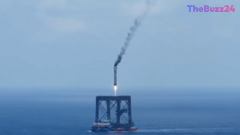
China has reached a significant milestone in its national space program by successfully executing the first vertical landing of a reusable rocket. The Long March 10B vehicle launched from the Hainan province, marking a pivotal shift in the country’s aerospace capabilities. Approximately six minutes after separating from its upper stage, the rocket’s booster performed a controlled descent and was recovered on a floating platform, demonstrating a major technical advancement for the nation.
This achievement positions China as a serious competitor in the global race for cost-effective space travel, an arena previously dominated by private entities like SpaceX and Blue Origin. Historically, rockets have been treated as expendable hardware, with components discarded after a single use. By mastering the recovery and reuse of boosters—the most expensive segment of a launch vehicle—China aims to drastically reduce the financial barriers associated with satellite deployment and deep-space exploration.
The technical approach utilized by the Long March 10B differs slightly from Western counterparts. While vehicles like the Falcon 9 rely on autonomous precision landing on ground pads or drone ships, the Chinese system employs a unique mechanism where landing hooks on the rocket engage with a net secured to a floating platform. Following the successful test, financial markets reacted positively, with major Chinese space-related stocks hitting their daily trading limits as investors signaled confidence in the country’s growing aerospace infrastructure.
Key Takeaways
- China successfully landed a reusable Long March 10B rocket for the first time, marking a major breakthrough for its space program.
- The recovery of the booster was achieved using a unique 'landing hook' system on a floating platform, distinct from the autonomous landing methods used by SpaceX.
- The development is expected to significantly lower the costs of satellite launches and space missions, making China more competitive in the global aerospace market.
Editor’s Analysis & Impact
The successful recovery of the Long March 10B represents a strategic inflection point for China’s space ambitions. By closing the technological gap in reusability, China is effectively lowering the barrier to entry for orbital logistics, which has profound implications for both commercial satellite constellations and national security interests. This development forces a shift in the global market, as the cost-per-kilogram to orbit is a primary driver of the ‘New Space’ economy. Moving forward, we can expect an acceleration in the frequency of Chinese launches, potentially challenging the current market dominance held by established Western players. The ability to iterate on this technology will be the true test, as the industry now shifts focus from proving the concept of reusability to optimizing the turnaround time and reliability of these recovered boosters.
Frequently Asked Questions
Q: How does the Long March 10B landing differ from SpaceX's Falcon 9?
A: Unlike the Falcon 9, which performs an autonomous vertical landing on a pad or drone ship using engine thrust, the Long March 10B uses a specialized hook system to catch a net on a floating platform.
Q: Why is rocket reusability important for space exploration?
A: Reusability allows for the recovery of the most expensive parts of a rocket, significantly reducing the cost of launching satellites and spacecraft by eliminating the need to build a new vehicle for every mission.
AI Disclosure: This article is based on verified data and official reports. Our Team and AI have cross-referenced every financial detail with primary sources to ensure total accuracy.
More from this Category