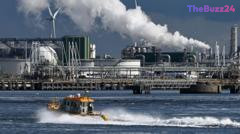
Rotterdam’s Green Dilemma: Europe’s Largest Port Navigates Decarbonization Amidst Legal Scrutiny
The Port of Rotterdam, Europe’s largest freight hub situated at the delta of the Rhine and Meuse, faces escalating pressure to significantly reduce its environmental footprint. This massive industrial complex, home to five refineries including Shell’s largest in Europe and numerous chemical plants, is a critical node for global trade and energy. However, its operations are deeply intertwined with fossil fuels, with research by CE Delft indicating that the fuels flowing through the port are ultimately linked to approximately 600 megatonnes of CO2 annually – a figure far exceeding the emissions of the Netherlands’ largest airport, Schiphol.
This immense carbon output has made Rotterdam a focal point in the global debate over industrial decarbonization. The port’s own industrial cluster contributes about 29 million tonnes of CO2 each year, representing roughly half of the Netherlands’ domestic emissions. In response to this, environmental group Advocates for the Future has initiated a lawsuit against the Port of Rotterdam Authority, asserting that current efforts to phase out fossil-based energy are insufficient and demanding a concrete plan to wind down coal, oil, and gas flows.
While acknowledging the challenge, the Port Authority has outlined its own ambitious strategy to cut direct and purchased energy emissions by 90% between 2019 and 2030. This plan includes developing a hydrogen hub for new fuel testing, investing in onshore power to allow ships to connect to the grid at berth, and supporting alternative fuels like LNG, biofuels, and methanol. Additionally, the port is pursuing Carbon Capture and Storage (CCS) initiatives, such as the Porthos project, to mitigate short-term emissions by storing captured CO2 in depleted gas fields. However, port officials like Oscar van Veen and Mark van Dijk highlight the complexities, including the challenge of influencing international companies whose loyalties lie with foreign headquarters, and the limitations of physical space and power infrastructure for new green developments.
The broader implications of Rotterdam’s transition extend beyond its immediate operations. Experts like Emeritus Professor Harry Geerlings of Erasmus University Rotterdam emphasize the need for a global level playing field to prevent industries from relocating to regions with less stringent environmental regulations. The port’s substantial income remains tied to fossil fuel industries, creating a significant dilemma: how to transition to a sustainable future without jeopardizing its vital role as a logistics hub. Despite the shared long-term goal of net-zero emissions, the disagreement between the port and environmental advocates centers on the speed and radicalness of the necessary changes.
Key Takeaways
- The Port of Rotterdam, Europe's largest freight port, faces intense pressure to decarbonize due to its significant CO2 emissions, linked to approximately 600 megatonnes annually from fossil fuels.
- Environmental group Advocates for the Future has filed a lawsuit demanding a concrete phase-out plan for fossil fuel activities, while the Port Authority is implementing its own strategy focused on hydrogen, onshore power, and carbon capture.
- The port's green transition is complicated by its economic reliance on fossil fuels, the international nature of its industrial clients, and the need for a global regulatory framework to prevent industries from relocating to less stringent regions.
Editor’s Analysis & Impact
The Port of Rotterdam’s struggle to decarbonize exemplifies the immense challenges facing heavy industry and logistics hubs in the global energy transition. This case highlights the tension between economic imperatives and environmental responsibilities, setting a potential precedent for legal accountability of state-owned enterprises in climate action. The push for greener operations will likely accelerate innovation in alternative fuels like hydrogen and advanced carbon capture technologies. However, the risk of ‘carbon leakage’ – industries relocating to avoid strict regulations – underscores the critical need for international cooperation and harmonized policies. This situation is a microcosm of the broader global effort, demonstrating that a successful transition requires a multi-faceted approach encompassing technological advancements, robust policy frameworks, and sustained legal and public pressure.
Frequently Asked Questions
Q: What is the main environmental concern regarding the Port of Rotterdam?
A: The Port of Rotterdam, as Europe's largest freight port and a major energy hub, is linked to approximately 600 megatonnes of CO2 emissions annually through the fossil fuels it handles, making it a significant contributor to climate change.
Q: What measures is the Port of Rotterdam Authority taking to become greener?
A: The Port Authority plans to cut its own direct and purchased energy emissions by 90% by 2030. Initiatives include developing a hydrogen hub, investing in onshore power for ships, supporting alternative fuels like LNG and biofuels, and implementing Carbon Capture and Storage (CCS) projects like Porthos.
Q: Why is the green transition challenging for the Port of Rotterdam?
A: Challenges include the port's deep economic reliance on fossil fuel industries, the international nature of its major industrial clients who might relocate if regulations become too strict, and limitations in physical space and power infrastructure for new green developments. Experts also emphasize the need for a global regulatory framework to ensure a level playing field.
AI Disclosure: This article is based on verified data and official reports. Our Team and AI have cross-referenced every financial detail with primary sources to ensure total accuracy.
More from this Category