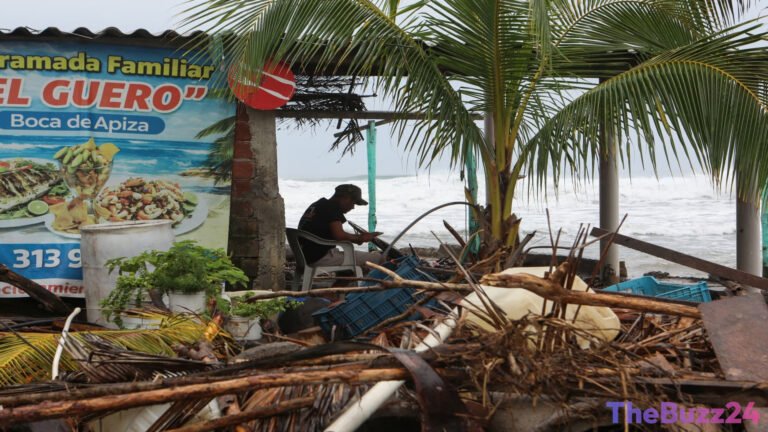
Typhoon Bavi Forces Mass Evacuations in China, Disrupts Taiwan
As Typhoon Bavi intensifies its approach, Chinese authorities have undertaken a massive evacuation effort, relocating over 1.8 million residents from coastal areas in Zhejiang and Fujian provinces. The storm, packing sustained winds of 144 km/h (90 mph), is projected to make landfall near Wenzhou, a densely populated city in Zhejiang, early Sunday. This significant precautionary measure highlights the potential severity of the typhoon, which, despite weakening over cooler waters, retains substantial moisture.
In preparation for Bavi’s arrival, residents like Wenzhou local Huang Xinghuan are stocking up on essentials, though he expressed confidence in the government’s preparedness. “We’ve been through typhoons before. We’ll get through it,” he stated, noting that his family had secured sufficient supplies for several days. The scale of the evacuation underscores the typhoon’s broad reach, with the storm system spanning a considerable area.
While China braces for the direct impact, Taiwan experienced significant disruptions as Bavi skirted its northern coast. Over 14,000 people were evacuated from vulnerable regions, and thousands of flights were canceled, effectively grounding air travel. Although Taiwan was spared the brunt of the storm’s fury, with no reported fatalities, the precautionary measures, including widespread closure of offices and schools, reflect the serious threat posed by the typhoon’s forecasted heavy rainfall. The typhoon’s passage also exacerbated monsoon rains in the Philippines, leading to 17 fatalities there.
Key Takeaways
- Over 1.8 million people evacuated in China ahead of Typhoon Bavi's expected landfall.
- Typhoon Bavi caused widespread flight cancellations and evacuations in Taiwan.
- The typhoon's indirect impact worsened monsoon rains in the Philippines, resulting in fatalities.
Editor’s Analysis & Impact
The mass evacuation in China and the extensive disruptions in Taiwan demonstrate the significant economic and social impact of severe weather events. Such typhoons not only pose immediate threats to life and property but also disrupt critical infrastructure, including transportation networks and supply chains. The event underscores the increasing importance of robust disaster preparedness and early warning systems, especially in densely populated coastal regions. As climate patterns shift, the frequency and intensity of such storms may rise, necessitating continuous investment in resilient infrastructure and effective emergency response strategies to mitigate future risks and economic losses.
Frequently Asked Questions
Q: What is Typhoon Bavi?
A: Typhoon Bavi is a powerful tropical cyclone that approached China's eastern coast after affecting Japan and Taiwan. It brought strong winds and heavy rainfall.
Q: Why were so many people evacuated in China?
A: Authorities ordered the evacuation of over 1.8 million people in China's Zhejiang and Fujian provinces as a safety precaution against the strong winds and heavy rain associated with Typhoon Bavi, which was forecast to make landfall in the region.
Q: Did Typhoon Bavi cause any deaths in Taiwan?
A: While Taiwan experienced significant disruptions, including flight cancellations and evacuations, there were no reported deaths directly attributed to Typhoon Bavi in Taiwan. However, the storm's impact worsened monsoon rains in the Philippines, leading to fatalities there.
AI Disclosure: This article is based on verified data and official reports. Our Team and AI have cross-referenced every financial detail with primary sources to ensure total accuracy.
More from this Category