Geopolitical Tensions and AI Hype Drive Market Volatility: Futures Dip as Middle East Conflict Flares
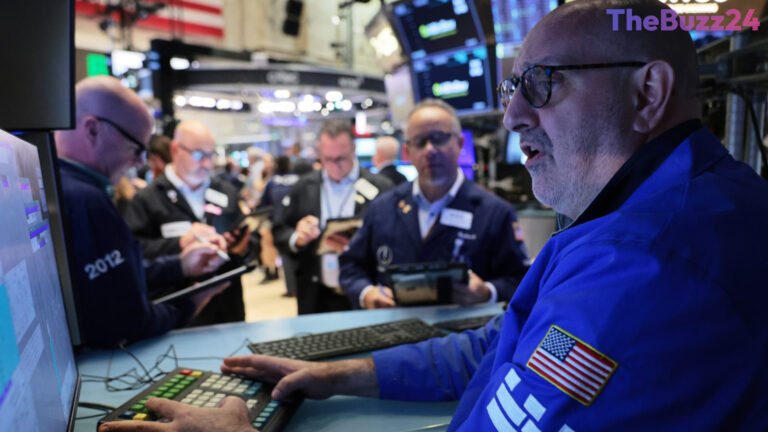
Global markets experienced a volatile start to the trading week as escalating geopolitical tensions in the Middle East overshadowed corporate earnings previews and the ongoing artificial intelligence boom. Stock futures indicated a lower opening for major U.S. indices, with Dow Jones Industrial Average futures down 0.3%, S&P 500 futures off by 0.3%, and Nasdaq-100 futures shedding 0.5% in early Sunday night trading.
The renewed airstrikes between the U.S. and Iran, coupled with Iran’s declaration of closing the Strait of Hormuz – a claim disputed by President Donald Trump – sent ripples through energy markets. Crude oil prices saw a notable increase, with Brent futures climbing 3.7% and West Texas Intermediate futures advancing over 3%, reflecting the heightened risk premium.
Asian markets reacted sharply to the geopolitical developments. South Korea’s Kospi index plunged over 7%, marking its lowest point since early May, while the smaller Kosdaq index fell 1.98%. Japan’s Nikkei 225 lost 1.57%, and Australia’s S&P/ASX 200 declined 0.35%. In contrast, Hong Kong’s Hang Seng Index managed a slight gain of 0.91%, while mainland China’s CSI 300 saw a modest dip of 0.64%.
Despite the geopolitical concerns, analysts suggest that the market’s focus will also be divided between upcoming economic data, such as the Consumer Price Index (CPI) report, and a significant wave of corporate earnings. Major U.S. banks, including JPMorgan Chase, Goldman Sachs, and Bank of America, are slated to release their second-quarter results this week, with expectations for robust profit growth, potentially exceeding 23% year-over-year for S&P 500 companies. The performance of the technology sector, particularly its ability to sustain AI-driven earnings growth, remains a key area of interest, with evidence suggesting businesses are increasingly benefiting from AI adoption.
Key Takeaways
- Stock futures declined as markets reacted to renewed U.S.-Iran airstrikes and the closure of the Strait of Hormuz.
- Asian markets experienced significant drops, with South Korea's Kospi plunging over 7%, while oil prices rose due to escalating tensions.
- Investors are bracing for a busy earnings week, with major U.S. banks and tech companies set to report, while the impact of AI on corporate profits remains a key focus.
Editor’s Analysis & Impact
The interplay between geopolitical instability and the relentless advance of artificial intelligence is creating a complex market environment. While the Middle East conflict introduces immediate risk aversion and impacts energy prices, the underlying strength of the AI narrative continues to underpin the technology sector. Investors face a dual challenge: navigating short-term geopolitical shocks while assessing the long-term growth potential driven by AI adoption. The upcoming earnings season will be crucial in determining whether corporate performance can justify current valuations, especially in tech, and whether AI’s contribution to profits is sustainable. The market’s resilience will be tested as it balances these competing forces.
Frequently Asked Questions
Q: What caused the initial drop in stock futures?
A: Stock futures dropped primarily due to renewed airstrikes between the U.S. and Iran and Iran's declaration of closing the Strait of Hormuz, which heightened geopolitical concerns and impacted energy prices.
Q: How are Asian markets reacting to the geopolitical situation?
A: Asian markets have reacted negatively, with significant plunges observed in South Korea's Kospi index and declines in Japan and Australia, reflecting investor concerns over regional stability.
Q: What is the outlook for corporate earnings this week?
A: Expectations for the upcoming earnings season are high, with analysts forecasting strong profit growth for S&P 500 companies. Key sectors to watch include major U.S. banks and technology firms, particularly regarding the sustained impact of AI on their financial performance.
AI Disclosure: This article is based on verified data and official reports. Our Team and AI have cross-referenced every financial detail with primary sources to ensure total accuracy.
More from this Category