Astronomers Uncover Elusive Stellar-Mass Black Hole in Omega Centauri
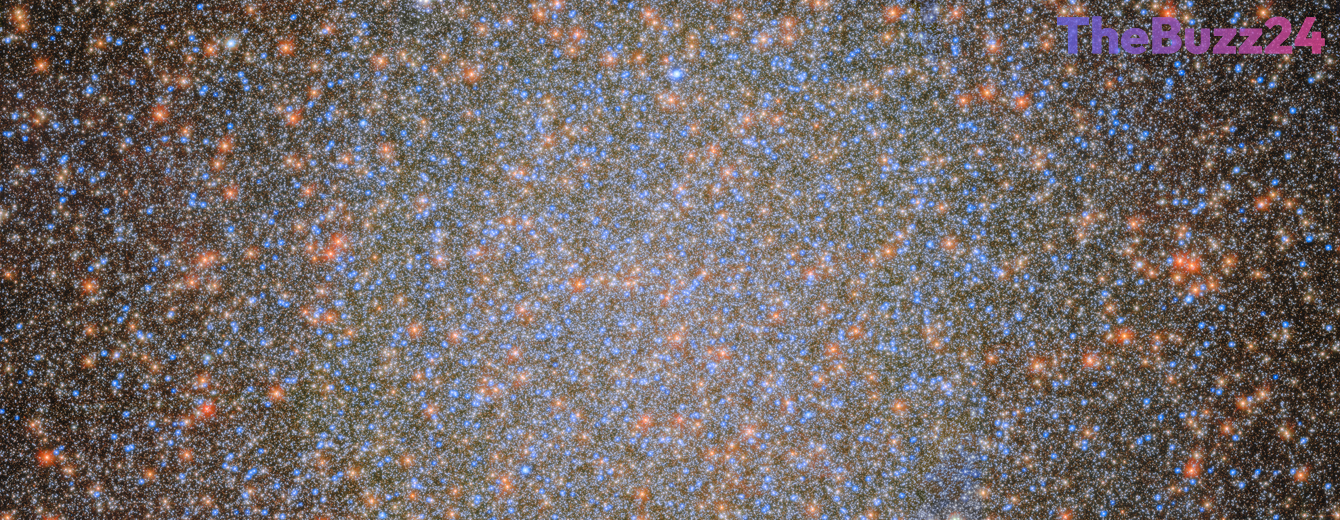
For decades, the massive globular star cluster Omega Centauri has remained a subject of intense astronomical debate. While theoretical models suggested the cluster should host approximately 10,000 stellar-mass black holes, concrete evidence of these objects had remained frustratingly out of reach. By combining over two decades of archival data from the Hubble Space Telescope with recent observations from the James Webb Space Telescope, researchers have finally identified the first stellar-mass black hole within the cluster, designated as oMEGACat BH-2.
The discovery was made possible through a technique known as astrometry, which tracks the minute movements of stars over extended periods. By analyzing the orbital path of a visible star, the research team identified a dark, massive companion exerting a gravitational pull. The data revealed that the companion possesses a mass of 4.46 solar masses, effectively ruling out the possibility of it being a neutron star. This finding provides a critical data point for scientists attempting to model how black holes form in metal-poor environments.
Beyond its existence, the system displays unique characteristics, including the longest orbital period of any known black hole binary system, with the star completing an orbit every 94 years. Researchers believe the system was likely formed dynamically, meaning the star and the black hole were not born together but were brought into proximity by the dense gravitational environment of the cluster. This discovery not only resolves a long-standing mystery regarding Omega Centauri but also offers new insights into the formation of binary systems that eventually produce gravitational waves.
Key Takeaways
- Researchers identified the first stellar-mass black hole, oMEGACat BH-2, in the Omega Centauri globular cluster using a combination of Hubble and Webb telescope data.
- The black hole is part of a binary system with a 94-year orbital period, the longest ever recorded for such a pair.
- The discovery confirms that black holes can form in metal-poor environments, providing essential data for future gravitational wave research.
Editor’s Analysis & Impact
The identification of oMEGACat BH-2 represents a significant milestone in observational astrophysics, effectively bridging the gap between theoretical population models and empirical evidence. By successfully utilizing long-term astrometric data, the research team has validated a methodology that will be crucial for future surveys, particularly with the upcoming Nancy Grace Roman Space Telescope. The broader implication of this discovery lies in our improved understanding of stellar evolution and the dynamics of dense star clusters. As these clusters are considered primary nurseries for binary black hole mergers, this finding enhances our ability to interpret gravitational wave signals detected by observatories on Earth. This breakthrough suggests that the ‘missing’ population of black holes in globular clusters may finally be within reach, potentially reshaping our understanding of galactic evolution and the life cycles of massive stars.
Frequently Asked Questions
Q: Why was it so difficult to find black holes in Omega Centauri?
A: Previous attempts relied on detecting X-ray or radio emissions from material falling into black holes, or measuring radial velocity. These methods often failed to detect smaller, stellar-mass black holes in dense clusters, necessitating the more precise astrometric approach used here.
Q: What makes the oMEGACat BH-2 system unique?
A: It is the first stellar-mass black hole discovered in Omega Centauri and holds the record for the longest orbital period of any known black hole binary system, with a 94-year cycle.
AI Disclosure: This article is based on verified data and official reports. Our Team and AI have cross-referenced every financial detail with primary sources to ensure total accuracy.
More from this Category