Bangladesh Faces Humanitarian Crisis as Monsoon Floods Claim 51 Lives
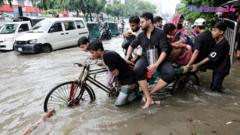
A devastating series of flash floods and landslides triggered by relentless monsoon rains has left at least 51 people dead across Bangladesh. The extreme weather, which began over a week ago, has displaced thousands of residents and severely impacted infrastructure, including the capital city of Dhaka, where streets remain submerged under knee-deep water.
The hardest-hit region is Cox’s Bazar, which accounts for more than half of the total fatalities. The district, which hosts the world’s largest refugee settlement for over a million Rohingya, has been particularly vulnerable to the deluge. Recent incidents include a tragic event where floodwaters inundated a school, resulting in the deaths of several students and a teacher. Authorities have been forced to evacuate families from high-risk zones and postpone academic examinations to ensure public safety.
Government officials report that over one million people have been affected by the ongoing crisis. While emergency shelters are currently housing thousands of displaced individuals, the situation remains precarious. Experts have noted that while Bangladesh is historically prone to monsoon-related flooding due to its low-lying geography and dense river network, the increasing intensity and frequency of these events are being exacerbated by global climate change.
Looking ahead, the Flood Forecasting and Warning Centre suggests that while conditions in the southeast may stabilize, the northern and northeastern regions remain at risk of further inundation. Concerns regarding urban planning have also surfaced, with critics questioning the efficacy of existing drainage systems in Dhaka to handle the increasing volume of rainfall.
Key Takeaways
- At least 51 fatalities have been confirmed following severe flash floods and landslides across Bangladesh.
- Over one million people have been impacted, with Cox's Bazar suffering the highest concentration of casualties.
- Climate change is increasingly cited as a primary driver for the heightened intensity and frequency of monsoon-related disasters in the region.
Editor’s Analysis & Impact
The recurring nature of these catastrophic floods in Bangladesh highlights a critical intersection between climate vulnerability and infrastructure inadequacy. From a market and policy perspective, the nation faces an escalating economic burden as it must divert significant resources toward disaster relief and long-term climate adaptation strategies. The vulnerability of densely populated areas like Cox’s Bazar and the capital, Dhaka, underscores the urgent need for modernized drainage systems and resilient urban planning. Future outlooks suggest that without substantial international investment in climate-resilient infrastructure, the frequency of such humanitarian crises will likely increase, potentially destabilizing local economies and displacing vulnerable populations on a larger scale. The situation serves as a stark reminder for developing nations to prioritize sustainable development goals in the face of unpredictable environmental shifts.
Frequently Asked Questions
Q: Why is Bangladesh particularly susceptible to flooding?
A: Bangladesh is a low-lying country with an extensive network of rivers, making it naturally prone to flooding during the annual monsoon season.
Q: How has the government responded to the current flooding?
A: Authorities have evacuated families from high-risk areas, established government shelters for the displaced, and postponed student exams to prioritize safety.
AI Disclosure: This article is based on verified data and official reports. Our Team and AI have cross-referenced every financial detail with primary sources to ensure total accuracy.
More from this Category