General Fusion Makes Historic Market Debut as First Publicly Traded Fusion Firm
General Fusion officially entered the public markets this week, debuting on the Nasdaq under the ticker symbol GFUZ. The listing marks a significant milestone for the energy sector, as the company becomes the first fusion power firm to be publicly traded. Investors responded with immediate enthusiasm, driving the stock price up 40% from its initial $12.85 valuation during Monday’s trading session.
The public listing follows a merger with Spring Valley Acquisition Corp. III, a deal finalized last week. While the transaction was initially expected to bolster the company’s balance sheet by up to $230 million, high redemption rates common in de-SPAC deals have significantly reduced the expected cash infusion. Estimates suggest the company may retain less than $30 million from the merger, though this is supplemented by $108 million raised through private investment, bringing the company’s total cash reserves to approximately $150 million.
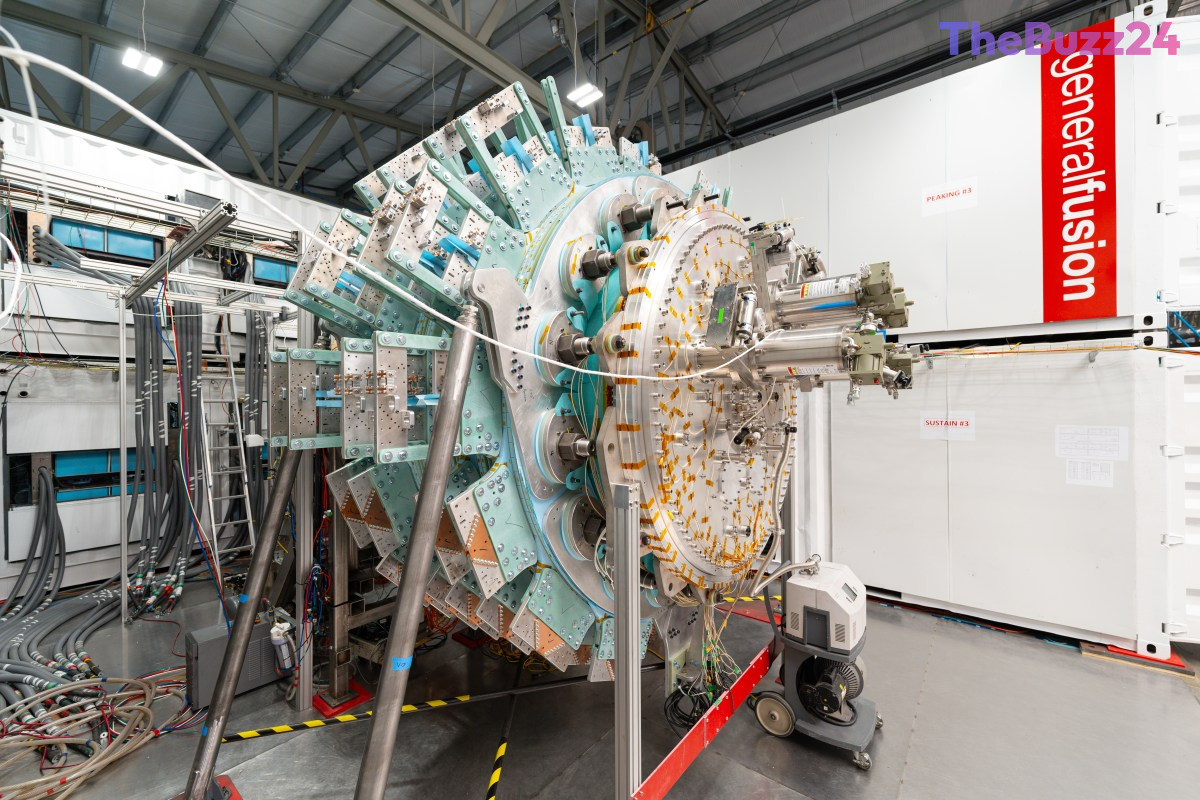
This capital injection arrives after a period of financial instability for the 2002-founded company. Faced with funding shortages in 2025, General Fusion was forced to implement a 25% workforce reduction before securing bridge financing. The company utilizes a unique approach known as magnetized target fusion, which employs synchronized mechanical drivers to compress liquid lithium around plasma to trigger energy-releasing fusion reactions. While the company previously aimed to reach energy breakeven this year, financial constraints have pushed that goal to 2028, with a target of launching its first commercial power plant by 2035.
Key Takeaways
- General Fusion has become the first fusion energy company to go public, listing on the Nasdaq under the ticker GFUZ.
- Despite a strong market debut with shares rising 40%, the company faces reduced capital inflows due to high redemption rates following its de-SPAC merger.
- The company has adjusted its development timeline, now aiming for energy breakeven by 2028 and a commercial power plant launch by 2035.
Editor’s Analysis & Impact
The public listing of General Fusion represents a critical ‘proof of concept’ for the fusion industry’s ability to tap into public capital markets. Historically, fusion has been the domain of venture capital and government grants due to the extreme long-term nature of the R&D. By going public, General Fusion is signaling a transition from experimental laboratory work to commercialization, though the market’s volatility and the company’s own history of funding struggles highlight the immense risks involved. The shift in timeline for the LM26 device underscores the ‘valley of death’ that deep-tech companies face when scaling. If General Fusion can maintain its cash runway and hit its 2028 milestones, it could set a valuation precedent for other fusion startups, potentially accelerating the sector’s move toward grid-scale clean energy.
Frequently Asked Questions
Q: What is the primary technology used by General Fusion?
A: General Fusion uses a process called magnetized target fusion, which involves creating magnetized plasma inside a chamber lined with liquid lithium and using mechanical drivers to compress the fuel to trigger fusion.
Q: Why did General Fusion's stock debut involve a de-SPAC process?
A: The company utilized a merger with a Special Purpose Acquisition Company (SPAC), specifically Spring Valley Acquisition Corp. III, as a vehicle to go public and raise capital to fund its ongoing research and development efforts.
AI Disclosure: This article is based on verified data and official reports. Our Team and AI have cross-referenced every financial detail with primary sources to ensure total accuracy.
More from this Category