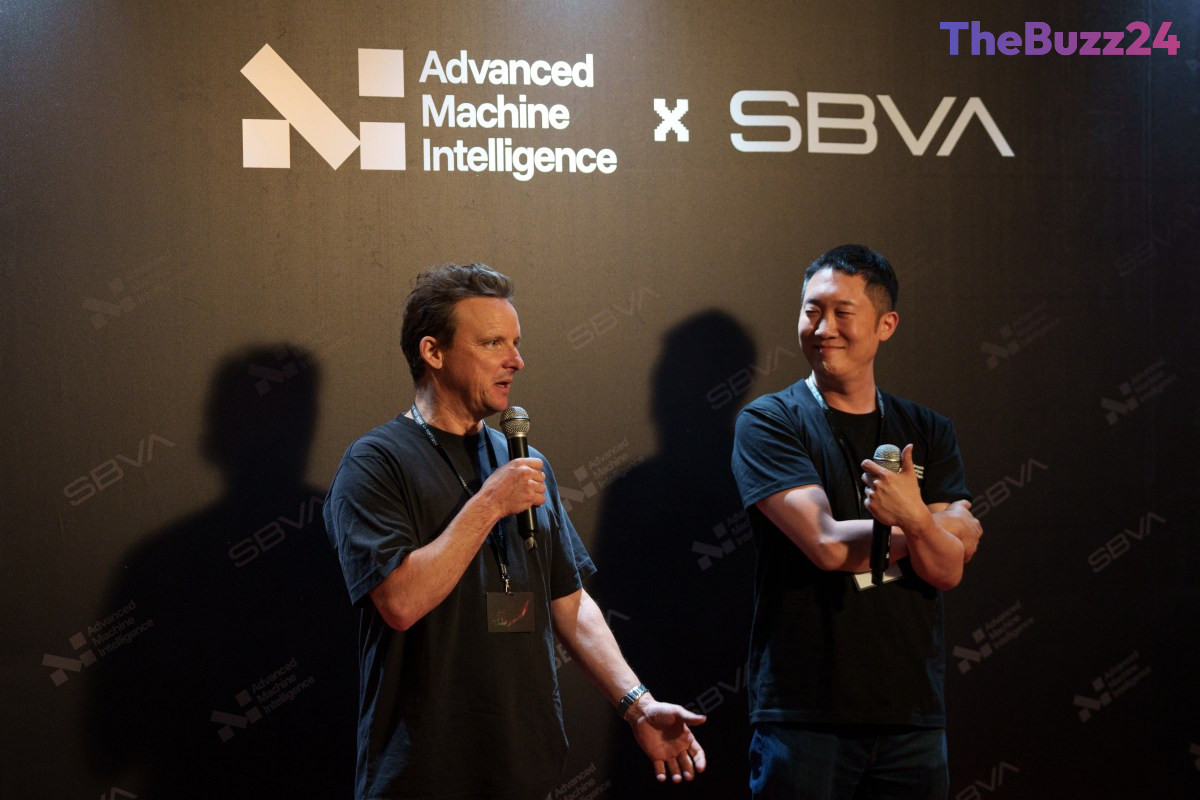
Why AMI Labs is Betting on ‘World Models’ Over Hype-Driven AI Labels
As the artificial intelligence industry continues to chase buzzwords like ‘AGI’ and ‘superintelligence,’ Alexandre LeBrun, CEO of the startup AMI Labs, is intentionally distancing his company from such terminology. LeBrun argues that these labels lack clear, functional definitions and serve more as marketing fluff than technical milestones. Instead, AMI Labs is focused on the development of ‘world models’—systems designed to understand and predict physical states rather than simply processing text.
AMI Labs, co-founded by Turing Award winner Yann LeCun, is currently operating in a pre-product phase but has already secured significant backing, including a $1.03 billion funding round that valued the company at $3.5 billion. The startup’s core mission is to bridge the gap between advanced hardware and the ‘brain’ required to operate safely in real-world environments. LeBrun notes that while current AI excels at language processing, it remains largely ineffective in physical spaces, where robots often struggle to navigate beyond static, pre-programmed routines.
To achieve this, LeBrun is looking toward South Korea, a hub for robotics, semiconductors, and manufacturing. By partnering with industrial leaders in the region, AMI Labs aims to train its models on real-world data rather than relying solely on laboratory simulations. The goal is to create AI that can perceive context and interact safely with humans and unpredictable environments, a capability LeBrun believes is essential for the next generation of robotics and industrial automation.
While the company has yet to release a commercial product, the focus remains on long-term utility rather than immediate hype. LeBrun emphasizes that world models and large language models are complementary technologies; while LLMs handle linguistic reasoning, world models will provide the physical intuition necessary for robots to function in homes, streets, and factories. As the company continues its development, the industry is watching closely to see if this pragmatic approach to physical AI will yield the breakthrough that current, text-heavy models have yet to achieve.
Key Takeaways
- AMI Labs is prioritizing 'world models' that predict physical states, moving beyond the limitations of text-based large language models.
- The company is actively seeking partnerships in South Korea to leverage the nation's advanced robotics and manufacturing infrastructure for real-world training.
- CEO Alexandre LeBrun rejects the use of 'AGI' and 'superintelligence' as labels, viewing them as ill-defined and unhelpful for actual technical progress.
Editor’s Analysis & Impact
The strategic pivot by AMI Labs toward ‘world models’ represents a significant shift in the AI narrative, moving from the abstract goal of human-level intelligence to the practical necessity of physical-world competence. By focusing on robotics and industrial integration, the company is addressing the ‘physicality gap’ that currently limits AI utility in the real world. The decision to establish a presence in South Korea—a global leader in hardware and manufacturing—suggests that the next phase of the AI arms race will be won by those who can successfully integrate software intelligence with physical hardware. If successful, AMI Labs could set a new standard for embodied AI, potentially disrupting sectors from healthcare to automated manufacturing where current LLM-based solutions fall short due to a lack of environmental awareness.
Frequently Asked Questions
Q: What is a 'world model' in the context of AI?
A: A world model is an AI system designed to predict the next state of a physical environment, allowing it to understand cause-and-effect relationships, such as how an object will move or react when nudged.
Q: Why is AMI Labs focusing on South Korea?
A: AMI Labs is targeting South Korea because of its advanced industrial base in robotics, semiconductors, and manufacturing, as well as the country's history as an early adopter of new technologies.
AI Disclosure: This article is based on verified data and official reports. Our Team and AI have cross-referenced every financial detail with primary sources to ensure total accuracy.
More from this Category