Escalating Tensions: US and Iran Exchange Strikes Following Fatal Jordan Attack
The geopolitical standoff between the United States and Iran has intensified significantly following a lethal attack in Jordan that claimed the lives of two American service members. In a swift retaliatory move, the US military launched a series of air strikes targeting Iranian coastal surveillance and air defense infrastructure. These operations, which mark the eighth consecutive night of military engagement, were described by officials as a strategic effort to degrade Iran’s capacity to threaten commercial shipping in the Strait of Hormuz and to hold the Islamic Revolutionary Guard Corps (IRGC) accountable for the recent casualties.
In response to the US offensive, Iranian state media reported that the nation’s military conducted drone strikes against US-affiliated bases in Kuwait, while Bahrain confirmed the interception of aerial threats. The situation has been further complicated by the collapse of a preliminary ceasefire agreement, which was officially declared void by President Donald Trump earlier this month. As diplomatic channels remain strained, both nations have engaged in aggressive posturing, including the reimposition of port blockades and the closure of the Strait of Hormuz to transit.
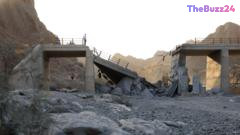
The humanitarian and economic toll of the conflict continues to mount, with reports of significant infrastructure damage across the region. While the US maintains that its strikes are strictly limited to military logistics and defense assets, Iranian officials have accused the US of targeting civilian infrastructure, including power and water facilities. Meanwhile, the US embassy in Amman has issued urgent travel warnings for the port city of Aqaba, citing credible security threats, as the broader Middle East braces for further instability.
Key Takeaways
- The US launched retaliatory air strikes against Iranian military assets following the death of two American soldiers in Jordan.
- The preliminary ceasefire between Washington and Tehran has collapsed, leading to a surge in direct military confrontations and regional infrastructure damage.
- Tensions have disrupted critical maritime routes, with Iran threatening the safety of vessels in the Strait of Hormuz.
Editor’s Analysis & Impact
The rapid deterioration of the US-Iran ceasefire signals a return to high-stakes regional volatility that threatens global energy markets and maritime security. By targeting the Strait of Hormuz, both nations are effectively weaponizing a critical global trade artery, which could lead to significant spikes in oil prices and supply chain disruptions. The collapse of the diplomatic framework suggests that neither side is currently willing to pursue de-escalation, pointing toward a prolonged period of asymmetric warfare. Future implications include a heightened risk of regional spillover, increased defense spending for neighboring Gulf states, and a potential long-term shift in how international powers navigate the Middle East’s security architecture. Investors should anticipate continued market uncertainty as the conflict remains fluid and unpredictable.
Frequently Asked Questions
Q: Why did the US launch air strikes against Iran?
A: The US launched the strikes in retaliation for an attack in Jordan that killed two American soldiers and to degrade Iran's ability to threaten commercial shipping in the Strait of Hormuz.
Q: What is the current status of the US-Iran ceasefire?
A: The preliminary ceasefire agreement, which was established in June, has collapsed, with President Donald Trump declaring the deal void as of July 8.
AI Disclosure: This article is based on verified data and official reports. Our Team and AI have cross-referenced every financial detail with primary sources to ensure total accuracy.
More from this Category