NASA Prepares for Groundbreaking Roman Telescope Launch with Media Briefing
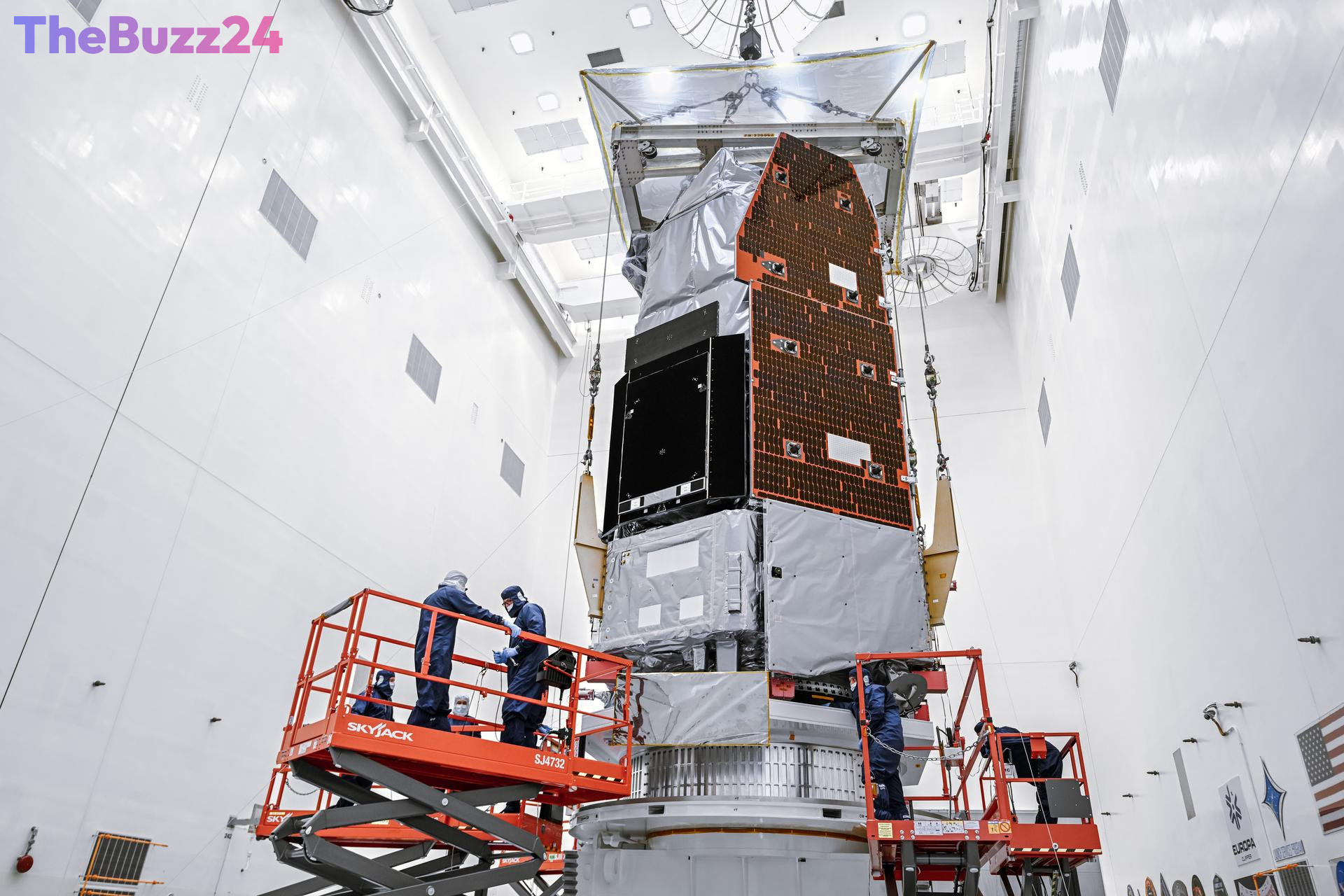
NASA is set to unveil details about its highly anticipated Nancy Grace Roman Space Telescope during a virtual media briefing scheduled for Wednesday, July 29, at 2 p.m. EDT. The briefing will offer an in-depth look at the mission’s status and objectives ahead of its planned launch on Sunday, August 30, from the Kennedy Space Center in Florida. This advanced observatory promises to revolutionize our understanding of the cosmos with its unprecedented capabilities.
The Nancy Grace Roman Space Telescope is poised to deliver a panoramic view of the universe, boasting a field of view at least 100 times larger than that of the Hubble Space Telescope. This expansive perspective will enable deep and sweeping explorations, uncovering vast numbers of celestial objects and providing new insights into some of the universe’s most enduring mysteries. The telescope is also equipped with cutting-edge technology designed to directly image planets orbiting nearby stars, a critical advancement in the ongoing search for extraterrestrial life.
Key personnel from NASA Headquarters and the Goddard Space Flight Center, including the Astrophysics Division director, the Roman telescope’s project manager, and senior project scientists, will participate in the briefing. Media interested in attending the virtual conference must RSVP by July 29 to ensure participation. The event will be streamed live across various NASA platforms, with details available on the agency’s website.
Managed by NASA Goddard, with significant contributions from the Jet Propulsion Laboratory, Caltech/IPAC, the Space Telescope Science Institute, and numerous research institutions, the Roman telescope represents a collaborative international effort. Industrial partners BAE Systems Inc., L3Harris Technologies, and Teledyne Scientific & Imaging are also crucial to its development. Furthermore, the European Space Agency (ESA), Japan Aerospace Exploration Agency (JAXA), France’s CNES, and Germany’s Max Planck Institute for Astronomy have provided essential contributions, underscoring the global significance of this mission.
Key Takeaways
- NASA will host a media briefing on July 29 to preview the Nancy Grace Roman Space Telescope, launching August 30.
- The Roman telescope features a field of view 100 times larger than Hubble's, enabling unprecedented cosmic surveys.
- The mission includes advanced technology for directly imaging exoplanets, aiding the search for life beyond Earth.
Editor’s Analysis & Impact
The upcoming launch of the Nancy Grace Roman Space Telescope marks a significant milestone in space exploration and astrophysics. Its immense field of view and advanced imaging capabilities are expected to generate a wealth of new data, potentially leading to groundbreaking discoveries about dark energy, exoplanets, and the evolution of the universe. The telescope’s ability to directly image exoplanets is particularly exciting, offering a tangible step forward in the search for habitable worlds. This mission underscores NASA’s continued commitment to pushing the boundaries of scientific understanding and technological innovation, with potential long-term impacts on our perception of the cosmos and humanity’s place within it.
Frequently Asked Questions
Q: What is the primary goal of the Nancy Grace Roman Space Telescope?
A: The primary goal is to conduct deep, sweeping explorations of the cosmos, including studying dark energy, exoplanets, and phenomena that are currently undetectable. It aims to revolutionize our understanding of the universe.
Q: How does the Roman telescope compare to the Hubble Space Telescope?
A: The Roman telescope will have a field of view at least 100 times larger than the Hubble Space Telescope, allowing it to survey much larger areas of the sky more efficiently.
Q: What is the significance of the Roman telescope's exoplanet imaging technology?
A: This technology represents a key step in NASA's search for life on other worlds by enabling direct imaging of planets around nearby stars, providing crucial data for habitability assessments.
AI Disclosure: This article is based on verified data and official reports. Our Team and AI have cross-referenced every financial detail with primary sources to ensure total accuracy.
More from this Category