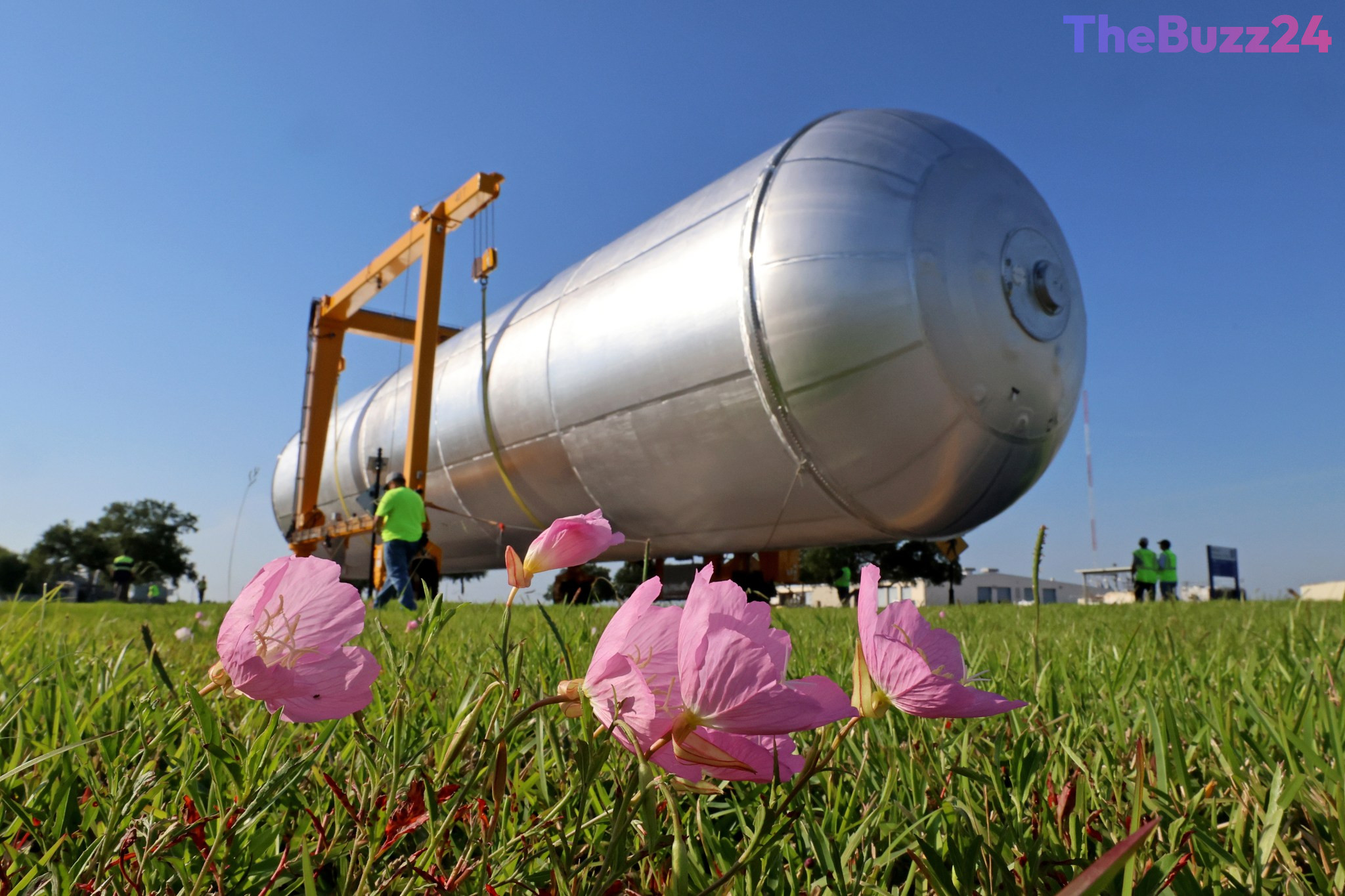
NASA Advances Artemis IV Mission with Critical Hydrogen Tank Relocation
NASA has marked a significant milestone for its Artemis IV lunar mission, successfully transporting a crucial liquid hydrogen tank at the Michoud Assembly Facility in New Orleans. On May 15, 2026, crews meticulously moved the towering 130-foot-tall tank from its production cell within the main factory building to a dedicated test facility situated on a separate section of the expansive 829-acre site.
This colossal liquid hydrogen tank is an indispensable component of the Space Launch System (SLS) rocket’s core stage. Its primary function is to store thousands of gallons of super-cold propellant, which will feed one of the four powerful RS-25 engines, providing the immense thrust required for deep space missions. The relocation to the detached test building is a critical step, allowing for comprehensive evaluations and preparations before its final integration into the rocket assembly.
The successful movement of this key element underscores the steady progress of the Artemis program, which aims to return humans to the Moon and establish a sustainable lunar presence as a precursor to future human missions to Mars. Each completed stage, such as this tank transfer, brings NASA closer to achieving its ambitious goals in space exploration, demonstrating the ongoing commitment to pushing the boundaries of human endeavor beyond Earth.
Key Takeaways
- NASA successfully moved the 130-foot-tall liquid hydrogen tank for the Artemis IV mission at its Michoud Assembly Facility.
- The tank is a critical component of the Space Launch System (SLS) rocket's core stage, designed to fuel its RS-25 engines.
- This relocation to a test building signifies a major step forward in the development of the Artemis program, aiming for lunar and future deep-space missions.
Editor’s Analysis & Impact
The successful transfer of the Artemis IV liquid hydrogen tank represents a tangible advancement in NASA’s ambitious lunar program. This milestone instills greater confidence in the aerospace industry, particularly for contractors and partners involved in the SLS development, signaling continued progress and investment in large-scale space infrastructure. The future outlook for the Artemis program appears robust, with each completed component and test phase reducing overall mission risk and building momentum towards human return to the Moon. Broader implications include inspiring a new generation in STEM fields, fostering technological innovation, and potentially opening new avenues for international collaboration in space exploration, reinforcing humanity’s long-term commitment to venturing beyond Earth.
Frequently Asked Questions
Q: What is the Artemis IV mission?
A: The Artemis IV mission is part of NASA's broader Artemis program, which aims to return humans to the Moon, establish a sustainable lunar presence, and prepare for future human missions to Mars.
Q: What is the purpose of the liquid hydrogen tank?
A: The 130-foot-tall liquid hydrogen tank is a vital component of the Space Launch System (SLS) rocket's core stage. It stores thousands of gallons of super-cold liquid hydrogen, which serves as propellant for four RS-25 engines, providing the necessary thrust for launch.
Q: Why was the tank moved to a separate test building?
A: The tank was transported from its production cell to a detached test building to undergo rigorous evaluations and preparations. This crucial step ensures the tank meets all specifications and is ready for integration into the SLS rocket, minimizing risks during future mission phases.
AI Disclosure: This article is based on verified data and official reports. Our Team and AI have cross-referenced every financial detail with primary sources to ensure total accuracy.
More from this Category