AMD Challenges Market Leaders with High-Performance Helios AI Rack System
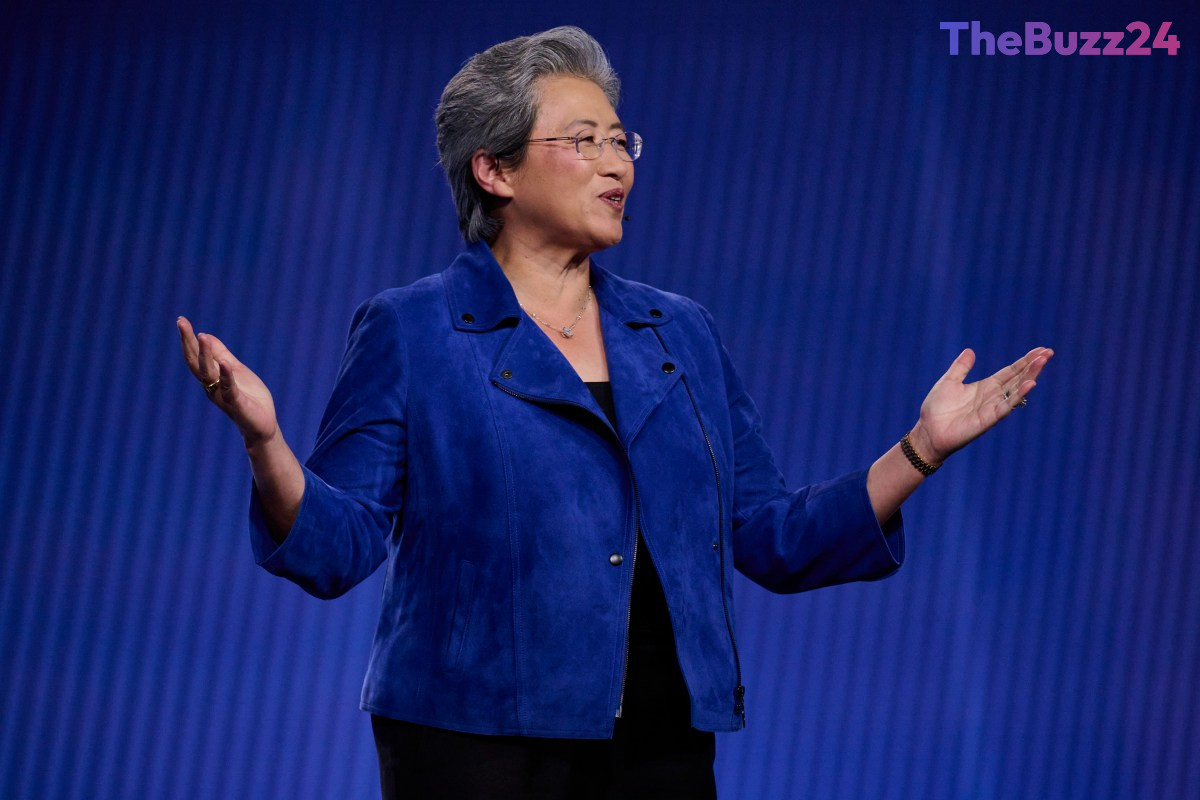
AMD has officially unveiled its latest advancement in data center infrastructure, the Helios rack-scale system, signaling a major push to capture market share in the rapidly expanding artificial intelligence sector. Designed to meet the extreme computational demands of modern AI labs, the system integrates multiple processors into a high-density unit capable of training and running the world’s most complex frontier models. During the Advancing AI conference, CEO Dr. Lisa Su positioned Helios as a premier solution for gigawatt-scale deployments, emphasizing its ability to handle the massive compute requirements of next-generation AI.
The introduction of Helios places AMD in direct competition with established industry leaders, as the company aims to provide a more efficient and powerful alternative for data centers. Early adoption is already underway, with major technology firms including Microsoft, OpenAI, Meta, Oracle, and Anthropic committing to the platform. Microsoft has confirmed plans to integrate the system into its Azure infrastructure, while Anthropic has entered a strategic partnership to deploy up to two gigawatts of GPUs using the new architecture.
Beyond the Helios rack system, AMD is looking toward the future with the announcement of its Venice-X CPU, slated for a 2027 release. This processor is specifically engineered to manage high-computing workloads, further rounding out the company’s data center portfolio. These hardware developments arrive as AMD anticipates a massive surge in demand for AI accelerators, projecting that the market for such technology could reach $1.4 trillion by 2030. According to company leadership, the rise of agentic AI—which requires iterative reasoning and tool usage—is driving a fundamental shift in the semiconductor industry, necessitating a new generation of programmable silicon.
Key Takeaways
- AMD launched the Helios rack-scale system, a high-performance unit designed for large-scale AI model training and deployment.
- Major industry players including Microsoft, Meta, OpenAI, and Anthropic have already committed to utilizing the Helios platform.
- AMD projects the AI accelerator market will grow to $1.4 trillion by 2030, driven by the increasing complexity of agentic AI workloads.
Editor’s Analysis & Impact
The launch of the Helios system represents a critical inflection point for AMD as it attempts to break the current hardware duopoly in the AI infrastructure space. By securing early commitments from hyperscalers like Microsoft and Meta, AMD is successfully validating its ecosystem as a viable alternative to existing market standards. The industry shift toward ‘agentic AI’—which requires significantly more compute cycles than traditional generative models—provides a massive tailwind for hardware providers. If AMD can maintain its performance lead and ensure supply chain reliability, it is well-positioned to capture a significant portion of the projected $1.4 trillion accelerator market. However, the company faces the ongoing challenge of software optimization and developer ecosystem lock-in, which remain the primary defensive moats for its competitors.
Frequently Asked Questions
Q: What is the primary purpose of the AMD Helios system?
A: Helios is a rack-scale system designed for data centers to train and run large-scale, compute-intensive AI models.
Q: Which major companies are planning to use AMD's new AI hardware?
A: Key customers and partners include Microsoft, OpenAI, Meta, Oracle, and Anthropic.
AI Disclosure: This article is based on verified data and official reports. Our Team and AI have cross-referenced every financial detail with primary sources to ensure total accuracy.
More from this Category