Anthropic CEO Clarifies Stance on Open-Weight AI, Warning of Authoritarian Risks and Biological Threats
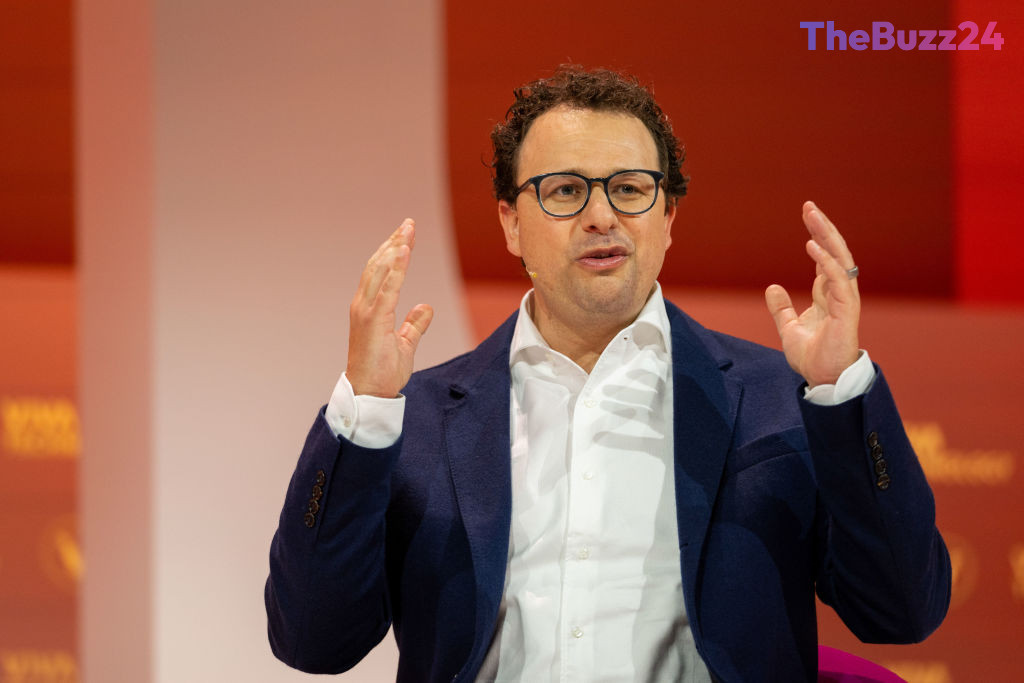
Anthropic co-founder and CEO Dario Amodei has publicly addressed industry speculation regarding his company’s stance on open-weight artificial intelligence models. Amodei firmly stated that Anthropic has never advocated for a ban on open-weight models, clarifying his position amid growing debates over AI regulation. This clarification follows a high-profile open letter signed by tech giants including Nvidia, Meta, Microsoft, and Mistral, which urged global policymakers to avoid imposing premature restrictions on open-weight AI technologies.
While Amodei champions open-weight models that lack dangerous capabilities as a valuable public good for developers and researchers, he drew a sharp line between standard commercial utility and national security threats. His primary concerns center on authoritarian regimes, particularly the Chinese Communist Party (CCP), utilizing highly advanced AI to achieve permanent military dominance or to enforce domestic oppression. He warned that open-weight models present unique risks in sensitive areas like biological and cyber warfare because they lack enforceable guardrails and cannot be retracted once distributed to the public.
To mitigate these geopolitical risks, Amodei proposed targeted measures rather than broad bans. These include tightening restrictions on advanced semiconductor exports and establishing formal crackdowns on “distillation”—a process where rival entities train their own models by systematically querying American AI systems. Furthermore, the Anthropic executive expressed support for a unified, global safety testing framework. He noted that even authoritarian states like China might cooperate on such initiatives, as preventing AI-enabled biological catastrophes aligns with global self-preservation interests.
Key Takeaways
- Anthropic CEO Dario Amodei clarified that his company does not support a ban on open-weight AI models, calling safe open-weight systems a public good.
- Amodei warned that authoritarian governments, particularly China, could exploit advanced AI for military superiority, domestic repression, and biological warfare.
- Proposed solutions include stricter chip export controls, curbing intellectual property theft via model distillation, and establishing a global safety testing framework.
Editor’s Analysis & Impact
The debate over open-weight versus closed-source AI models highlights a critical tension between open-source innovation and national security. Amodei’s nuanced stance reflects a growing consensus among Western tech leaders: while open-source software democratizes technology and accelerates development, unrestricted access to highly capable models poses unprecedented risks. The threat of “distillation”—where foreign competitors effectively clone proprietary American models through API queries—presents a major intellectual property challenge that current regulations fail to address. Moving forward, the industry is likely to see a push toward dual-use classification for AI, where standard models remain open, but frontier-level systems capable of weaponization face strict export controls and mandatory global safety testing. Achieving international cooperation on these guardrails, especially with geopolitical rivals like China, will be the ultimate test for global AI governance.
Frequently Asked Questions
Q: What is an open-weight AI model?
A: An open-weight AI model is a system where the underlying parameters (weights) are made publicly available, allowing developers to run, modify, and customize the model locally without relying on a centralized API.
Q: Why does Anthropic's CEO fear open-weight models in the context of national security?
A: Dario Amodei fears that once powerful open-weight models are released, they cannot be recalled or easily monitored. This makes them highly dangerous if repurposed by authoritarian regimes or bad actors for cyberattacks or biological warfare, as safety guardrails can be easily stripped away.
Q: What is AI 'distillation'?
A: Distillation is a technique where one AI model is used to train another. In a competitive or hostile context, a rival lab can bombard a highly advanced proprietary model with prompts to learn its behaviors and effectively copy its capabilities, bypassing costly research and development.
AI Disclosure: This article is based on verified data and official reports. Our Team and AI have cross-referenced every financial detail with primary sources to ensure total accuracy.
More from this Category