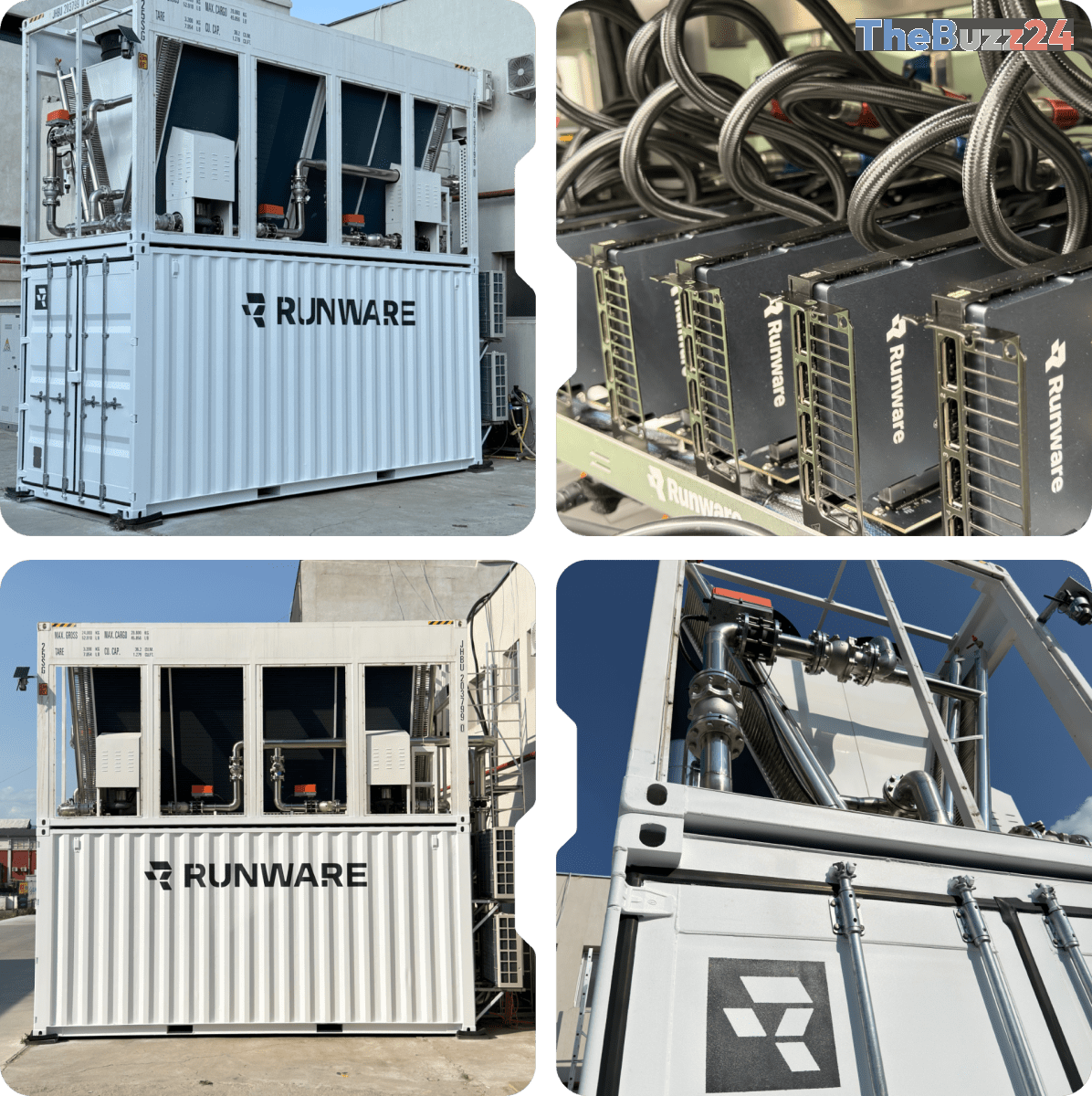
Runware Unveils Portable ‘Sonic Inference Pods’ to Revolutionize AI Infrastructure
Runware has officially entered the modular infrastructure market with the launch of its Sonic Inference Pod, a transportable data center unit designed to challenge the traditional, fixed-facility model of AI compute. By offering a decentralized approach to data processing, these pods aim to provide high-quality inference at a lower cost than conventional serverless platforms and GPU clouds. The units are engineered for rapid deployment, allowing companies to scale their computing capacity in days rather than the months or years required for traditional data center construction.
At the core of the Sonic Inference Pod is a focus on efficiency and flexibility. Unlike massive, centralized data centers that often require significant water consumption for cooling, Runware’s units utilize a closed-loop cooling system that eliminates water usage entirely. Furthermore, the pods are designed to be placed closer to end users, which reduces latency and optimizes performance. According to the company, the system is built to adapt quickly to hardware advancements, ensuring that infrastructure does not become obsolete as AI technology evolves.
Currently, Runware has 10 pods operational across the United States, Europe, and the Asia-Pacific region, with 160 additional sites already identified for potential expansion. The company is positioning itself as a critical backbone for AI development, providing the necessary infrastructure for firms like Higgsfield AI and Wix. By operating as a single, interconnected network, the pods offer redundancy; if one unit experiences a failure, traffic is automatically rerouted to another, minimizing downtime and ensuring consistent service availability.
While industry giants continue to invest billions in massive, permanent data centers, Runware believes its modular strategy offers a more sustainable and agile alternative. The company acknowledges the growing concerns regarding the environmental impact of AI, including energy consumption and grid strain. By utilizing existing power sources and avoiding the need for new, large-scale grid developments, Runware aims to meet the surging demand for AI inference while mitigating the resource-heavy footprint typically associated with the sector.
Key Takeaways
- Runware’s Sonic Inference Pods are modular, transportable data centers that can be deployed in days to provide scalable AI compute.
- The units utilize a closed-loop cooling system that requires no water, offering a more sustainable alternative to traditional, resource-intensive data centers.
- The pods operate as a distributed network, allowing for lower latency by placing compute power closer to the end user and providing automatic failover redundancy.
Editor’s Analysis & Impact
The introduction of modular, portable data centers like Runware’s Sonic Inference Pods represents a significant shift in how the industry approaches the ‘AI compute crunch.’ As demand for inference outpaces the construction of traditional hyperscale facilities, the ability to deploy capacity rapidly and locally provides a distinct competitive advantage. From a market perspective, this decentralized model addresses two major pain points: the extreme lead times for building permanent infrastructure and the growing public scrutiny regarding the environmental impact of AI, specifically water usage and grid strain. If successful, this model could force a rethink of capital expenditure in the AI sector, favoring agility and distributed networks over the massive, centralized ‘fortress’ data centers that currently dominate the landscape. However, the long-term success of this model will depend on the company’s ability to maintain hardware consistency and manage the complexities of distributed maintenance across global sites.
Frequently Asked Questions
Q: How do Sonic Inference Pods differ from traditional data centers?
A: Traditional data centers are fixed, large-scale facilities that often take years to build and require significant water for cooling. Runware’s pods are modular, transportable, can be deployed in days, and use a closed-loop cooling system that does not consume water.
Q: What happens if one of Runware's pods goes offline?
A: Because the pods operate as part of a single, interconnected network, traffic is automatically rerouted to other available pods, ensuring that the system remains operational even if an individual unit experiences a failure.
AI Disclosure: This article is based on verified data and official reports. Our Team and AI have cross-referenced every financial detail with primary sources to ensure total accuracy.
More from this Category