Security Alert in Germany as Explosive-Laden Drone Discovered Near Cargo Aircraft at Leipzig/Halle Airport
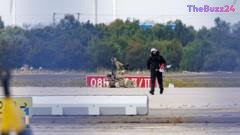
Authorities in Germany have heightened security protocols following the discovery of a drone armed with explosives near parked cargo planes at Leipzig/Halle Airport. An airport staff member spotted the device overnight in close proximity to aircraft operated by Ukraine’s Antonov Airlines. Bomb disposal specialists deployed a specialized robot to inspect the threat, successfully neutralizing the detonator before carrying out a controlled detonation on-site. The incident triggered temporary runway closures and delayed logistics operations at the vital transportation hub.
The event coincides with another suspicious airspace disruption where an unidentified flying object collided mid-flight with a separate freight plane. That aircraft managed to land safely in Hanover despite sustaining minor damage. German officials noted that these tandem occurrences highlight an escalating threat level against critical infrastructure. Leipzig/Halle Airport serves as a major strategic junction, acting as a key logistics base for DHL and facilitating transport operations for NATO allies alongside Ukrainian heavy-cargo carriers.
Government leadership and intelligence specialists suspect the intrusion was a highly coordinated, professional operation rather than the work of amateurs, pointing toward hybrid warfare tactics. Concerns over state-sponsored sabotage have intensified across Western Europe, particularly given a string of previous unauthorized drone sightings over military installations, seaports, and energy terminals. Investigators are assessing potential foreign involvement, though official inquiries remain ongoing to identify those responsible for the breach.
This latest incident underscores ongoing vulnerabilities in aviation security and airspace defense across European transit corridors. The event follows earlier high-profile security scares at the same airport, including incendiary cargo devices and espionage cases. As international investigators analyze the recovered drone hardware, regional transport authorities are re-evaluating defensive countermeasures to safeguard critical air supply lines against evolving aerial threats.
Key Takeaways
- An explosive-bearing drone was neutralized at Leipzig/Halle Airport near parked Ukrainian cargo aircraft.
- A separate airborne object collided with a freight plane, causing minor damage before it landed safely in Hanover.
- German authorities suspect a sophisticated, state-linked hybrid threat targeted at critical transport infrastructure.
Editor’s Analysis & Impact
The discovery of explosive devices near critical logistics assets at Leipzig/Halle Airport represents a serious escalation in operational risk for European supply chains and commercial aviation. As a major hub for international freight networks like DHL and essential military transport, any disruption to this facility reverberates across global commerce and defense operations. This incident will likely force European governments and airport operators to accelerate the deployment of advanced counter-drone technologies, including radio-frequency jamming, kinetic defense systems, and automated airspace monitoring. In the broader context, insurance premiums for cargo carriers operating in Central Europe could rise, while logistics firms will face increased operational costs due to stricter physical and aerial security protocols.
Frequently Asked Questions
Q: What happened at Leipzig/Halle Airport?
A: An explosive-laden drone was discovered near parked Antonov cargo planes, prompting a bomb disposal team to safely dismantle the detonator and perform a controlled explosion.
Q: Were there any other related aviation incidents reported?
A: Yes, a separate unidentified airborne object struck a cargo aircraft mid-flight, forcing it to land in Hanover with minor damage.
Q: How are German authorities responding to the situation?
A: Officials have placed major transport hubs on high alert and are treating the incursions as a professional hybrid threat targeting key European infrastructure.
AI Disclosure: This article is based on verified data and official reports. Our Team and AI have cross-referenced every financial detail with primary sources to ensure total accuracy.
More from this Category