Hadrian Valuation Soars to $8 Billion as Capital Pours Into Defense Technology
Advanced manufacturing startup Hadrian has successfully closed a major new funding round, propelling its valuation to nearly $8 billion. This milestone represents more than a fourfold increase from the company’s valuation earlier in the year. The financial injection was led by prominent institutional backers, including Baillie Gifford, J.P. Morgan Strategic Investment Group, and Washington Harbor Partners, reflecting growing investor confidence in technology-driven defense infrastructure.
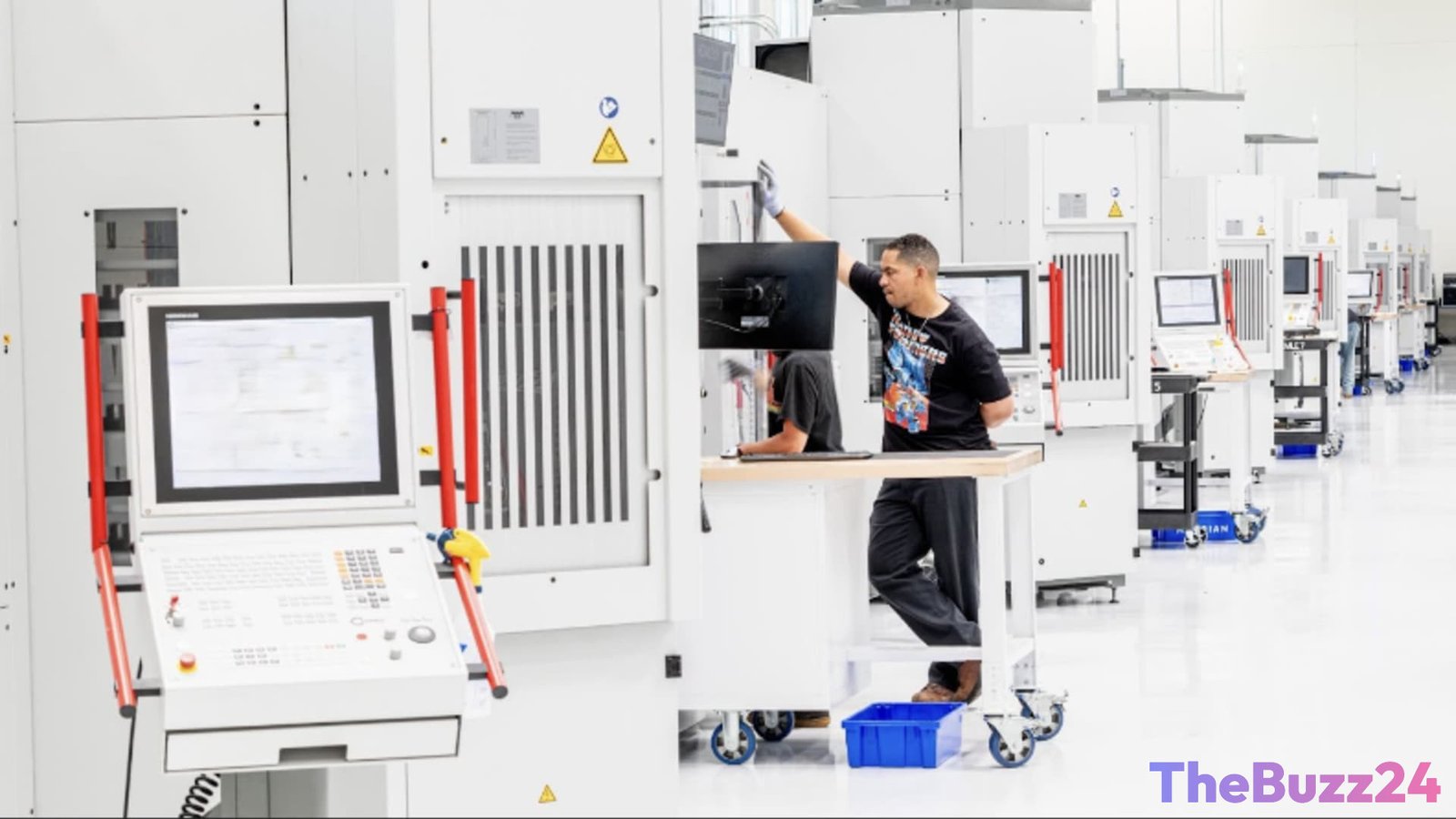
The fresh capital will be directed toward expanding Hadrian’s engineering and operational workforce while accelerating the development of Opus, the company’s proprietary software platform. Opus serves as the operational intelligence layer for Hadrian’s network of advanced factories, designed to resolve critical supply chain bottlenecks across high-priority defense sectors such as naval submarine construction, munitions production, and hardware for unmanned drone fleets. The technology is already deployed across key defense entities, including the U.S. Army and U.S. Navy, with additional partnerships alongside major defense primes expected to be announced soon.
Hadrian’s rapid growth comes during a broader surge of investment across the defense technology sector. Driven by heightened geopolitical friction and momentum toward rebuilding domestic industrial capacity, federal priorities are aligning with modern, software-enabled manufacturing capabilities. Investors have aggressively deployed capital into hardware and defense software providers, as seen in recent multi-billion-dollar valuation spikes for related sector players like Shield AI, Saronic, and Anduril.
Following a prior $260 million capital raise backed by Founders Fund, Hadrian is expanding its footprint to meet escalating demand for modernized industrial capacity. Company leadership noted that as physical AI begins transforming heavy industries, integration between automated software networks and physical manufacturing assets will be essential for defense contractors striving to keep pace with evolving national security requirements.
Key Takeaways
- Hadrian reached a valuation of nearly $8 billion in its latest investment round, quadrupling its market value from earlier in the year.
- The new capital will fund workforce expansion and the scale-up of Opus, Hadrian's proprietary software powering automated defense factories.
- The surge in funding reflects a broader wave of venture capital flowing into defense tech and domestic industrial re-industrialization.
Editor’s Analysis & Impact
Hadrian’s dramatic valuation rise highlights a fundamental shift in venture capital toward physical AI and defense infrastructure. Historically focused on pure software models, capital markets are increasingly prioritizing startups that bridge advanced software capabilities with heavy industrial manufacturing. Bottlenecks in naval shipyards, munitions output, and aerospace systems have exposed vulnerabilities in legacy defense supply chains. By standardizing high-tech manufacturing through automated, software-driven systems like Opus, Hadrian positions itself as a critical supplier for both defense agencies and prime contractors. Expect continued capital deployment into the defense technology sector as global supply chain security and industrial readiness remain top policy priorities.
Frequently Asked Questions
Q: What service does Hadrian provide?
A: Hadrian designs and operates automated, software-driven factories that manufacture critical components for defense and aerospace applications.
Q: What is Hadrian's Opus software?
A: Opus is Hadrian's software platform that leverages physical AI to streamline factory operations, automate production workflows, and alleviate manufacturing bottlenecks.
Q: Which investors participated in Hadrian's latest funding round?
A: The investment round was led by Baillie Gifford, J.P. Morgan Strategic Investment Group, and Washington Harbor Partners.
AI Disclosure: This article is based on verified data and official reports. Our Team and AI have cross-referenced every financial detail with primary sources to ensure total accuracy.
More from this Category