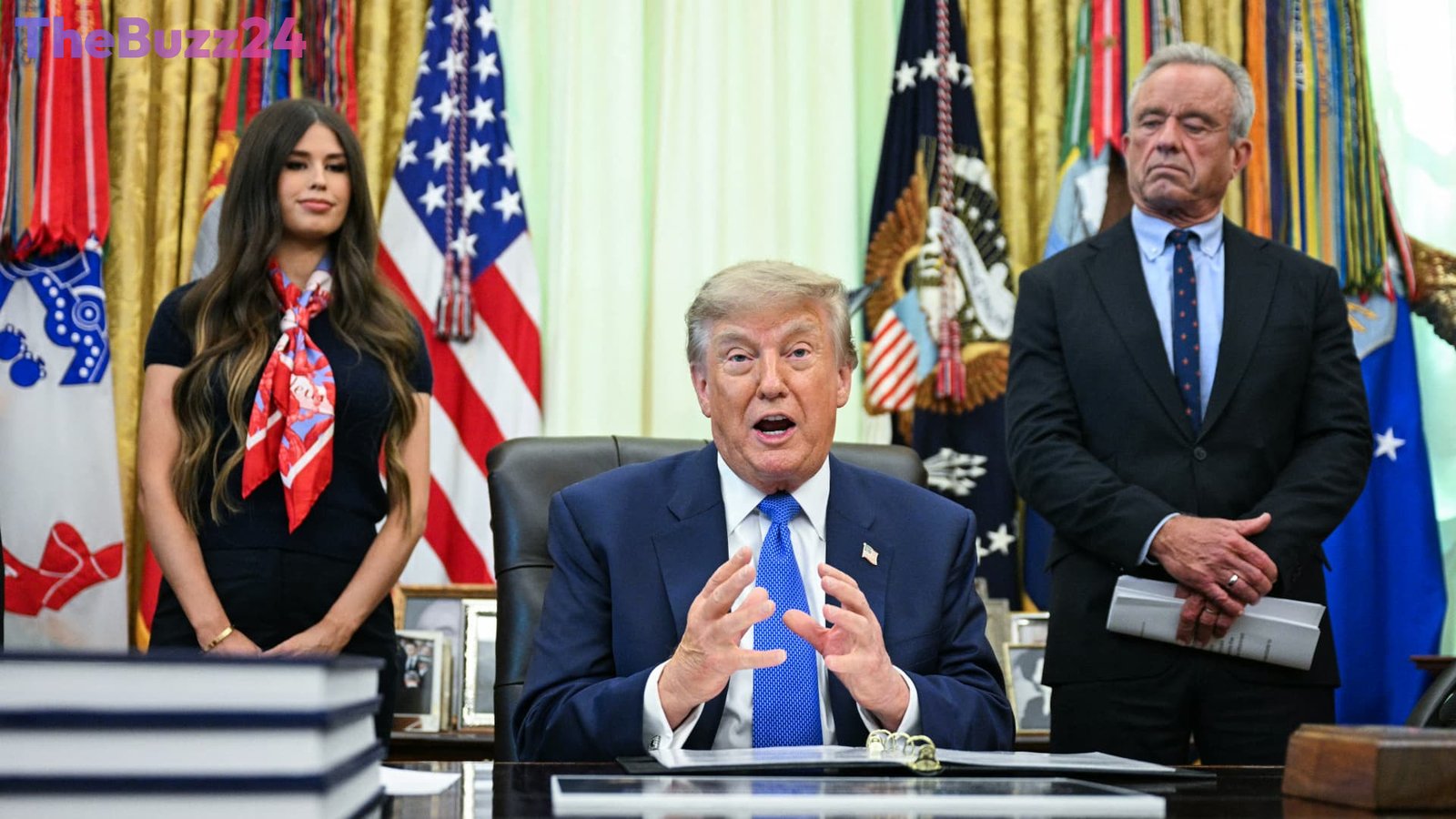
President Trump Issues Executive Order on Childhood Vaccinations, Promotes Unsubstantiated Autism Link
President Donald Trump has signed an executive order that aims to reduce the number of recommended childhood vaccinations, proposing a new schedule that would include just 11 routine shots. The directive also seeks to separate the combined measles, mumps, and rubella (MMR) vaccine into individual doses administered during separate doctor visits.
During a briefing, President Trump stated that this revised schedule would align the United States with other developed nations and, more importantly, with “common sense and knowledge.” However, the order is notable for President Trump’s repeated assertions, which lack scientific backing, that an increase in childhood vaccinations has contributed to a rise in autism diagnoses. Decades of extensive scientific research have consistently found no link between childhood immunizations and autism spectrum disorder.
The executive order further directs the Department of Justice to examine state-level adherence to vaccine mandate exemptions, including those based on parental rights, religious beliefs, medical conditions, and disabilities. This move follows previous actions by the administration targeting the MMR and related MMRV vaccines, with a vaccine advisory panel to the Centers for Disease Control and Prevention having previously adjusted recommendations for the MMRV shot for young children.
Health experts have voiced concerns that requiring multiple separate doctor visits for individual vaccines could lead to missed appointments and lower overall immunization rates. President Trump acknowledged the potential inconvenience for parents but maintained that the change would have a significant positive impact on autism rates, despite the absence of scientific evidence to support this claim. The administration has indicated that efforts will be made to assist families with potential costs associated with multiple co-pays, and insurance coverage for vaccines is expected to remain unchanged.
Key Takeaways
- President Trump signed an executive order to reduce the number of recommended childhood vaccines to 11 and separate the MMR vaccine.
- The order includes unsubstantiated claims linking childhood vaccines to autism, a connection refuted by extensive scientific evidence.
- The directive also tasks the Department of Justice with reviewing state vaccine mandate exemptions and may increase the number of required doctor visits for vaccinations.
Editor’s Analysis & Impact
This executive order represents a significant intervention in public health policy, driven by unsubstantiated claims regarding vaccine safety. The administration’s focus on reducing vaccine schedules and separating existing combination vaccines, while simultaneously promoting a debunked link to autism, could have serious repercussions for public health. Declining vaccination rates, already a concern exacerbated by the pandemic, could worsen, potentially leading to outbreaks of preventable diseases like measles, which is currently experiencing a resurgence. The economic implications, while not immediately clear, could involve increased healthcare costs due to disease outbreaks and potential challenges for parents navigating a more complex vaccination schedule. The broader implication is a potential erosion of trust in established public health guidance and scientific consensus.
Frequently Asked Questions
Q: What is the primary goal of President Trump's executive order regarding childhood vaccines?
A: The executive order aims to reduce the number of recommended routine childhood vaccinations to 11 and to separate the combination measles, mumps, and rubella (MMR) vaccine into individual doses administered over multiple visits.
Q: What is the scientific consensus on the link between vaccines and autism?
A: Extensive scientific research conducted over decades has consistently shown no link between childhood vaccines and autism spectrum disorder. This conclusion is supported by major health organizations worldwide.
Q: What are the potential concerns raised by health experts regarding this executive order?
A: Health experts are concerned that requiring multiple separate doctor visits for individual vaccines could lead to missed appointments, lower overall immunization rates, and potentially increase the risk of outbreaks of preventable diseases. There are also concerns about the unsubstantiated claims regarding autism potentially undermining public trust in vaccines.
AI Disclosure: This article is based on verified data and official reports. Our Team and AI have cross-referenced every financial detail with primary sources to ensure total accuracy.
More from this Category