Orbital Servicing Enters a New Era as Robotic Spacecraft Swap Places
A groundbreaking shift in orbital maintenance is underway thousands of miles above Earth, as advanced robotic spacecraft begin swapping places to extend the operational lifespan of aging communication satellites. In a recent operation, an innovative servicing vehicle successfully detached from an Australian-operated communications satellite, paving the way for a more versatile generation of orbital mechanics.
For over a year, the Mission Extension Vehicle (MEV), built and operated by Northrop Grumman, remained docked to the back of the Optus satellite, actively managing its positioning to ensure uninterrupted service. Having completed this initial assignment, the spacecraft is moving away to accommodate newer technology. Earlier this year, a fleet of four advanced servicing spacecraft launched into orbit aboard a SpaceX Falcon 9 rocket, marking a major technological leap for the industry.
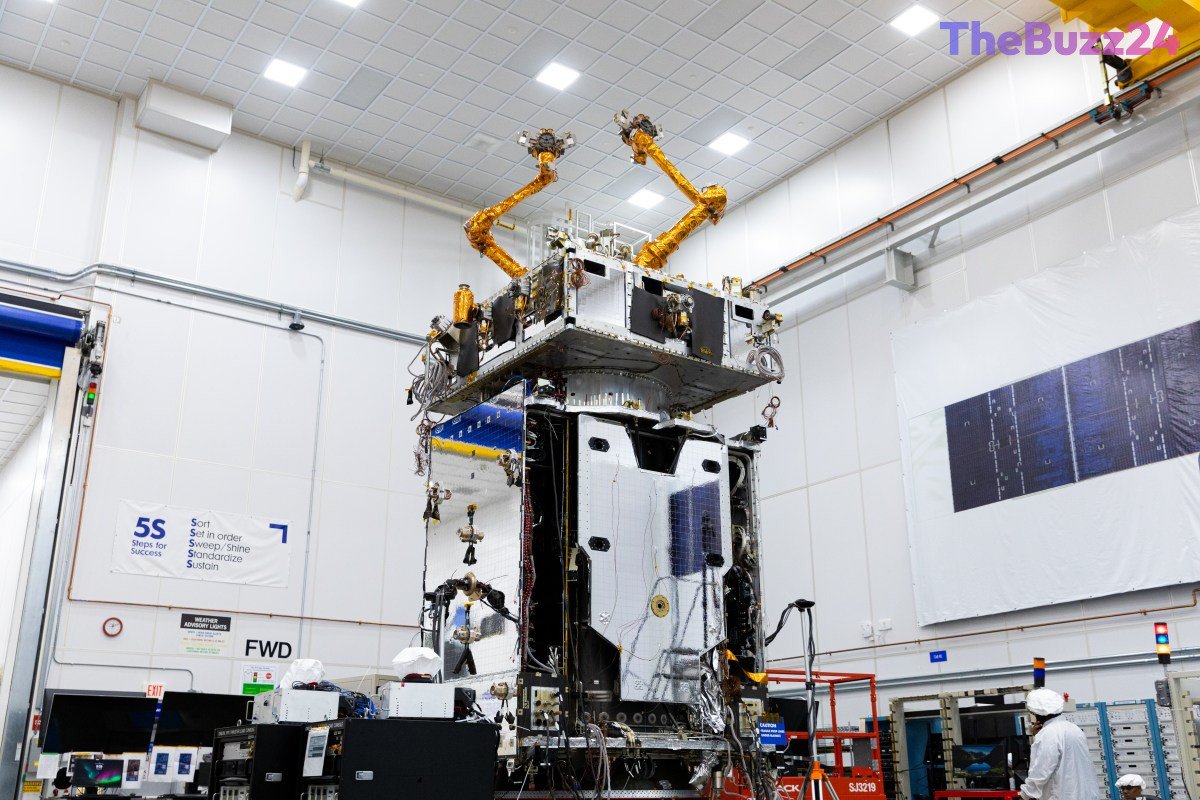
Among this new batch is the Mission Robotic Vehicle (MRV), equipped with sophisticated robotic arms developed alongside military research organizations, alongside three modular propulsion units known as Mission Extension Pods. These assets are journeying toward high-altitude orbits, where the MRV will utilize its robotic appendages to attach a fresh propulsion pod to the aging Optus spacecraft. This intervention is expected to grant the satellite years of additional operational capacity, transforming how operators approach orbital hardware failure.
Historically, multi-million-dollar satellites were decommissioned simply because they exhausted their propellant, even while their internal electronics remained fully functional. By introducing in-orbit servicing, refueling, and hardware upgrades, the aerospace sector is shifting toward a more sustainable and economically viable infrastructure. As launch costs decrease and robotic autonomy improves, the ability to repair and maintain spacecraft in the vacuum of space is quickly evolving from a futuristic concept into a commercial reality.
Key Takeaways
- Northrop Grumman's MEV spacecraft successfully detached from the Optus communications satellite after more than a year of stabilization support.
- A new fleet of spacecraft, including the robotic-arm-equipped MRV and modular propulsion pods, was recently launched via SpaceX to take over servicing duties.
- In-orbit servicing aims to drastically reduce waste by extending the functional lifespan of expensive satellites that run out of fuel.
Editor’s Analysis & Impact
The evolution of in-orbit satellite servicing represents a monumental shift in the economics of the aerospace and telecommunications industries. For decades, deploying high-value satellites into geostationary orbit was viewed as a terminal investment; once propellant reserves were depleted, the multimillion-dollar assets were effectively abandoned. The introduction of autonomous docking vehicles, robotic arms, and modular propulsion pods changes this paradigm entirely, turning terminal assets into indefinitely upgradeable infrastructure. As commercial operators and defense agencies alike seek to maximize return on investment and reduce orbital congestion, demand for these servicing capabilities is poised to surge. Furthermore, the technology sets the groundwork for future industrial space applications, such as orbital manufacturing, debris removal, and complex assembly tasks, positioning in-orbit logistics as one of the fastest-growing sectors in the modern space economy.
Frequently Asked Questions
Q: What causes most satellites to stop working?
A: Satellites typically fail when they run out of fuel to maintain their proper orbital position, rather than because their internal computers or transceivers stop functioning.
Q: How do the new Mission Extension Pods (MEPs) help satellites?
A: MEPs act as smaller, modular propulsion systems that attach to aging satellites, providing the necessary thrust to keep them in orbit and operational for years beyond their original lifespans.
Q: Why is the Mission Robotic Vehicle (MRV) considered an evolution in space servicing?
A: Unlike older vehicles that remain permanently attached to a single customer, the MRV is designed to use robotic arms to attach modular pods to multiple different spacecraft, creating a more scalable and efficient service model.
AI Disclosure: This article is based on verified data and official reports. Our Team and AI have cross-referenced every financial detail with primary sources to ensure total accuracy.
More from this Category