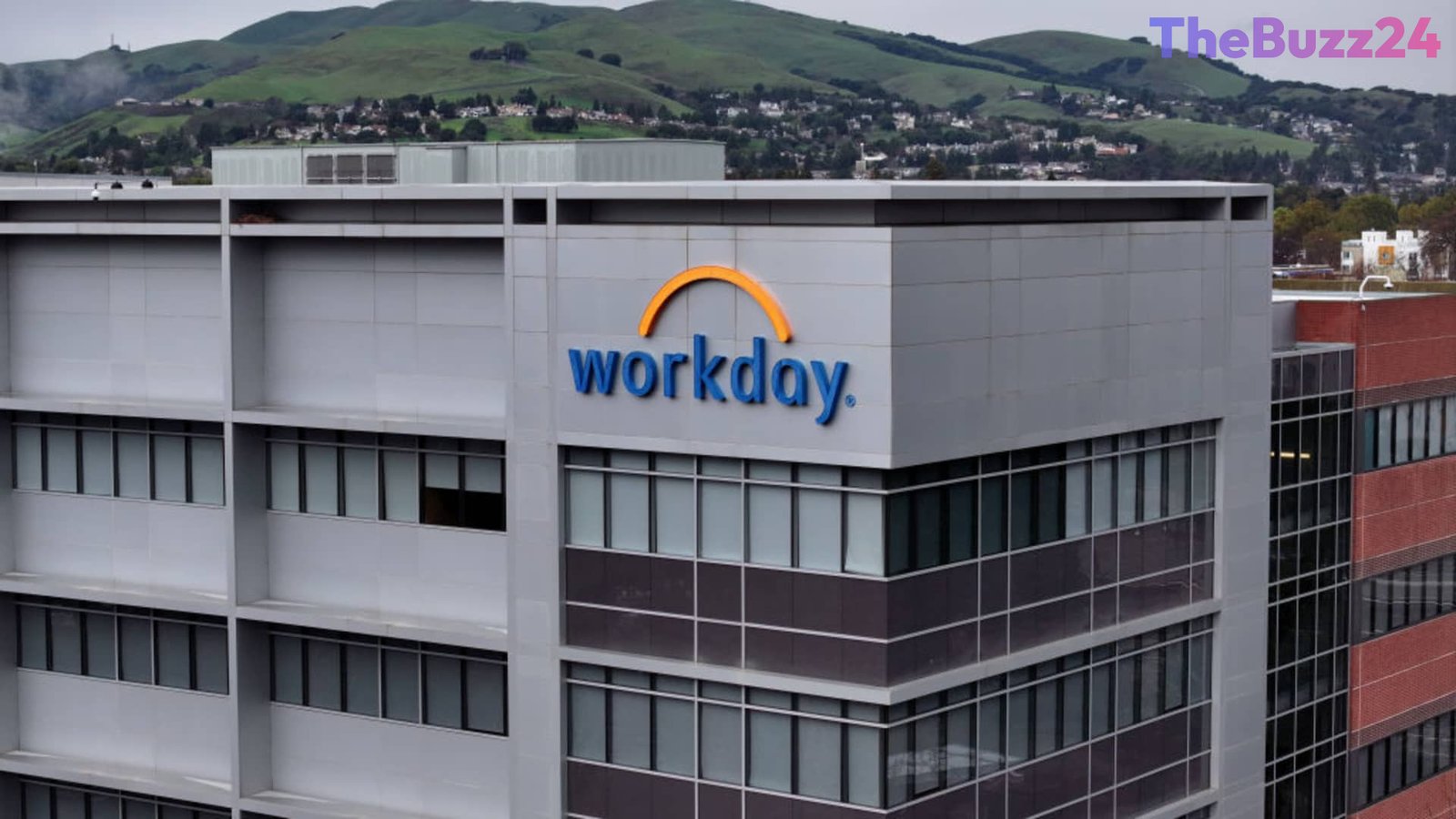
Workday Shares Soar on Reports of Silver Lake Acquisition Talks
Workday, a prominent human resources software provider, experienced a significant surge in its stock price following reports that private equity firm Silver Lake is engaged in discussions to acquire the company. The news propelled Workday shares up nearly 18%, marking their best single-day performance since 2016, and briefly led to trading halts in late afternoon sessions. The company’s market capitalization closed at approximately $51 billion after the reports surfaced.
Sources familiar with the matter indicate that these acquisition discussions have been ongoing for several months. Neither Workday nor Silver Lake has yet issued an official statement regarding the reported talks. This development comes at a time when the broader software sector, including Workday, has faced investor apprehension due to concerns that advancements in artificial intelligence tools could disrupt traditional business models.
The potential acquisition also follows recent leadership changes at Workday. In March, co-founder Aneel Bhusri was reinstated as CEO, succeeding Carl Eschenbach. Bhusri has a long history with the company, having previously served in various executive capacities, including CEO and co-CEO. Industry analysts suggest that a deal could make strategic sense, particularly given the recent pressures on software valuations. One analyst noted the existing relationship between Workday CEO Aneel Bhusri and Silver Lake’s Egon Durban, suggesting a potential alignment that could facilitate such a transaction.
Despite broader market concerns about AI, Workday itself reported better-than-expected financial results in May and subsequently raised its forecast, citing tailwinds from artificial intelligence. A major acquisition in this space could signal a renewed appetite for software investments, potentially easing some of the prevailing fears surrounding AI’s impact on the industry.
Key Takeaways
- Workday's stock surged nearly 18% on reports that private equity firm Silver Lake is in talks to acquire the human resources software maker.
- The potential acquisition discussions have been ongoing for months, occurring amidst broader industry concerns about AI's impact on software business models.
- The news follows Workday's recent CEO change, with co-founder Aneel Bhusri returning to the helm, and could signal renewed investor confidence in the software sector.
Editor’s Analysis & Impact
The reported acquisition talks between Silver Lake and Workday highlight a significant trend in the enterprise software market: private equity firms are increasingly looking to capitalize on undervalued tech assets, especially those facing market skepticism due to AI disruption fears. This potential deal could signal a turning point, suggesting that sophisticated investors see long-term value and growth opportunities in established software companies, even as AI reshapes the landscape. For Workday, an acquisition by Silver Lake could provide the capital and strategic flexibility to accelerate its AI integration and market expansion without the immediate pressures of public market scrutiny. More broadly, it might encourage other private equity players to explore similar opportunities, potentially leading to a wave of consolidation in the software sector and a re-evaluation of tech valuations.
Frequently Asked Questions
Q: What is Workday?
A: Workday is a leading provider of enterprise cloud applications for finance and human resources. Its software helps organizations manage a wide range of business functions, including human capital management (HCM), financial management, planning, and analytics.
Q: Who is Silver Lake?
A: Silver Lake is a global technology investment firm, known for its focus on large-scale investments in technology and technology-enabled industries. It is one of the largest and most prominent private equity firms specializing in tech buyouts.
Q: Why is this acquisition significant for the software industry?
A: This potential acquisition is significant because it suggests that private equity sees value in the enterprise software sector despite ongoing concerns about artificial intelligence's disruptive potential. It could signal a renewed confidence in the long-term viability and growth of established software companies, potentially leading to more M&A activity in the tech space.
AI Disclosure: This article is based on verified data and official reports. Our Team and AI have cross-referenced every financial detail with primary sources to ensure total accuracy.
More from this Category