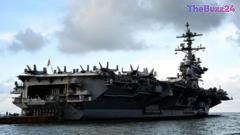
USS George Washington Deployed to Middle East Amid Growing Concerns Over USS Abraham Lincoln Conditions
The United States Navy is moving to replace the USS Abraham Lincoln in the Middle East as the aircraft carrier concludes an extended nine-month deployment. The USS George Washington, currently transitioning from the Pacific region, is expected to arrive in the area within days to relieve the vessel, which has been at sea since December. The deployment of the USS George Washington will bring the total number of US aircraft carriers in the Middle East to three, including the USS George HW Bush, while leaving the Pacific region without a carrier presence.
The transition follows mounting reports of deteriorating conditions aboard the USS Abraham Lincoln. Families of crew members have raised alarms regarding the welfare of the 5,000 sailors on board, citing issues such as broken plumbing, exhaustion, and significant food shortages. Some relatives have alleged that the prolonged duration of the mission—which far exceeds the standard six-month deployment cycle—has led to severe mental health struggles among the crew, with reports of sailors attempting to jump overboard.
While the US Navy has acknowledged that supply chains have been disrupted by ongoing combat operations, officials have denied claims of a mental health crisis or an increase in suicidal behavior. Defense leadership has maintained that the crew is being provided with necessary resources, dismissing some media reports as misrepresentations. However, the situation has drawn scrutiny from lawmakers, who are questioning whether the current operational tempo is sustainable for the Navy’s aging carrier fleet.
Key Takeaways
- The USS George Washington is being redeployed from the Pacific to the Middle East to relieve the USS Abraham Lincoln.
- Families of sailors on the USS Abraham Lincoln have reported poor living conditions, including food shortages and mental health concerns, following a nine-month deployment.
- The US Navy has acknowledged supply chain disruptions due to combat operations but denies reports of a mental health crisis on the ship.
Editor’s Analysis & Impact
The situation aboard the USS Abraham Lincoln highlights a critical tension between geopolitical operational requirements and the physical and mental sustainability of the US naval force. As the military faces an increased demand for carrier presence in volatile regions, the strain on aging vessels and their crews is becoming increasingly apparent. This incident forces a broader conversation regarding the ‘operational tempo’ of the Navy. If the current pace of deployments continues, the military may face significant retention and recruitment challenges, as well as increased maintenance costs for older ships pushed beyond their intended service cycles. Future policy decisions will likely need to balance the necessity of global power projection with the logistical reality of maintaining a healthy, well-supplied, and rested workforce.
Frequently Asked Questions
Q: Why is the USS Abraham Lincoln being replaced?
A: The USS Abraham Lincoln is being replaced after an extended nine-month deployment that has resulted in reports of poor living conditions, supply shortages, and crew exhaustion.
Q: How long do US Navy deployments typically last?
A: Standard deployments for US Navy aircraft carriers typically last about six months, making the nine-month duration of the USS Abraham Lincoln's current mission significantly longer than average.
AI Disclosure: This article is based on verified data and official reports. Our Team and AI have cross-referenced every financial detail with primary sources to ensure total accuracy.
More from this Category