U.S. Demands Global Allies Pick Sides in Deepening Artificial Intelligence Rivalry with China
The United States is escalating its geopolitical campaign to secure technological supremacy, preparing to issue strict warnings to international partners that they must choose between American and Chinese artificial intelligence partnerships. Under a directive being formulated by the State Department, foreign governments participating in Washington-backed technological coalitions will face exclusion if they simultaneously join competing frameworks established by Beijing.
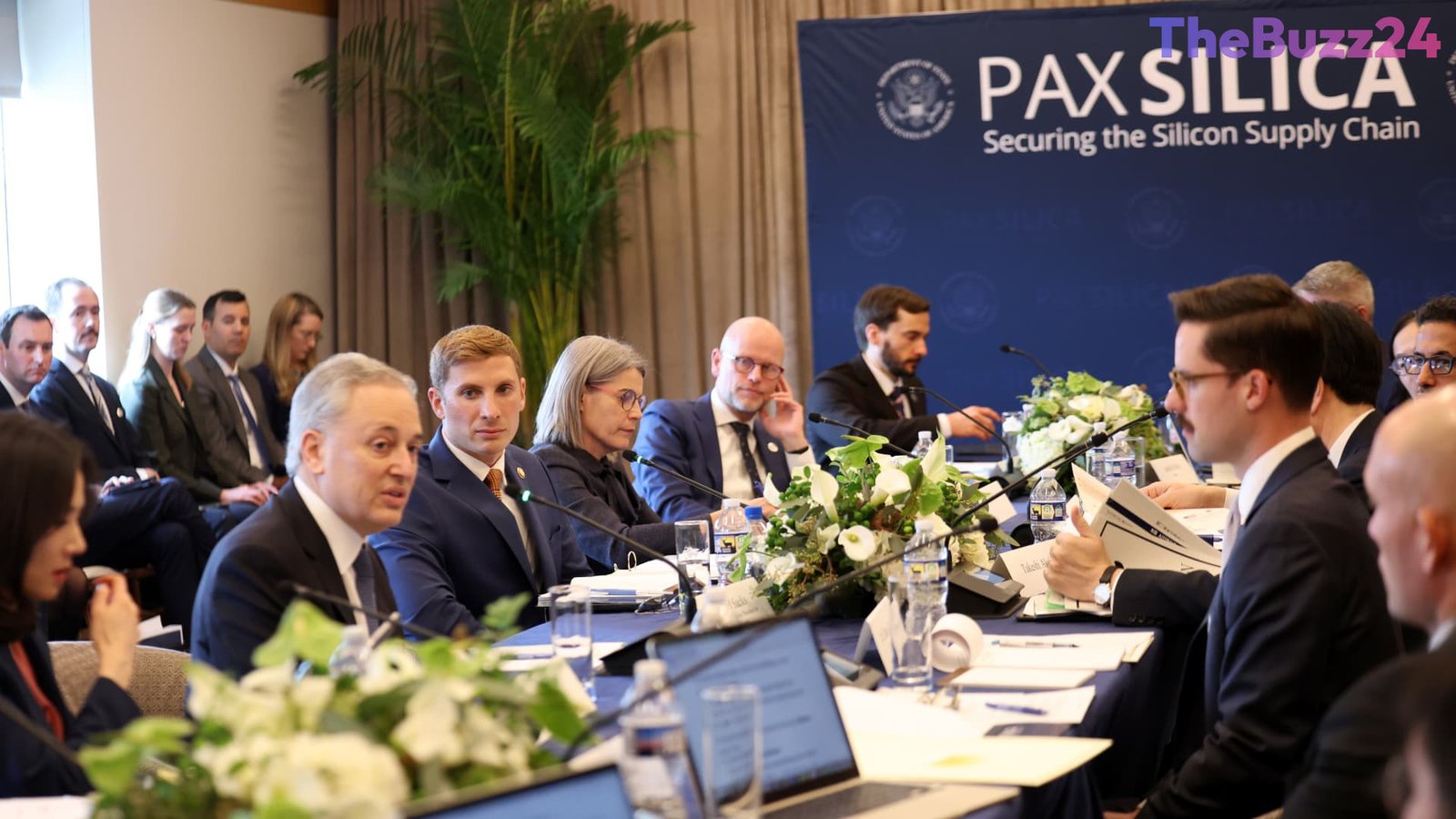
Central to the strategy is Washington’s Pax Silica initiative, launched to fortify critical supply chains encompassing semiconductors, raw minerals, and frontier artificial intelligence models. While prominent allies such as Japan, South Korea, and Australia have endorsed the U.S. approach, complications arose after Kazakhstan—a vital supplier of critical minerals—signed both the Pax Silica agreement and China’s newly established World Artificial Intelligence Cooperation Organization, sparking urgent security concerns in Washington.
Chinese President Xi Jinping introduced Beijing’s rival global initiative to champion China’s open-weight AI architectures as a direct counterweight to proprietary systems developed by leading American companies like OpenAI and Anthropic. In response, American officials are taking a firm stance against diplomatic fence-sitting, asserting that nations cannot credibly maintain trusted access to Western technological ecosystems while supporting parallel systems backed by Beijing.
With artificial intelligence increasingly tied to national defense capabilities, economic leverage, and autonomous cyber operations, access to raw processing power and critical minerals has become a crucial battleground. The forthcoming diplomatic push highlights Washington’s determination to constrain China’s technological reach by compelling international partners to commit exclusively to Western-aligned development pipelines.
Key Takeaways
- The U.S. is preparing to warn dozens of partner nations that they cannot participate in both American and Chinese AI development coalitions.
- The diplomatic ultimatum follows Kazakhstan's decision to join both the U.S.-led Pax Silica framework and Beijing's competing World Artificial Intelligence Cooperation Organization.
- Washington aims to restrict China's access to vital supply chains, advanced semiconductors, and critical minerals essential for next-generation AI.
Editor’s Analysis & Impact
Washington’s ultimatum signals a decisive shift away from technological neutrality, forcing middle powers and developing economies to choose between competing global ecosystems. By leveraging the Pax Silica initiative, the United States is working aggressively to construct an exclusive bloc that secures foundational semiconductor components and critical mineral supplies. However, this hardline stance places resource-rich nations in an uncomfortable position, particularly those with deep trade ties to Beijing. As artificial intelligence becomes deeply intertwined with sovereign defense and national security, this growing bifurcation risks fracturing international technical standards, hindering collaborative AI safety efforts, and accelerating a polarized global tech race.
Frequently Asked Questions
Q: What is the Pax Silica initiative?
A: Pax Silica is a U.S.-led coalition created to secure supply chains for advanced semiconductors, artificial intelligence models, and the critical minerals needed to manufacture cutting-edge technologies.
Q: Why is the U.S. pushing partner nations to reject China's AI framework?
A: U.S. officials argue that countries cannot maintain secure, trusted integration within Western technology networks while participating in competing Chinese initiatives designed to challenge Western technological standards and leadership.
Q: Which country caused concern by joining both technological coalitions?
A: Kazakhstan raised alarm bells in Washington after signing on to both the U.S.-backed Pax Silica framework and China's World Artificial Intelligence Cooperation Organization.
AI Disclosure: This article is based on verified data and official reports. Our Team and AI have cross-referenced every financial detail with primary sources to ensure total accuracy.
More from this Category