Trump Orders Significant Reduction in Joint US-South Korea Military Drills Amid Iran Denuclearization Dispute
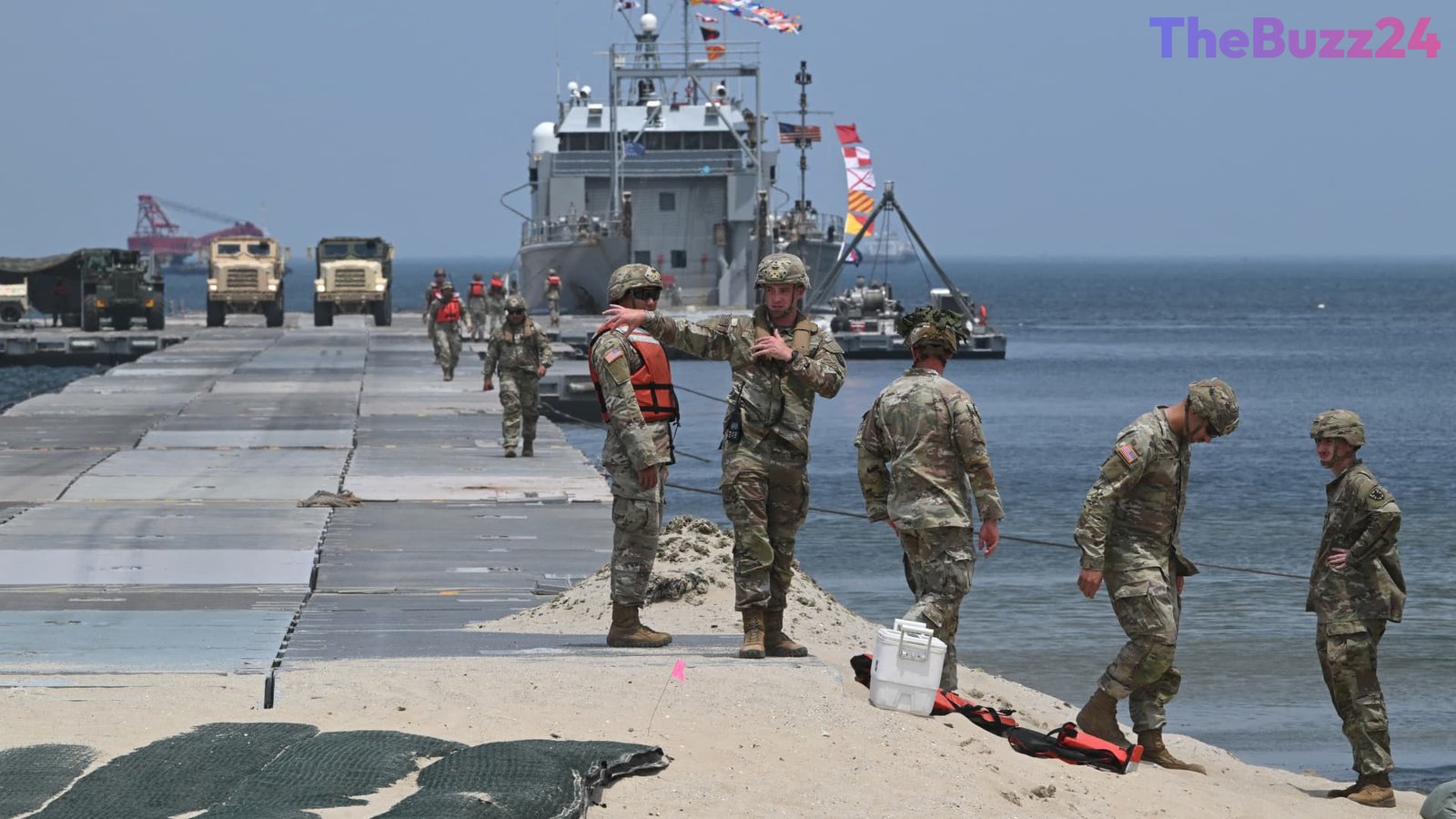
Former President Donald Trump has directed the Pentagon to substantially reduce planned joint military exercises with South Korea. The decision, announced via social media, comes as Trump cited the drills’ high cost and their perceived “inappropriate and hostile” signal to North Korea. A key factor in this directive, according to Trump, was South Korea’s refusal to join U.S. efforts to denuclearize Iran. He stated that while it was too late for a full cancellation, he instructed Secretary of War Pete Hegseth to implement a significant reduction.
The 11-day exercises, involving approximately 18,000 South Korean soldiers, were designed to enhance readiness against potential threats from North Korea. However, Pyongyang recently issued a warning, characterizing the drills as “a rehearsal for an aggressive war” that exacerbates regional instability. This rhetoric is consistent with North Korea’s historical pattern of using such joint military exercises as a pretext to escalate its own weapons testing and bolster domestic support for leader Kim Jong Un.
Despite the reduction, the U.S. military has previously emphasized that these exercises reinforce the alliance’s role as a cornerstone for regional peace and security, reaffirming the strong commitment between the United States and the Republic of Korea to mutual defense. This is not the first instance of Trump seeking to curtail these drills; during his initial term, he also controversially labeled them “provocative” and costly, notably after his 2018 meeting with Kim Jong Un in Singapore. Trump has met with Kim three times to discuss North Korea’s nuclear program and has expressed interest in continuing those discussions since returning to office.
Key Takeaways
- Former President Trump ordered a significant reduction in joint military exercises with South Korea.
- Reasons cited include the high cost, the signal sent to North Korea, and South Korea's refusal to assist in Iran's denuclearization.
- North Korea views these drills as provocative, often using them as a justification for its own military escalations.
Editor’s Analysis & Impact
This decision to scale back joint military exercises carries significant geopolitical implications. It could be interpreted as a shift in U.S. foreign policy, potentially signaling a de-emphasis on traditional alliances in favor of more transactional diplomacy, particularly concerning Iran. For South Korea, it raises questions about the consistency of the alliance’s defense posture and could prompt a re-evaluation of its own security strategies. North Korea, on the other hand, might perceive this as an opportunity to further its weapons development agenda, potentially increasing regional instability. The move also highlights the complex interplay between U.S. relations with its allies and its broader foreign policy objectives, such as denuclearization efforts in other regions.
Frequently Asked Questions
Q: Why did President Trump order the reduction in military exercises?
A: President Trump cited the high cost of the drills, their perceived "hostile" signal to North Korea, and South Korea's refusal to join U.S. efforts to denuclearize Iran as reasons for scaling back the exercises.
Q: What is North Korea's stance on these joint military exercises?
A: North Korea consistently describes these joint drills as "a rehearsal for an aggressive war" and a source of regional instability, often using them as a pretext to justify its own military testing and expansion of its weapons arsenals.
Q: Has President Trump previously sought to reduce these exercises?
A: Yes, during his first term, President Trump also made a surprise announcement calling the wargames "provocative" and costly, notably after his 2018 meeting with North Korean leader Kim Jong Un.
AI Disclosure: This article is based on verified data and official reports. Our Team and AI have cross-referenced every financial detail with primary sources to ensure total accuracy.
More from this Category