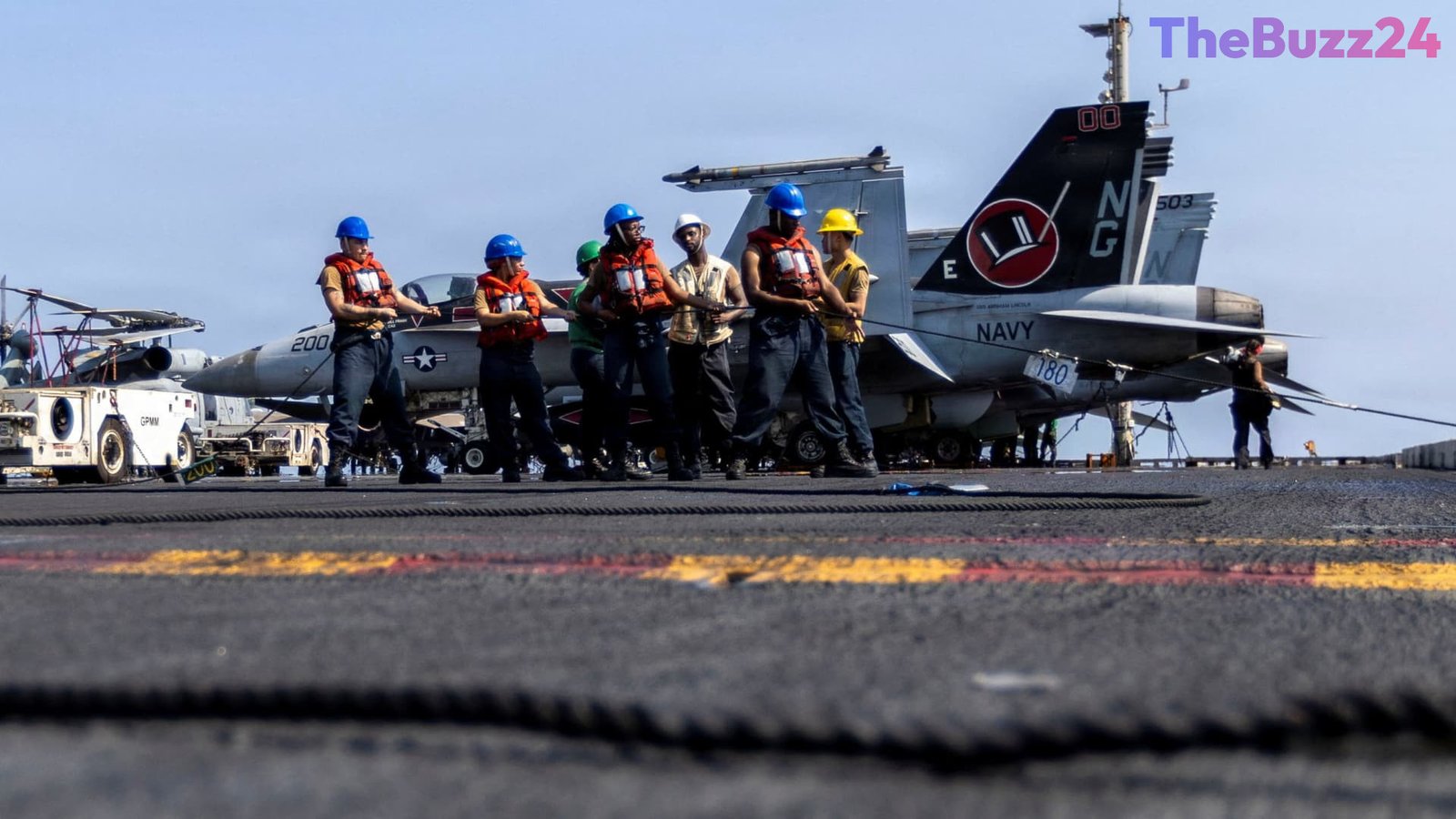
USS Lincoln Grapples with Mental Health Concerns Amidst Prolonged Deployment and Political Scrutiny
Admiral Brad Cooper, a top U.S. commander, has acknowledged the presence of mental health challenges among the crew of the USS Abraham Lincoln aircraft carrier. This admission comes amidst the vessel’s extended deployment in the Middle East, a period marked by reports of a sailor going overboard and broader concerns regarding crew morale. The Lincoln’s deployment has stretched for over eight months, coinciding with ongoing tensions in the region.
During a recent visit to the ship, Admiral Cooper stated that while the Lincoln currently registers among the lowest number of mental health-related cases compared to the U.S. Navy’s other active aircraft carriers, the situation is not without its difficulties. He emphasized that prolonged service at sea is inherently demanding and not suitable for everyone, a sentiment echoed by many Navy veterans. Despite his acknowledgment, Cooper also praised the crew’s resilience and leadership’s focus on mental health initiatives.
However, the administration has presented a different perspective. President Donald Trump and Defense Secretary Pete Hegseth have publicly downplayed reports of declining morale on the Lincoln. President Trump dismissed concerns about the deployment’s length, stating it was “not nearly long enough,” and indicated that the Lincoln would soon be replaced. Indeed, the USS George Washington is now en route to the Middle East to relieve the Lincoln. Hegseth, for his part, characterized the reports as “completely misrepresented.”
The conditions aboard the USS Lincoln have drawn sharp criticism from lawmakers. Senator Kirsten Gillibrand, a member of both the Senate Armed Services and Intelligence Committees, issued a statement demanding accountability from the Pentagon. She criticized what she described as “deteriorating conditions” endured by service members in a “reckless war started with no justification, no strategy, and no end in sight,” calling for immediate hearings and a clear plan to protect military personnel.
Key Takeaways
- Admiral Brad Cooper acknowledged mental health challenges on the USS Abraham Lincoln during its extended Middle East deployment.
- Despite Cooper's claims of low case numbers, reports of morale issues and a sailor reportedly jumping overboard have drawn scrutiny.
- President Trump and Defense Secretary Hegseth downplayed the concerns, while Senator Kirsten Gillibrand criticized the Pentagon and demanded accountability for the crew's conditions.
Editor’s Analysis & Impact
The acknowledgment of mental health challenges on the USS Abraham Lincoln, coupled with conflicting statements from military leadership and political figures, highlights a critical issue within the armed forces: the psychological toll of prolonged deployments. This situation could significantly impact military recruitment and retention, as potential recruits and current service members weigh the personal costs of service. The political scrutiny from lawmakers like Senator Gillibrand signals a growing demand for transparency and accountability regarding troop welfare, potentially leading to policy changes in deployment durations and mental health support. Furthermore, the public discourse around these issues could influence perceptions of military readiness and the human cost of ongoing global engagements, particularly in regions of sustained tension.
Frequently Asked Questions
Q: What is the primary concern regarding the USS Abraham Lincoln?
A: The primary concern revolves around the mental health and morale of the crew members during their extended, over eight-month deployment in the Middle East, following reports of a sailor jumping overboard and other widespread issues.
Q: How have military and political leaders responded to these concerns?
A: Admiral Brad Cooper acknowledged mental health challenges while stating the Lincoln has relatively low case numbers. In contrast, President Trump and Defense Secretary Pete Hegseth downplayed the reports. Lawmakers like Senator Kirsten Gillibrand have criticized the Pentagon and called for accountability and hearings.
Q: What is the USS George Washington's role in this situation?
A: The USS George Washington is currently en route to the Middle East and is expected to replace the USS Abraham Lincoln, allowing the Lincoln and its crew to return from their prolonged deployment.
AI Disclosure: This article is based on verified data and official reports. Our Team and AI have cross-referenced every financial detail with primary sources to ensure total accuracy.
More from this Category