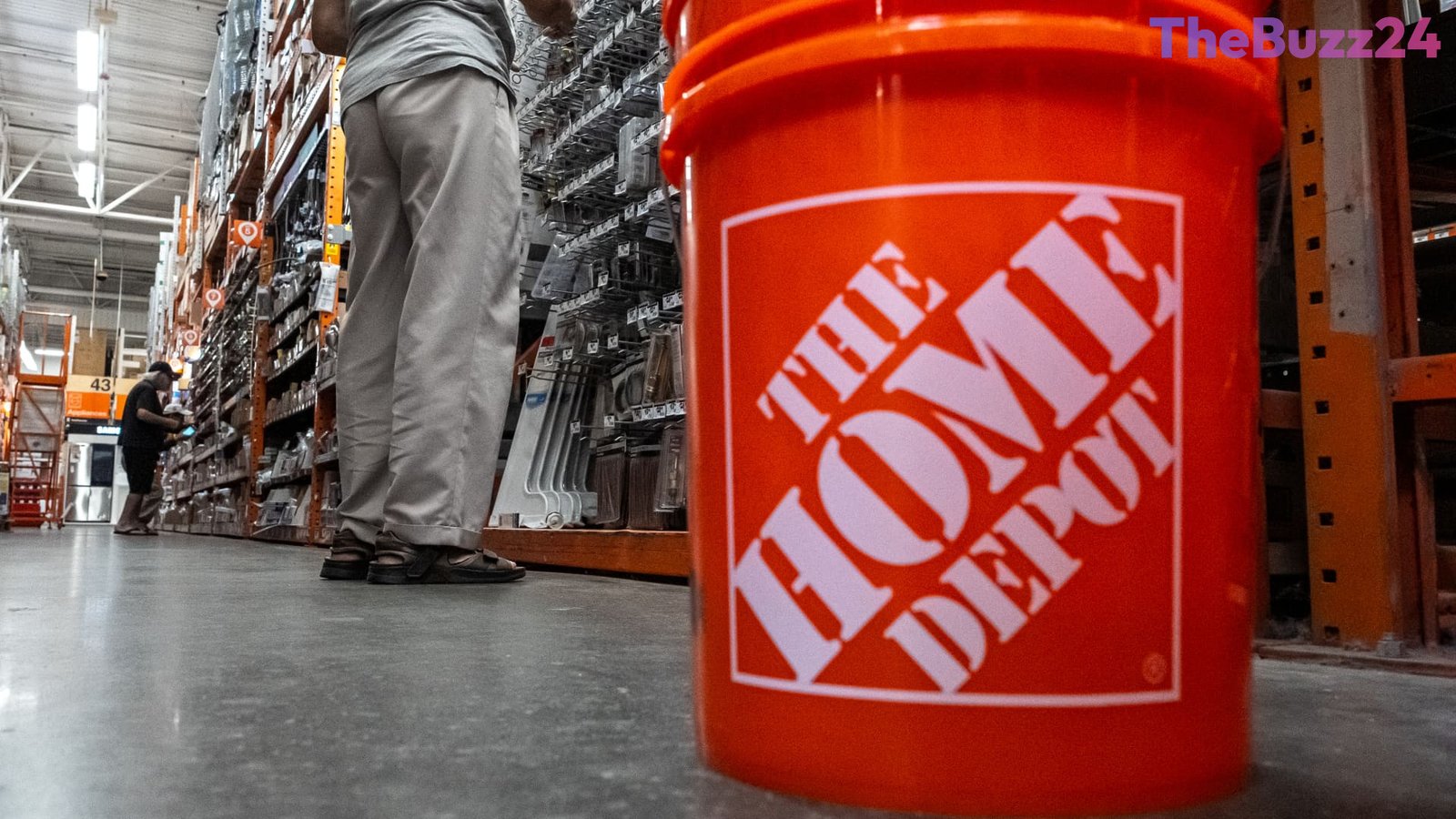
Home Depot Outperforms Expectations in Q2 Despite Stubborn Housing Market Headwinds
Home Depot has successfully beaten Wall Street’s expectations for both revenue and earnings in the second fiscal quarter, demonstrating resilience even as the broader housing market remains tightly constrained. The home improvement giant posted net income of $4.77 billion, translating to $4.79 per share, alongside a total revenue of $47.86 billion, comfortably outpacing the consensus estimates compiled by analysts. Furthermore, comparable sales grew by 1.7%, marking the highest such increase the retailer has recorded since the third quarter of 2022.
Despite the positive financial performance, leadership has chosen to maintain rather than elevate its full-year guidance, pointing to persistent macroeconomic caution. Company executives highlighted that consumers continue to navigate a remarkably static housing market driven by elevated mortgage rates and lower housing turnover. While everyday engagement and smaller-scale projects remain robust across both professional and do-it-yourself segments, customers are exhibiting noticeable hesitation when it comes to committing to larger, more expensive home renovations due to lingering concerns over inflation and general economic uncertainty.
In tandem with these financial updates, the organization is managing a brief leadership transition as CEO Ted Decker takes a temporary medical leave of absence for a few months. During this period, Ann-Marie Campbell, senior executive vice president of U.S. stores and operations, will manage day-to-day operations, while Chief Financial Officer Richard McPhail takes on an expanded role overseeing financial management and the core pro business. Leadership remains confident that ongoing strategic investments will allow the retailer to continuously capture market share and sustain its value proposition over the long term.
Key Takeaways
- Home Depot reported second-quarter revenue of $47.86 billion and adjusted earnings that surpassed Wall Street projections.
- Comparable sales rose 1.7%, marking the strongest performance in this metric since late 2022.
- Despite strong results, leadership reaffirmed its full-year guidance due to ongoing hesitations among consumers tackling large projects amid a frozen housing market.
Editor’s Analysis & Impact
Home Depot’s Q2 performance underscores a broader retail reality: companies with strong operational execution and diversified customer bases—spanning both DIYers and professional contractors—can weather challenging macroeconomic conditions. While high mortgage rates and a stagnant housing market traditionally dampen home improvement spending, Home Depot is effectively capturing market share through strategic investments. The hesitation in large-scale projects reflects consumer anxiety over inflation and fuel costs, yet the underlying demand remains fundamentally sound. Looking ahead, the company’s ability to maintain pricing value through tariff offsets and disciplined execution positions it well for when the housing market eventually thaws. The temporary executive transition is unlikely to disrupt this trajectory, given the depth of the existing leadership team.
Frequently Asked Questions
Q: How did Home Depot perform in the second fiscal quarter?
A: Home Depot beat Wall Street expectations on both top and bottom lines, reporting $47.86 billion in revenue and net income of $4.77 billion, with comparable sales rising by 1.7%.
Q: Why did Home Depot reaffirm its guidance instead of raising it?
A: Management maintained its full-year guidance due to ongoing uncertainties in the broader economy and a 'frozen housing market,' which has made consumers hesitant to undertake larger, costlier home improvement projects.
Q: Who is stepping in while CEO Ted Decker is on medical leave?
A: Ann-Marie Campbell, senior executive vice president of U.S. stores and operations, is overseeing day-to-day operations, while CFO Richard McPhail is managing financial oversight and the pro business.
AI Disclosure: This article is based on verified data and official reports. Our Team and AI have cross-referenced every financial detail with primary sources to ensure total accuracy.
More from this Category