Anthro Energy Breaks Ground on Kentucky Facility to Advance U.S. Battery Supply Chain
Anthro Energy has officially broken ground on a major manufacturing facility in Louisville, Kentucky, designed to produce advanced battery materials capable of supporting hundreds of thousands of electric vehicles annually. Slated to begin operations in 2028, the plant represents a significant milestone for domestic energy storage production, aiming to supply the burgeoning U.S. market with components independent of foreign supply chains.
The strategic location of the Louisville plant places it within a 12-hour drive of approximately 70 percent of existing battery manufacturing facilities in the United States. This geographic advantage is expected to streamline logistics for automakers and energy companies seeking reliable, domestic sources for critical battery components. Funding for the ambitious project has been bolstered by a substantial award from the Department of Energy under the Bipartisan Infrastructure Law, alongside federal investment tax credits and state-level incentives aimed at driving local job growth.
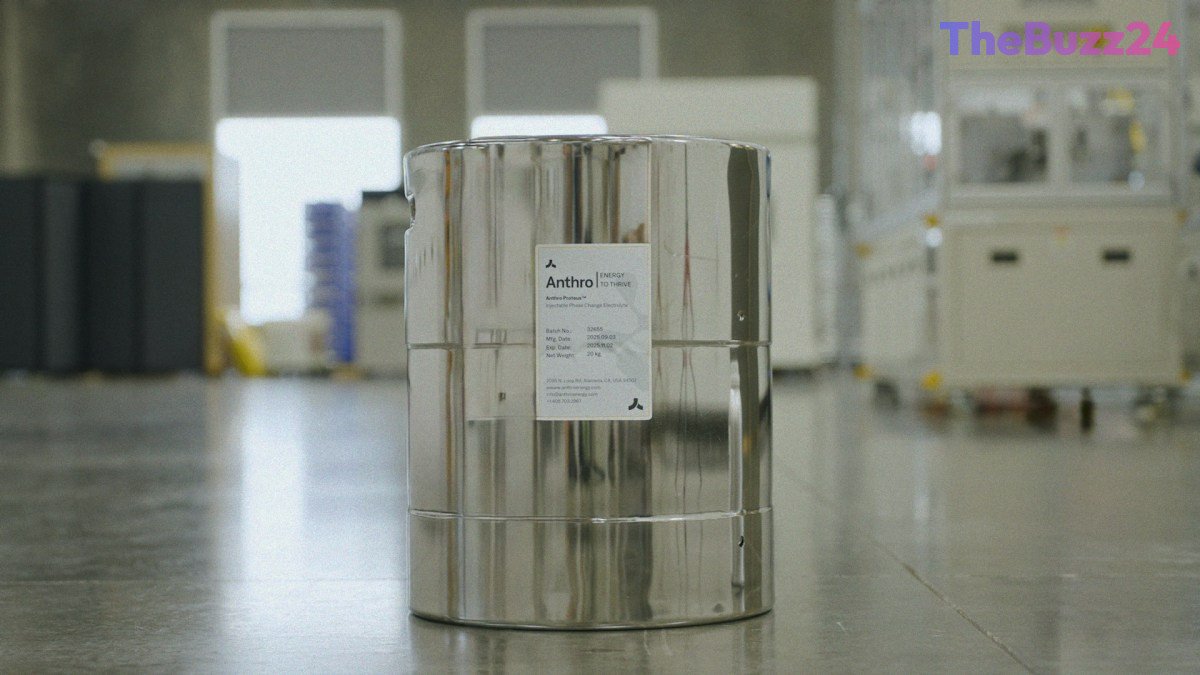
A central focus of the new facility will be the production of specialized electrolytes, including Anthro’s proprietary polymer product known as Proteus. This material is engineered to integrate seamlessly into existing manufacturing lines with minimal adjustments. Furthermore, the technology is designed to act as a stepping stone toward the commercialization of solid-state and semi-solid-state batteries, which promise higher energy densities, enhanced safety profiles by eliminating flammable components, and greater structural durability compared to traditional lithium-ion cells.
While scaling up production remains a notoriously difficult hurdle for clean-tech startups, leadership at Anthro Energy remains confident that federal backing and strategic partnerships will pave the way for successful commercial deployment. By bridging the gap between small-scale innovation and mass production, the company hopes to secure a foundational role in the next generation of power sources for electric vehicles, drones, and robotics.
Key Takeaways
- Anthro Energy has broken ground on a new manufacturing facility in Louisville, Kentucky, set to open in 2028.
- The factory aims to provide a domestic, China-free supply of electrolytes for the growing U.S. electric vehicle market.
- The facility will support the production of Proteus, a polymer designed to advance the development of safer solid-state batteries.
Editor’s Analysis & Impact
The construction of Anthro Energy’s Kentucky facility underscores the intense push by the United States to onshore critical elements of the electric vehicle supply chain. By focusing heavily on domestic, non-foreign-controlled sources for advanced electrolytes, the company positions itself to capture a significant market share as automakers scramble to comply with stringent sourcing requirements. More importantly, the commercial viability of polymer-based electrolytes like Proteus could finally accelerate the long-awaited transition to solid-state batteries. If Anthro can successfully navigate the hazardous transition from startup phase to mass production—historically known as the ‘valley of death’ for hardware companies—it could solve persistent manufacturing bottlenecks that have plagued the energy storage sector for years, ultimately redefining standards for safety, energy density, and durability across multiple industries.
Frequently Asked Questions
Q: When is the new Anthro Energy factory scheduled to open?
A: The manufacturing facility in Louisville, Kentucky, is scheduled to begin production in 2028.
Q: What is the primary benefit of Anthro Energy's Proteus material?
A: Proteus is a polymer designed to integrate into existing manufacturing lines with minimal tweaks while helping pave the way for safer, higher-density solid-state and semi-solid-state batteries.
Q: How was the factory funded?
A: The project received funding through a Department of Energy award under the Bipartisan Infrastructure Law, investment tax credits under the Inflation Reduction Act, and tax incentives from the state of Kentucky.
AI Disclosure: This article is based on verified data and official reports. Our Team and AI have cross-referenced every financial detail with primary sources to ensure total accuracy.
More from this Category